Discover how GC-MS helps scientists analyse lemongrass essential oil, identify its compounds and verify its purity and quality.
Did you know that fraud or adulteration sometimes occurs in essential oils (EO)?
Adulteration is adding unwanted substances to a product to reduce its quality or value. This can make an EO sell at a high price even though its quality is low because of contamination, such as added water.
An example of an essential oil that is widely sold on the market is lemongrass essential oil (LEO).

Lemongrass can be classified as a botanical gem. The lemongrass plant contains volatile oils that give it a distinct citrus scent, including citral (lemon-like), geraniol (soft floral), limonene (citrus), and myrcene (earthy).
Because these compounds are volatile, scientists use advanced technologies, such as gas chromatography-mass spectrometry (GC-MS), to detect and analyse their presence in lemongrass.
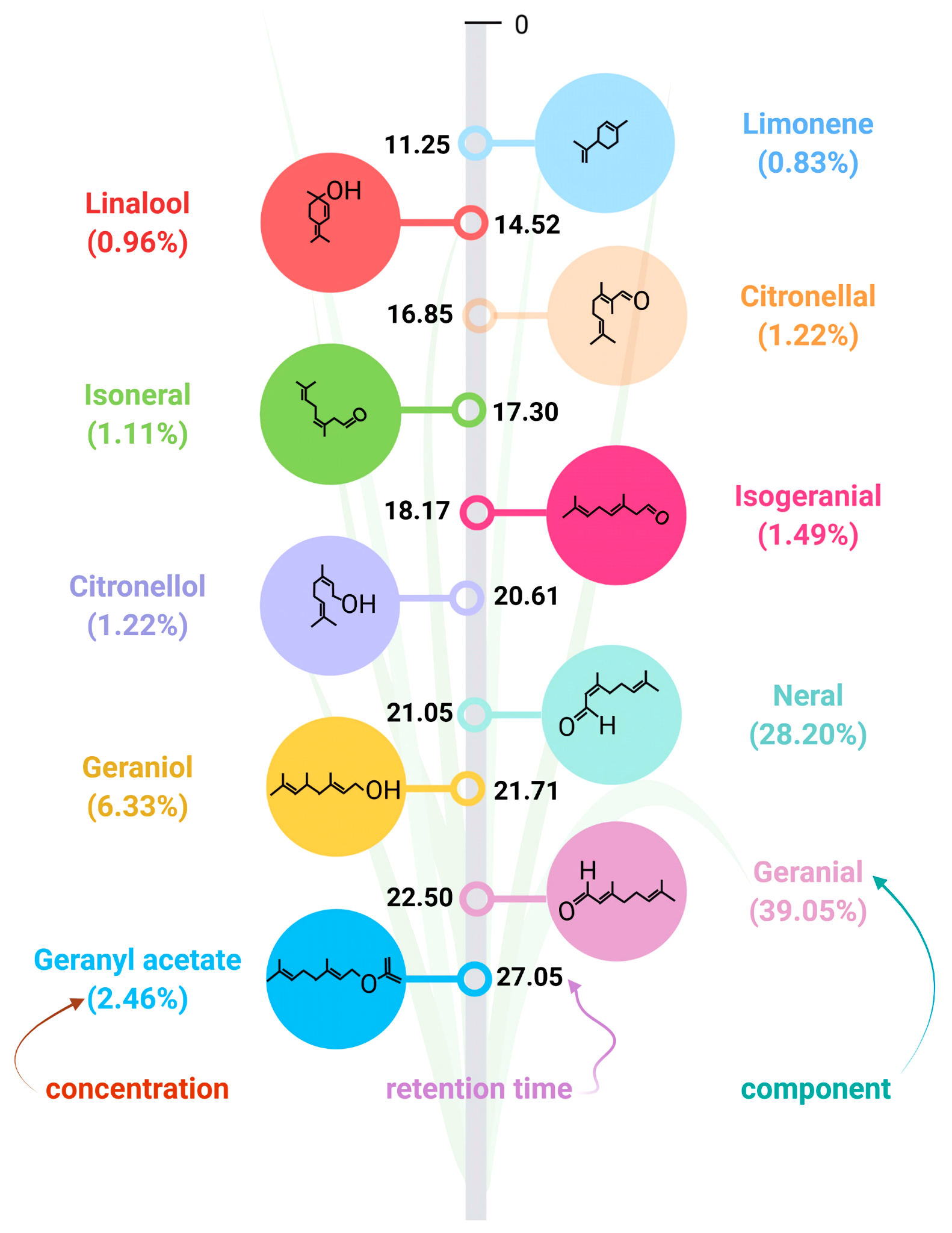
Bioactive compounds in lemongrass essential oil contribute to its aroma and biological activities. Adapted from MDPI.
Consumers today demand natural flavouring and antimicrobial agents, especially in EO. This has increased researchers’ attention to using plant-based essential oils.
LEO derived from Cymbopogon citratus is particularly interesting because of its complex chemical structure and multiple applications in the food industry, from flavouring agents and beverages to natural preservatives.
To accurately analyse LEO, it is essential to identify the oil’s precise composition. This is important for quality control, regulatory compliance, product authentication, and developing new compounds.
This analysis can also prevent any fraud that occurs and protect the consumer’s right to obtain pure ingredients without any contamination. The analytical technique used to analyse all volatile components and identify LEO’s composition is GC-MS.
How Does GC-MS Work?
GC-MS is like a scent detective because it can reveal the chemical basis of scent. In this technique, GC acts as a racetrack, separating volatile compounds into peaks based on their speed.
In contrast, MS acts as a fingerprinting machine, detecting each GC-separated molecule by its specific molecular structure.
Together, these techniques provide a powerful method for analysing the different components responsible for the scent of lemongrass.
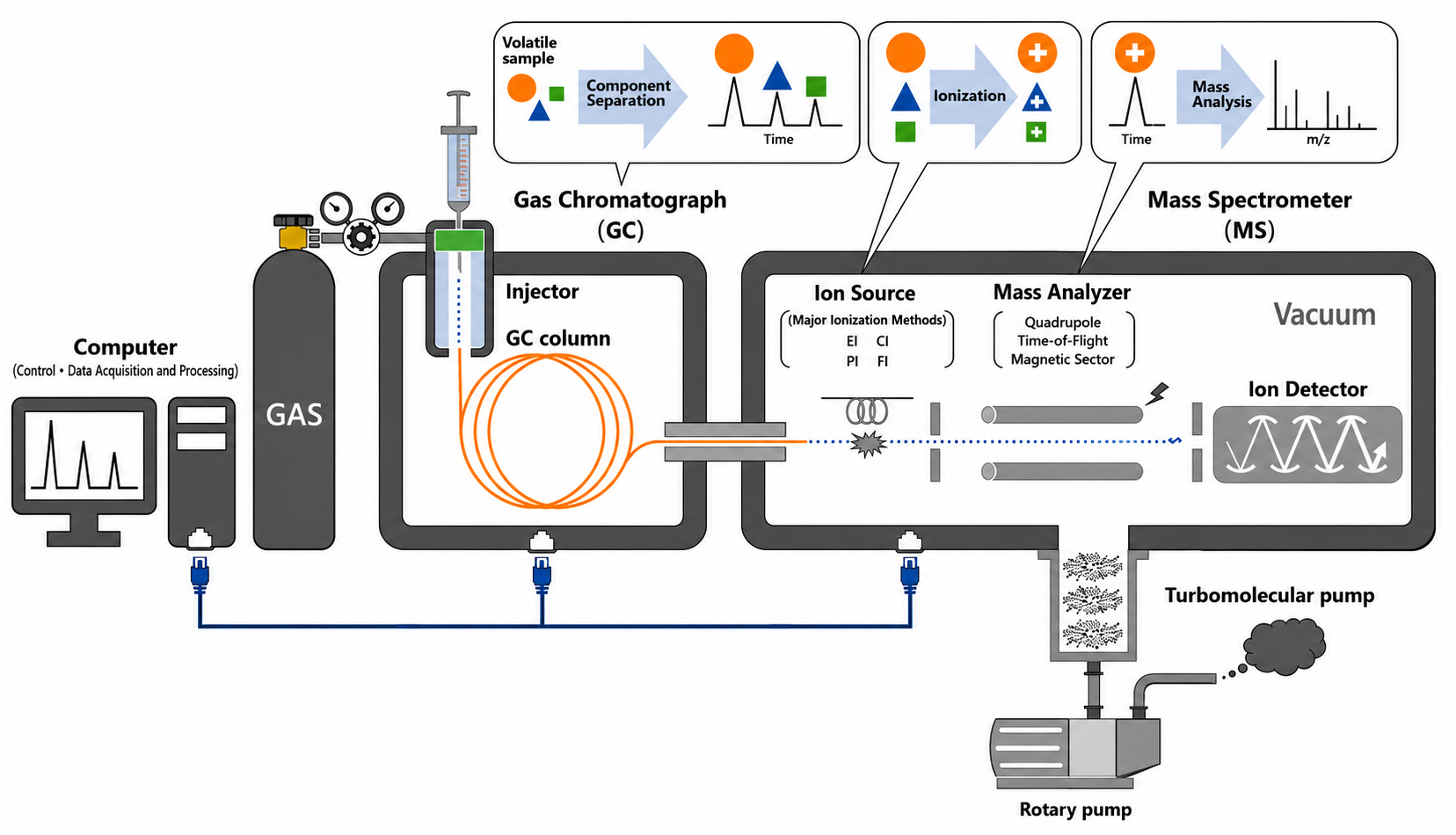
Schematic diagram of a gas chromatography-mass spectrometry (GC-MS) system. Adapted from JEOL.
- The analysis begins by extracting lemongrass essential oil and injecting it into the gas chromatograph.
- An inert mobile phase, typically helium, carries the sample through a stationary-phase-coated column.
- The volatile compounds separate based on their volatility and interactions with the stationary phase.
- The separated compounds then enter the mass spectrometer, where they are ionised and identified using spectral libraries.
- Finally, the chromatogram shows peaks corresponding to individual compounds, with citral commonly identified as the major constituent of lemongrass essential oil.
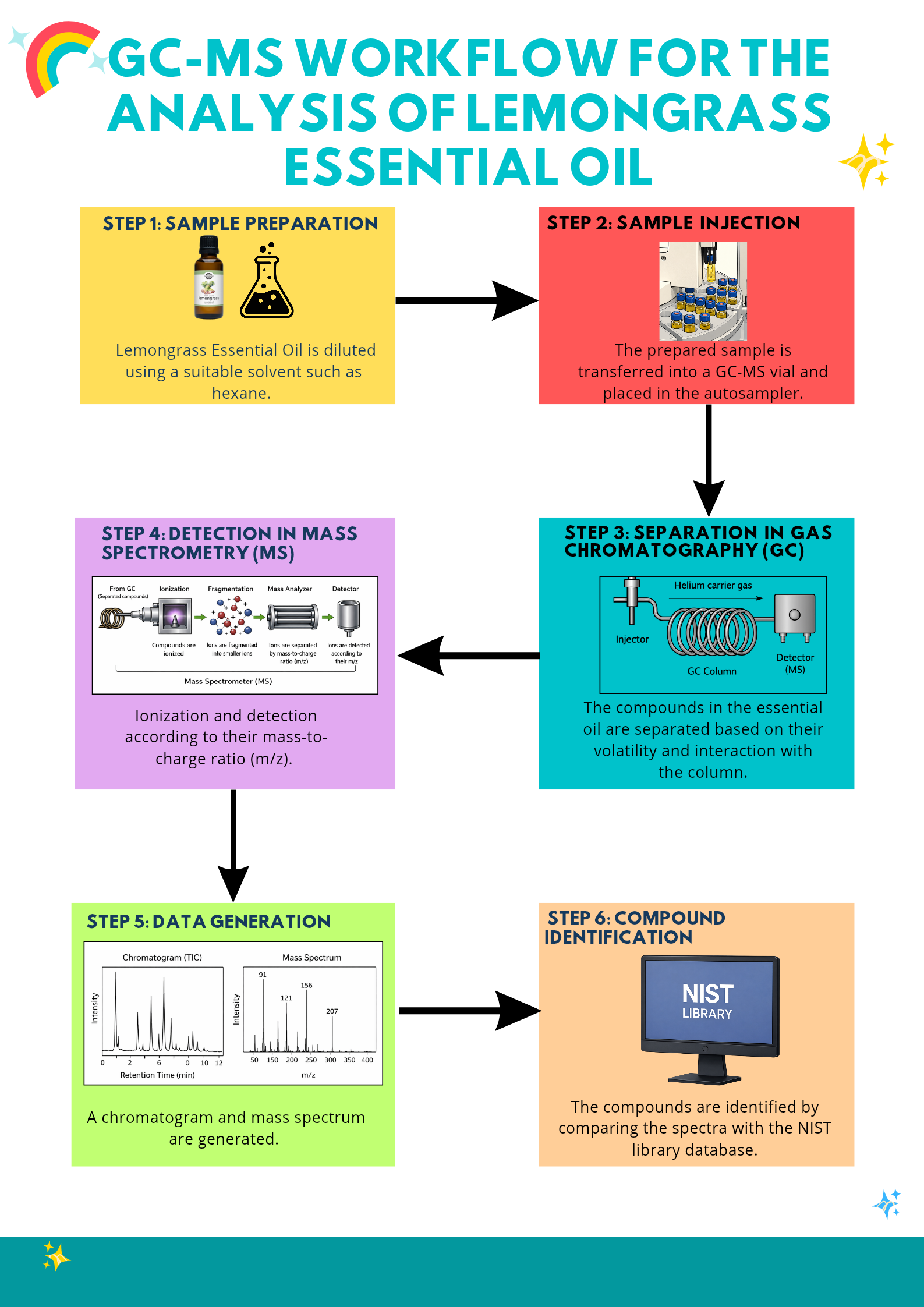
GC-MS Workflow for the analysis of lemongrass essential oil.
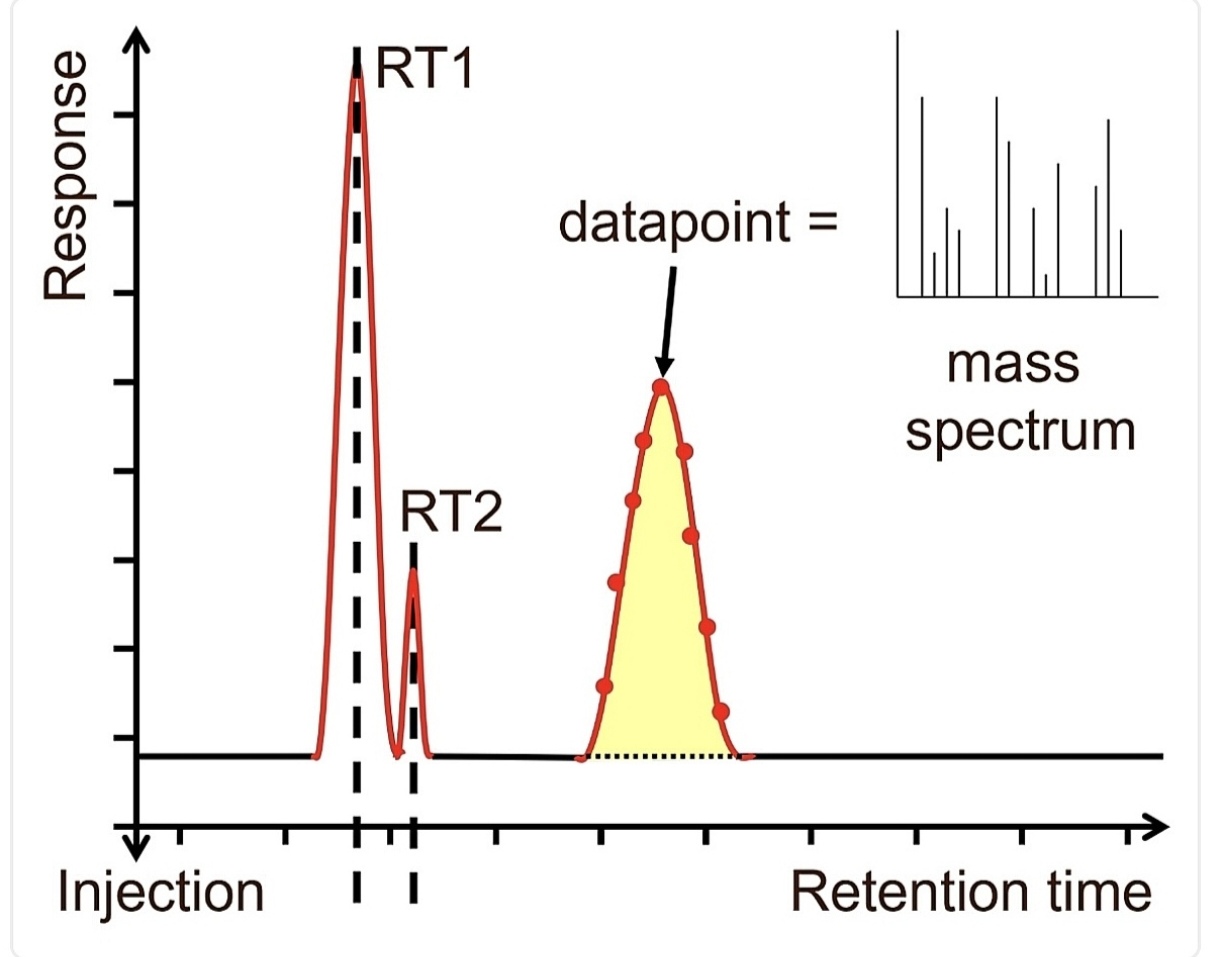
Example total ion chromatogram (TIC) output from a GC-MS. Obtained from Technology Networks.
The ‘x’ (horizontal) axis above shows the retention time (RT, in minutes) for each separated compound to move to the end of the GC column. In contrast, the ‘y’ (vertical) axis represents the magnitude of the electrical signal in response produced by each compound.
How Does GC-MS Benefit Lemongrass Essential Oil Studies?
GC-MS offers many advantages for studying LEO, especially in the Malaysian market. For example, it helps determine the chemical composition accurately. Using GC-MS, 68 compounds were characterised in LEO from a recent study.
When comparing extraction methods for volatile compounds, GC-MS provides more accurate identification and quantification, making it the preferred technique for EO analysis over conventional methods such as Fourier Transform Infrared Spectroscopy (FTIR).
For quality analysis, GC-MS helps determine the concentration of citral and its other products to ensure LEO is produced according to industry standards such as ISO 3217:1974 and to verify its authenticity.
Prepared by:
Nur Jihan Syazlin Binti Mahadi, Nur Syafiqah Binti Mohd Jafree, Nur Amnie Umairah Binti Ibrahim, Muhammad Nur Syarifuddin Bin Mohd Tarmeddy, Siti Aina Akmal Binti Sheikh Ahmad Kamal, Muzfirah Alya Binti Mesni, Dr. Hana Syafiqah Binti Sayeed Ibrahim, Dr. Mohamad Zulhafiz Shafiq Bin Zulhilmi Cheng
Faculty of Science and Technology (FAST)
Universiti Tun Hussein Onn Malaysia (UTHM)