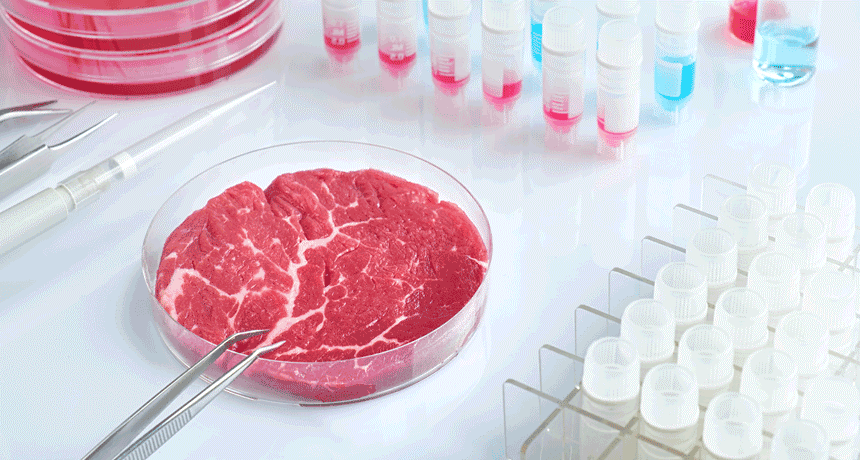
Humankind has been consuming meat since the Stone Age, and our ancestors ate any animal they could catch or find. However, science has found a way to produce meat without killing a single animal. How? Through lab-grown meat. This new “meat” production option has consistently drawn public attention.
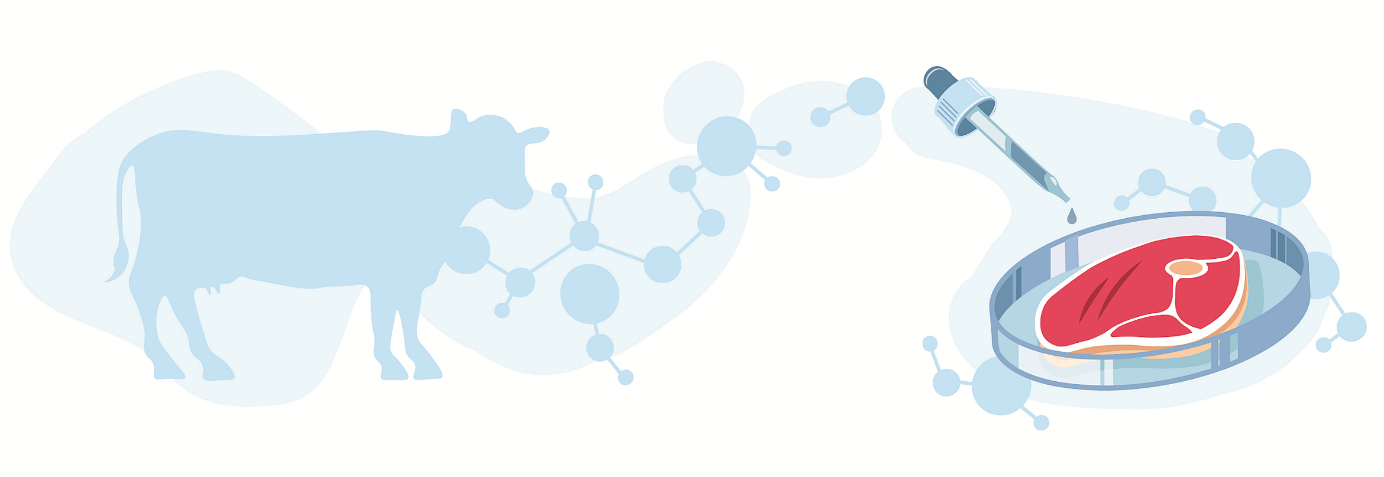
What is lab-grown meat? As the name suggests, the meat is grown in a laboratory rather than from raising and slaughtering livestock.
Is lab-grown meat any different from traditional meat? Both are biologically similar. However, the sources of these meats differ: lab-grown meat is produced in a lab, whereas traditional meat comes from animals raised and slaughtered.
Lab-grown meat is only possible with stem cells, the building blocks of muscles and other organs for the specific animal of interest.
Consider an example of lab-grown meat from cows. Researchers will begin creating cultured meat from cow stem cells by placing them in petri dishes with the necessary nutrients to grow muscle cells.
When sufficient muscle fibres have grown, we will get lab-grown beef.
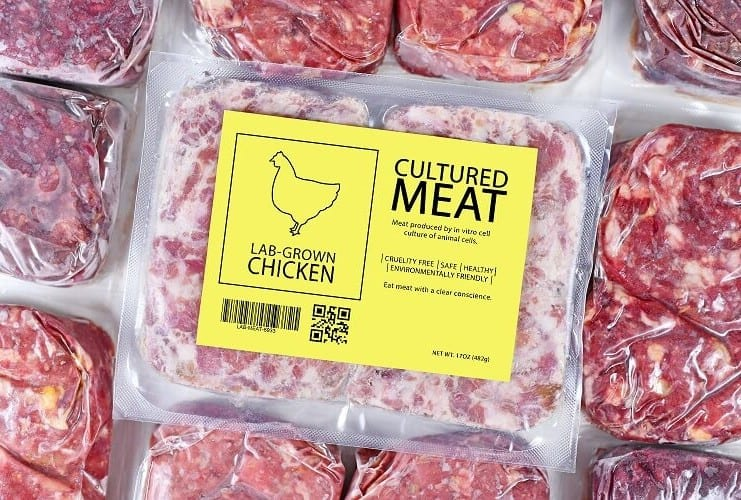
Lab-grown meat aims to reduce or replace conventional ways of producing animal meat.
The production of conventional meat has many negative effects on humans and the environment, making lab-grown meat a potential alternative to reduce them.
Water pollution is a common issue in the livestock industry, as animal waste is washed into nearby water sources. Water pollution will affect not only animals but also humans who depend on water sources for drinking.
Contaminated water can cause various health issues, including headaches, runny noses, and diarrhoea in humans.
Besides, clearing land for farming causes many trees to be cut down, contributing to greenhouse gas emissions, which are a factor in climate change.
This makes lab-grown meat eco-friendly as it requires 45% less energy, 99% less land, and 96% fewer greenhouse gas emissions than traditional meats.
One might wonder, what drives the demand for lab-grown meat globally?
Lab-grown meat can create a more sustainable global food system by reducing animal slaughter and easing pressure on food systems, which is driven by the negative effects of conventional meat.
Lab-grown meat can also help address food security issues associated with the growing human population.
To date, Singapore is the first and only country to approve lab-grown chicken meat produced by a US-based company for public consumption.
Although many countries are still considering lab-grown meat, some have taken the initiative to develop policies and guidelines, which is a huge step for the industry.
Many claim that lab-grown meat cannot replace conventional meat, as its production is expensive and yields less meat than traditional meat.
Recent advances in science prove this wrong, as researchers can produce different types of lab-grown meat, such as chicken, duck, and lamb, at reasonable prices. Down the road, prices are expected to drop to be similar to or lower than those of conventional meat.
Researchers can control the nutritional content of lab-grown meat during its production.
Growing meat in labs allows researchers to add necessary nutrients and control fat content, making lab-grown meat nutritious and a healthier substitute for conventional meat.
This is because lab-grown meat does not contain saturated fats and growth hormones, which are commonly found in conventional meat, that cause heart diseases, diabetes, and cancers.
The lab-grown meat industry is booming because of advances in science, and in just a few years, we could see ourselves ordering it from restaurant menus and enjoying it.
Prepared by: