Introduction
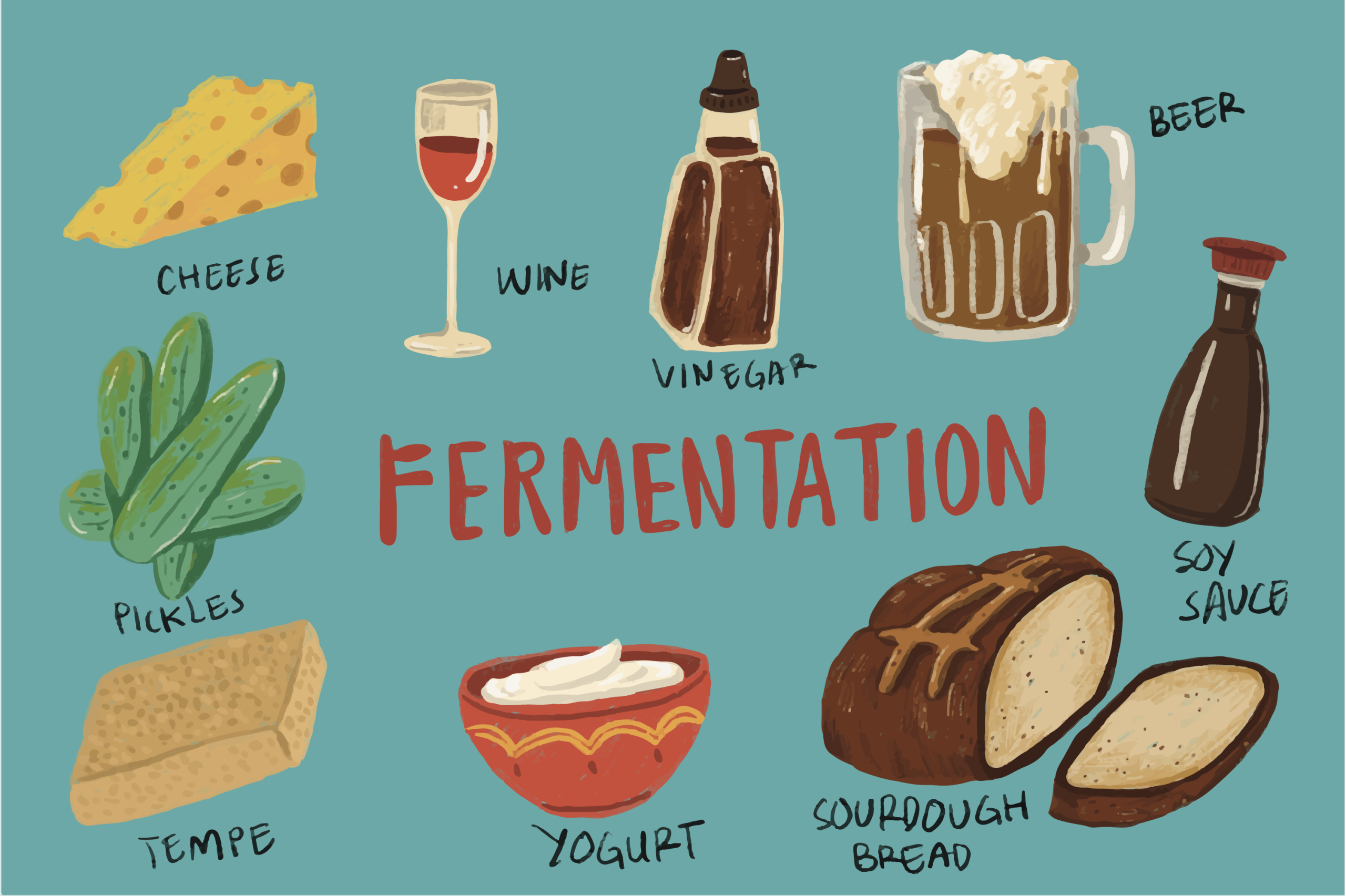
Fermentation is a complex biological process that has influenced human diets for thousands of years and is hidden in common foods, where microscopic microbes naturally convert raw nutrients into more stable, tasty foods. Archaeological data suggest this method may have been practised as early as 10,000 B.C. Fermentation is a natural and sustainable method of food preservation because it does not require artificial or chemical additives.

Kimchi is one example of a fermented food. Shutterstock
Microorganisms have a certain degree of “magic” as they produce the lactic acid, alcohol, and acetic acids that are commonly found in many foods. Despite this, understanding of the fermentation process remains limited.
Let us now take a close look at the unique characteristics and types of fermentation: lactic acid, alcohol, and acetic acid.
Lactic Acid Fermentation: The Science Behind Sour and Preservation
Lactic acid is an organic acid that is naturally occurring and can be synthesised through chemical synthesis or fermentation. Lactic acid fermentation is a type of anaerobic respiration where sugars (primarily glucose) are converted into cellular energy and lactic acid by lactic acid bacteria (LAB) or other microorganisms.
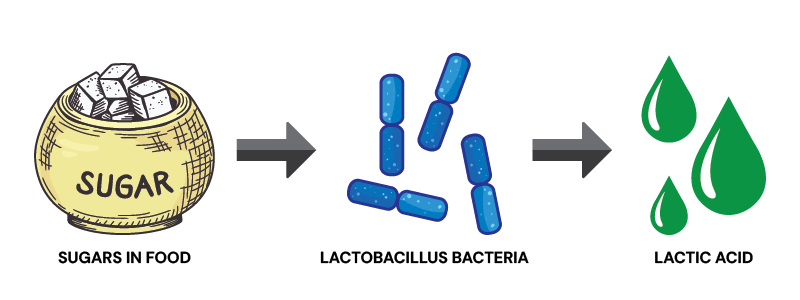
The formation of lactic acid. (Diagram components licensed from Shutterstock)
One of the most common products of lactic acid fermentation is yoghurt. In this fermentation process, raw milk is first pasteurised and homogenised, then cooled to about 40°C. After that, a starter containing lactic acid bacteria is added and mixed well. The milk is fermented at around 40°C. Once fermentation is complete, it is cooled, and yoghurt is produced.
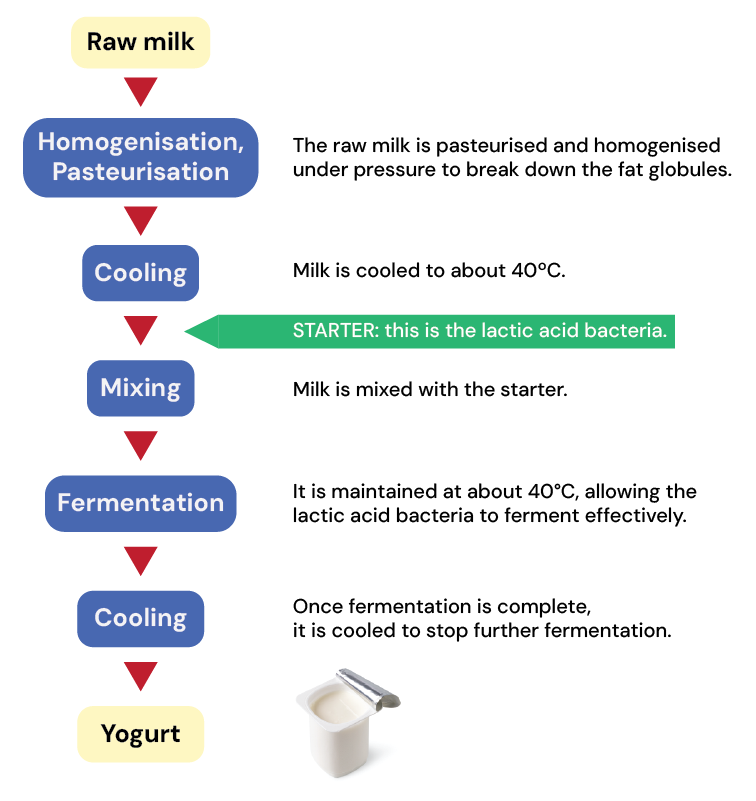
The image shows the process of making plain yoghurt. (Source)
Apart from yoghurt, many products can be produced with lactic acid fermentation, such as cabbage (Korean kimchi), cucumbers (pickles), fermented milks (cheeses), protein meat substitutes (Indonesian tempeh), pastes produced by fermentation of cereals and legumes (Japanese miso), and fermented meats (salami).
Alcoholic Fermentation: The Science Behind Brewing and Baking
Alcoholic fermentation is the anaerobic transformation of fructose and glucose (sugars) into ethanol and carbon dioxide. Yeasts, typically Saccharomyces cerevisiae, or certain bacteria, carry out the process, converting carbohydrates into ethanol and carbon dioxide. In bread-making, carbon dioxide released during alcoholic fermentation makes the dough rise and gives bread its soft texture.
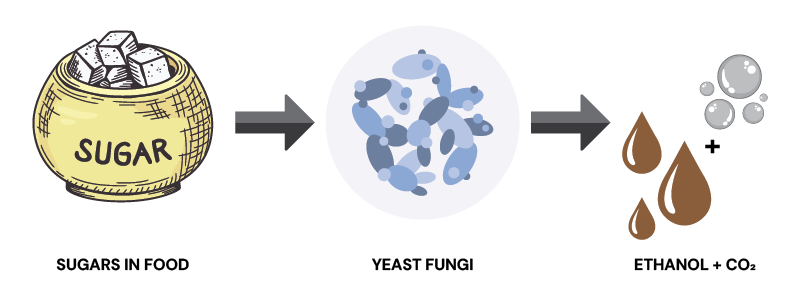
The formation of alcoholic fermentation. (Diagram components licensed from Shutterstock)
Wine, one of the most popular alcoholic beverages, is made through alcoholic fermentation. The process begins with harvesting ripe grapes. Then, the grapes are gently crushed and pressed to separate juice from the skins and seeds. Yeast is added to the juice to start fermentation, which converts sugar into alcohol. The juice is fermented at between 15-30°C. After fermentation, the wine is aged in wooden barrels or stainless-steel tanks to develop extra aromatic flavour.
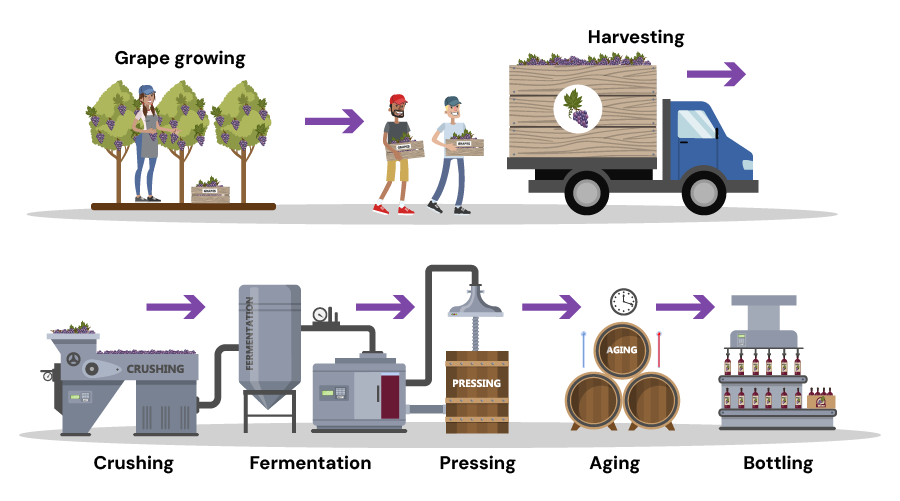
Winemaking process. Shutterstock
Alcoholic fermentation produces several popular foods and beverages. Wine, beer, cider, and sake are among the drinks consumed globally.
Acetic Acid Fermentation: The Science Behind Food and Beverage Production
Acetic acid is a key component of vinegar, formed through the oxidation of ethanol by acetic acid bacteria (AAB) such as Acetobacter and Gluconobacter. AAB play a crucial role in producing fermented foods and beverages such as vinegar, kombucha, water kefir, and lambic. These bacteria produce significant metabolites through biological processes that affect flavour, texture and safety.
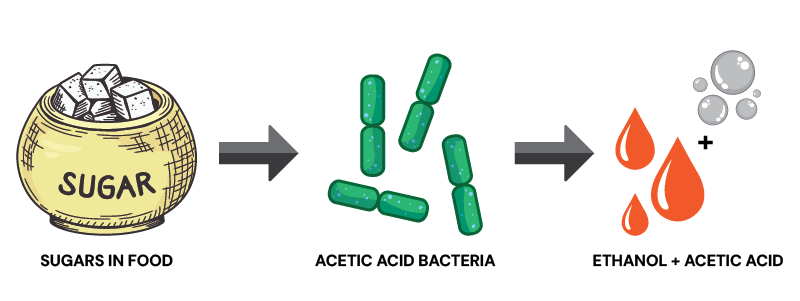
Acetic acid formation. (Diagram components licensed from Shutterstock)
Kombucha is a fermented tea beverage prepared from black tea or green tea using a SCOBY (symbiotic culture of bacteria and yeast). The SCOBY produces a biofilm through the symbiotic association between yeasts and acetic acid bacteria, which resembles a fungal carpet when developed under static conditions. This cellulosic structure, also referred to as “fungus tea”, forms on the surface of cooled and sweetened tea.
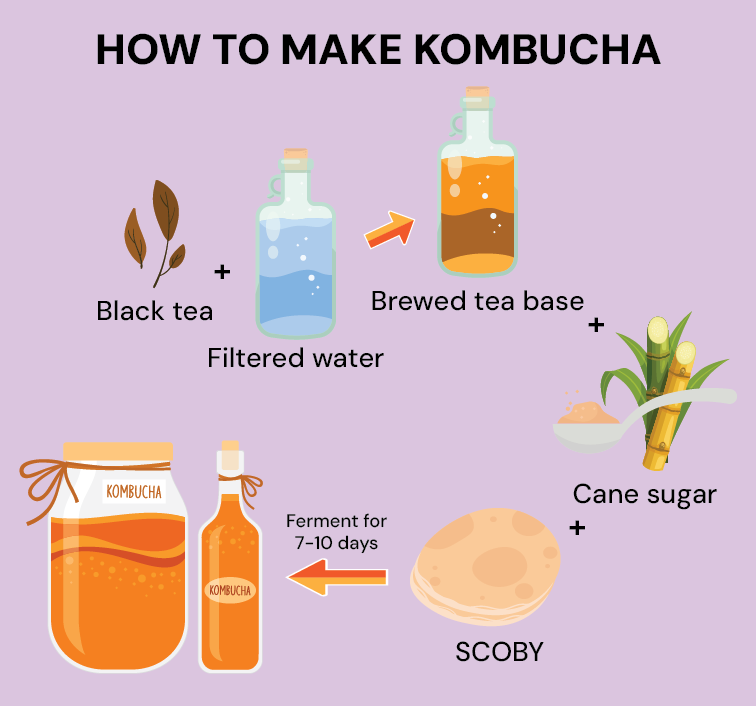
During kombucha fermentation, yeasts ferment sugar to ethanol. At the same time, acetic acid bacteria oxidise ethanol and acetaldehyde into acetic acid using acetaldehyde dehydrogenase. The bacteria oxidise ethanol into acetic acid, which can produce the beverage’s distinctive sour flavour and reduce its pH.
Conclusion
Fermentation is a natural biological process that uses tiny living things like bacteria and yeasts to preserve and give flavourful foods. Three main kinds of fermentation are lactic acid fermentation, which changes sugars into energy and lactic acid, such as in yoghurt. Alcoholic fermentation, where yeasts change sugars into ethanol and carbon dioxide, helps make bread and wine and acetic acid fermentation, which changes ethanol to make vinegar and kombucha. In conclusion, these natural biological processes are essential in food production because they enhance food safety and flavour while extending shelf life by preventing spoilage.
Prepared by:
Khairunnisa Umairah Binti Kamal Bahrin, Muhammad Nazarul Nizam Bin Abdul Aziz, Nur Khadijah Binti Abd Kadir, Nur Syafiqah Binti Anizan, Wafda Khadijah Binti Khairul Zaman