Scientists have their hands full with so many things at once – juggling decorated careers with just as colourful lives. Let’s peek into the world of quantum physics and the life of Professor Dr Raymond Ooi, Dr. rer. nat.* FASc, ASM Fellow, and Professor of Physics at Universiti Malaya.
Note: Dr.rer. nat. is short for Doctor rerum naturalium (Latin for “doctor of natural sciences”), which is a doctoral academic degree awarded by universities in some European countries (e.g., Germany, Austria, and the Czech Republic) to graduates in mathematics, physics, chemistry, biology, geology, computer science, pharmacy, other natural sciences, and similar areas.
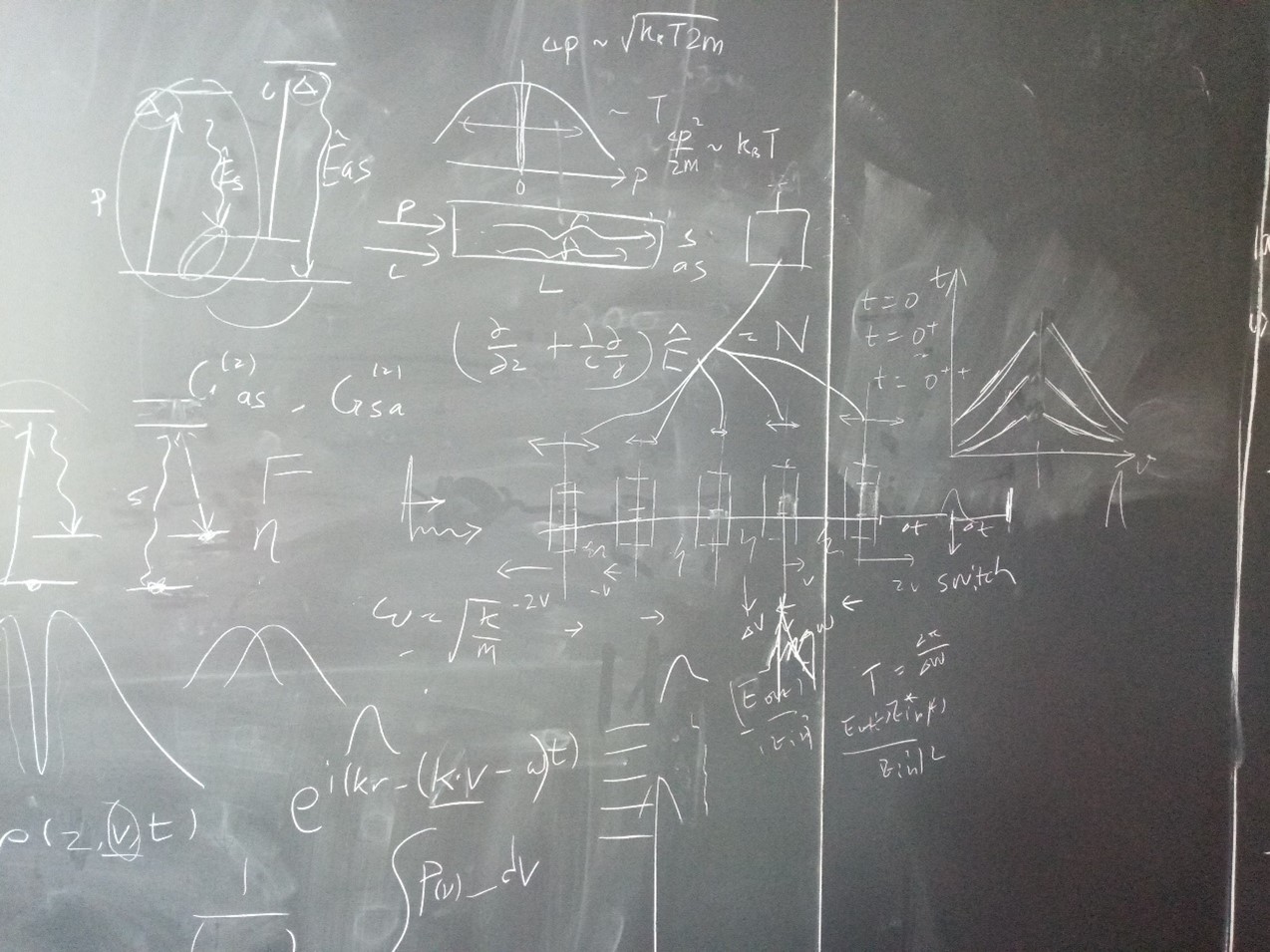
Here is where our ideas & thoughts flow through equations.
What inspired your career in STEM? (this could be an event or significant moment or someone like a parent, teacher, or community)
It is due to many events that have unfolded. I am the type who wants to explore and is attracted to knowledge, especially physics and astronomy. I went to the British Council Library. I felt compelled to pursue the subject when I looked at the equations in the physics books in the library.
I was inspired by a prodigy friend who went to Cambridge and a mathematics teacher at Penang Free School who often adored Galileo Galilei, Isaac Newton, Albert Einstein, and Srinivasa Ramanujan. Also, I was inspired by and learned a lot from a USM lecturer who was very passionate about astronomy and stargazing.
I would always tune in to watch science documentaries on TV, like The Astronomers, Beyond 2000 and the innovative inventor Dr NakaMats. I also enjoy science fiction movies.
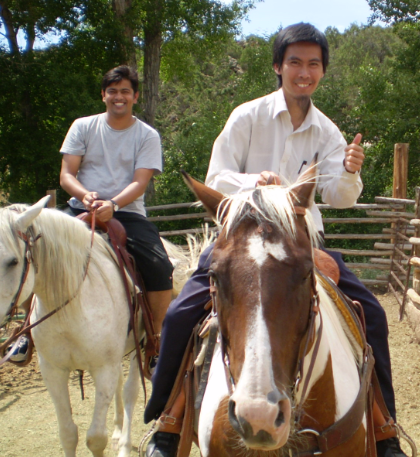
Horse riding at Casper workshop on Quantum Science.
What is your educational background, where do you work now, and what interests you the most about your work?
I am a professor of physics at Universiti Malaya. I am interested in topics about the interactions between photons and matter. My interest is in developing theory and experiments on the use of laser pulses to control and store quantum information in materials. As I moved on, I became interested in sharing my philosophy on sustainable coexistence with nature, green initiatives, and understanding the unexplained, including the mind and the mechanisms of life.
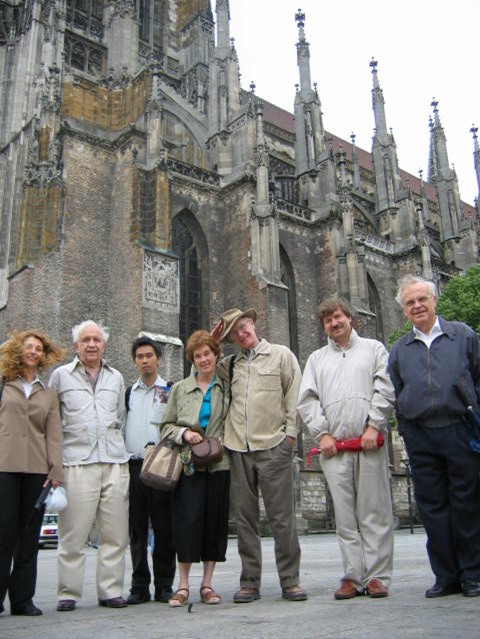
Visit to Munich during Einstein’s 100th Anniversary.
What area of research do you do, and why is it important to society?
I am researching quantum optics and quantum information technology, particularly developing theories and experiments that use laser pulses to control interactions between photons and atoms or molecules in materials. This fundamental research gives rise to marvellous possibilities, such as the teleportation of information, communication that is unconditionally secure against eavesdropping, and computers that can solve currently impossible problems. Quantum communication has already been commercialised and is highly beneficial to security in banking. Having said that, a quantum computer capable of exceeding present-day supercomputers has yet to be demonstrated.
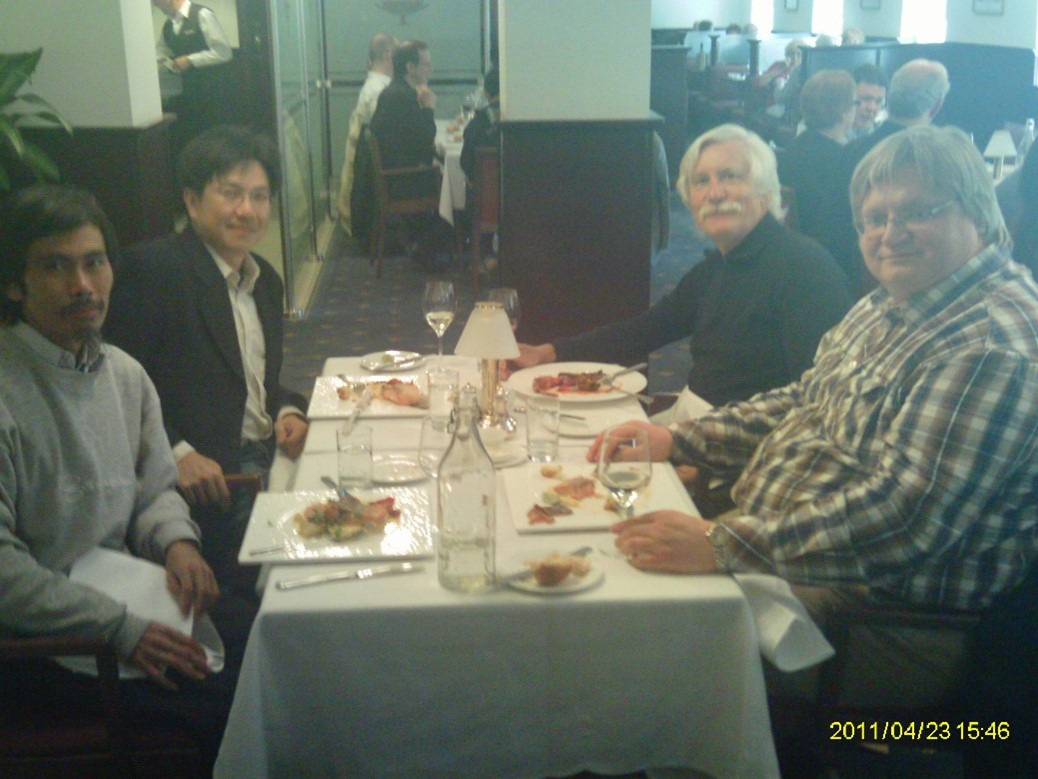
With Australian pioneers in quantum optics and nonlinear photonics.
What are some of the biggest challenges you have faced in your research, and how did you address them?
I have an interest in many things, but time is limited. It is a challenge to be disciplined and prioritise certain things I want to achieve.
Getting good students to pursue this field is challenging because nowadays students tend to prioritise material gain and success over self-interest or knowledge. There are interesting and challenging scientific and technical problems I am trying to address that require time, passion, and perseverance. Of course, there are external factors beyond our control, such as an unconducive research environment, inflexible procedures, limited funding, a lack of understanding and cooperation from management, and a lack of critical mass of expertise in this frontier field. As such, I have to be hands-on, work very hard, and build things single-handedly.
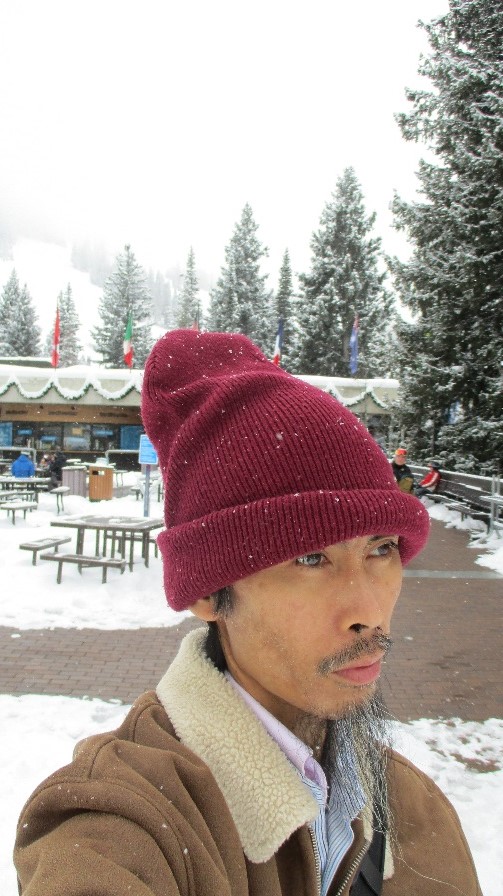
Skiing while at the Progress in Quantum Electronics Conference.
Many think scientists only work in labs, but that’s not always true. What do you think of this perception? Where have you done the research for your work, or where have you worked in the past?
As a theorist, I do not need to confine myself in the lab with a pen and paper or a laptop. Besides the office, I can “daydream” about science anywhere, especially in peaceful places like parks, forests, beaches, and mountains. One can work anywhere that is comfortable. We only need to be physically present in the lab when conducting experiments. We can conduct discussions with researchers and students online or face-to-face.
Can you share any interesting or funny stories while pursuing your research?
During my postdoc years, we organised a Festschrift1 for John Archibald Wheeler, and while preparing the publicity materials, another postdoc student commented, “his head looks like a wheel”.
1 A Festschrift is a collection of writings published in honour of a scholar.
What motivates you when you feel “down,” and how do you come back stronger & more enthusiastic at work? What do you find most rewarding about your job?
I realise that things and events come and go; sometimes it is up, sometimes down. Observing this, I try not to be held back by any situation- keep going and do what I must.
I think publication is a fair reward. What you write and publish stays with you; your name is always on it.
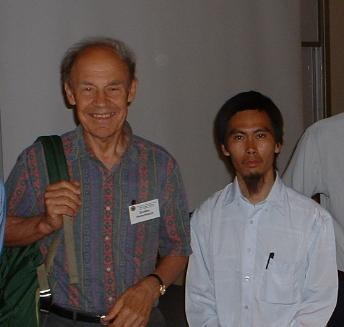
With Nobel Laureate in Chemistry, Professor Dudley Herschbach.
What advice would you give young people interested in pursuing a career in STEM?
Young people need to learn more from the elders and the wise, not just from the internet or social media. They need to spend some time immersing themselves and observing the natural world.
It is important to identify a STEM area you are passionate about rather than just following someone else. It is useful to consult experienced people to get more information and opinions. In planning one’s career, try to engage in relevant jobs that provide relevant experience. While it is good to aim high and pursue one’s dreams, it is also important to be flexible and open-minded.
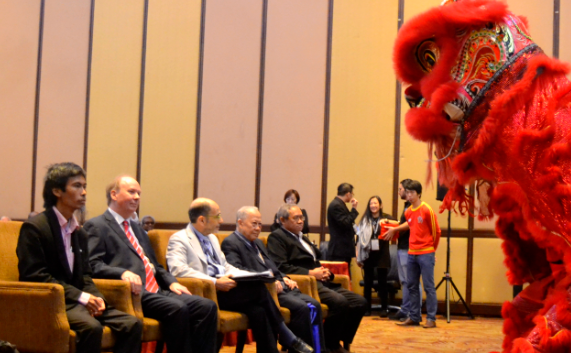
Chairing the International Conference on Quantum & Nonlinear Optics in 2018.
What skills do you think they should develop?
The important basic skills are time management, reasoning, analysis and problem-solving. Personal care is also necessary to maintain good mental and physical well-being and to avoid interruption of daily activities due to health-related problems. They must acquire the skill of sifting through online information and double-checking everything when in doubt. There are many skills to learn, but it is not necessary to learn all. One has to set priorities and learn only the skills most relevant to one’s needs, goals or direction in life and career. Do some research to learn about recent developments and frontiers in science and technology. Never jump into an area without sufficient knowledge of what it is about.
What areas will be most exciting to explore in the coming years?
I would say quantum technology is a very exciting field to explore in the coming years, as its capabilities are impressive and rapid progress in many countries is driven by significant financial investment. Spin-up companies and industries selling quantum products are booming. Artificial intelligence (AI) and machine learning (ML) are also advancing rapidly and are expected to significantly impact various fields. Advancements in deep learning, reinforcement learning, and natural language processing are opening new exciting possibilities to explore. The most exciting might be the integration of AI with quantum technology. 🐝