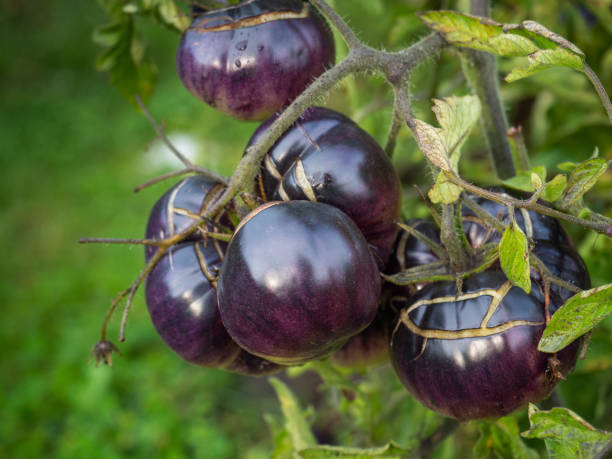
The Purple Tomato.
Superfoods are gaining popularity among consumers because they serve beyond basic nutritional needs, such as vitamins and minerals and provide exceptional nutrients. These exceptional nutrients are phytonutrients, or plant pigments, that can prevent diseases caused by ageing, during which our body loses its usual functions and slows down. These phytonutrients often come in deep red, orange, and purple colours. Hence, it is said that eating a colourful diet keeps us healthy. Some examples of superfoods include avocado, chia seeds, beetroot, and purple tomatoes.
Scientists have now turned the common tomato into a superfood through genetic modification. Genetic modification, or GM, inserts beneficial traits into crops from unrelated varieties. The usual red tomato is rich in lycopene, a plant pigment that gives tomatoes their red colour. Scientists at the UK’s John Innes Centre have modified the red tomatoes to deep purple by adding genes from a snapdragon flower and Arabidopsis (a weed). The purple pigments are anthocyanins, which are also found in blueberries.
Anthocyanins belong to a class of compounds called flavonoids. They have antioxidant effects, destroying free radicals. These unstable molecules damage our cells and increase the risk of diseases like cancer, cardiovascular diseases, diabetes, Alzheimer’s disease, Parkinson’s disease, cataracts and age-related macular degeneration. These qualities make the humble tomato a superfood.
Since the anthocyanin gene is from the snapdragon flower, scientists can’t use conventional breeding such as crossing or hybridisation. We know crossing a papaya and a pineapple is impossible. The genes responsible for anthocyanin production in snapdragons are spliced and inserted into tomatoes, along with genes from Arabidopsis, to help tomatoes produce the purple pigments. The scientist behind this tomato, Professor Cathie Martin, conducted a study on mice in 2008 and found that mice fed purple tomato powder lived nearly 30 % longer than those supplemented with powder from normal tomatoes.
Many might be concerned about the safety of genetically modified foods. Any genetically modified crops require stringent testing to ensure their safety to humans, animals and the environment before they are approved for cultivation and consumption. Scientists and regulators have conducted all the tests to assess the safety of purple tomatoes and found that they pose no risks to human health. Furthermore, anthocyanins have a long history of safe consumption in our diet.
In 2014, purple tomatoes were grown in a glasshouse in Canada to extract their juice for further testing. Results show that they are safe. Now, Norfolk Plant Sciences, a US-based company, is awaiting approval from US authorities to make the seeds available to farmers, enabling them to supply fresh tomatoes and related products, such as sauces and juices, to shops. This news will be exciting for consumers.
The other common question from opponents of biotechnology is: why not just eat other foods rich in anthocyanins, like red dragon fruit, cranberry, blueberry, or purple cabbage? The answer is that we need a variety of foods to suit consumers’ dietary preferences and the availability and affordability of those foods. This option helps reduce the rising risks of the diseases mentioned earlier. Scientists have developed other superfoods, such as pink pineapple, which is already available but not widely marketed. In contrast, tomatoes are widely used in many dishes, are available everywhere, and are inexpensive. This ubiquity will naturally make the purple tomato a soon-to-be-available superfood affordable to everyone!