When I first chose to study pure chemistry, I thought I knew exactly where my future was heading.
I was drawn to the field of separation science, also known as separations, which resolve complex mixtures into their individual components. To me, it felt like solving a fascinating puzzle.
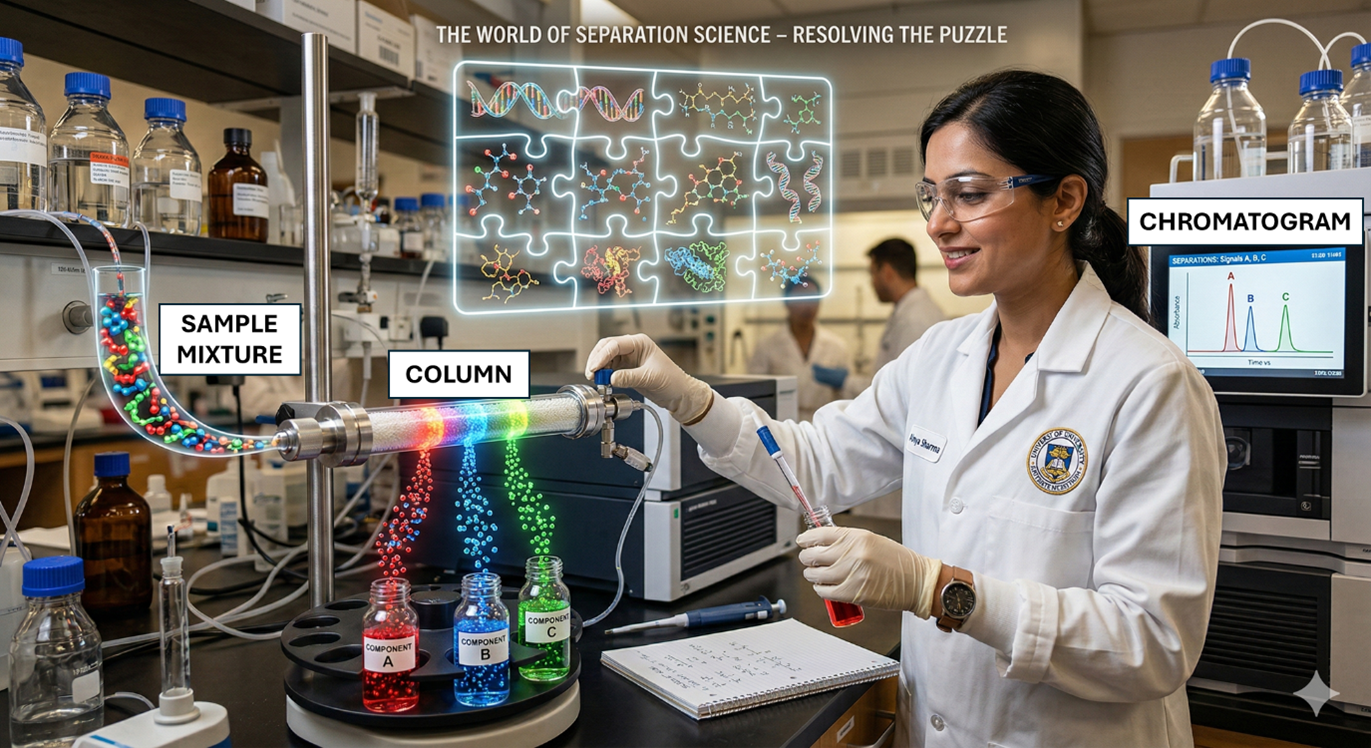
Separation of mixtures into individual components shown as chromatogram peaks. (Image is AI-generated)
Watching those peaks appear neatly on a screen was incredibly satisfying. Chromatography columns, solvents, and retention times were my everyday vocabulary.
I believed I had found the niche I would commit to for my entire career. But science, much like life, does not always stick to the script.
Stepping Into the Unknown
During my postgraduate studies, circumstances forced me to leave behind separations. My funder asked me to explore an entirely different area: electroanalytical chemistry.
This field relies on electrical properties, such as current and voltage, to analyse a substance’s chemical makeup.
I remember how unsettling that shift was. Terms like electrodes and potentiometric sensors were completely foreign to me, and I struggled to connect the concepts in my head.
My first encounter with a cyclic voltammogram stands out.
Instead of the clean, sharp peaks of chromatography, I saw confusing waves and curves. It looked like a language I couldn’t read, and I genuinely wondered if I belonged in this new field.
A Small Breakthrough
Slowly, that feeling of being an outsider faded. Separation science had trained me to ask what was inside a mixture.
Still, electroanalysis taught me to listen to molecules when electricity interacted with them. It was less about physical separation and more about interpreting chemical signals.
These measurable electrical responses tell us exactly what a substance is and how much of it is present.
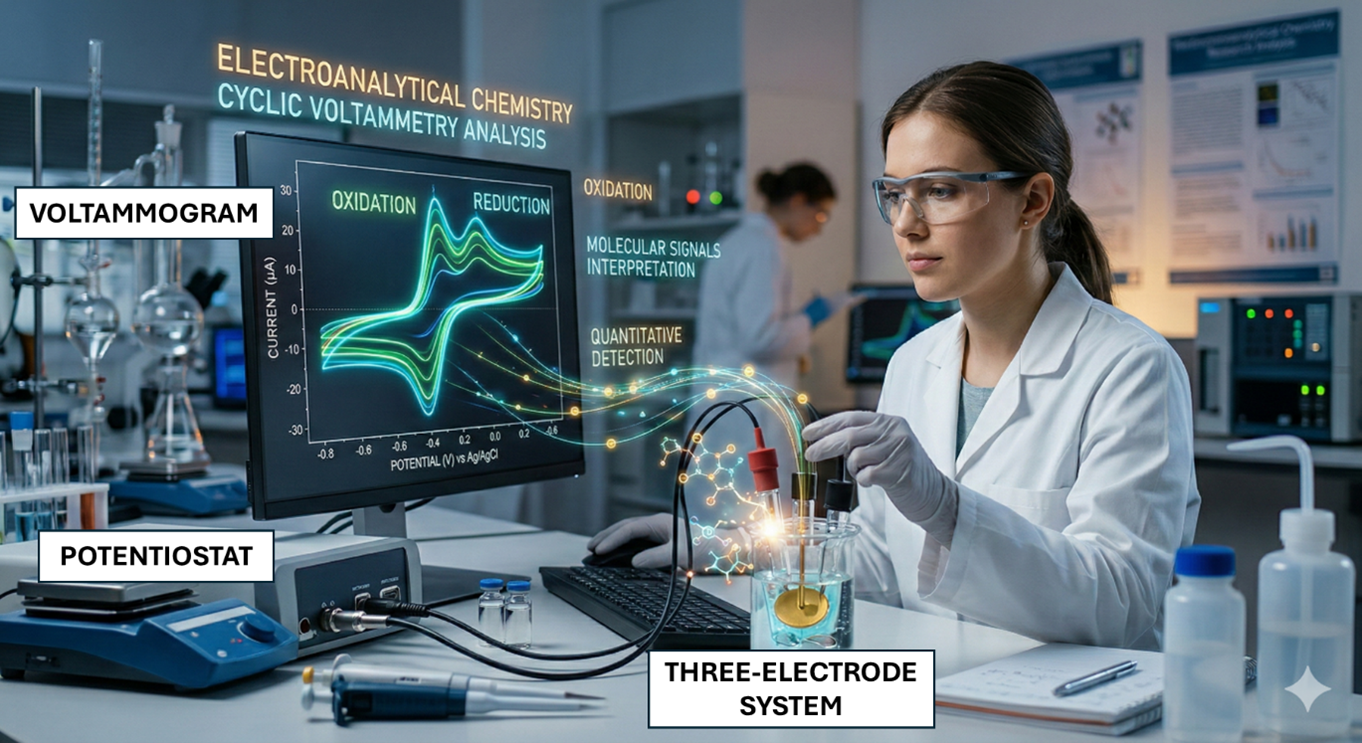
Three electrodes connected to a potentiostat measuring current-potential via voltammograms. (Image is AI-generated)
My breakthrough happened during a simple experiment: measuring pH. As I watched the number appear on the screen, something clicked.
It felt strangely familiar, almost like separation science expressed differently. Instead of retention times, I worked with potentials; instead of solvents, I thought in terms of electrolytes.
The rules had changed, but my curiosity to understand matter remained the same.
Finding My Place
What initially began as an unwanted detour became my main road. While separation science enabled me to separate mixtures, electroanalysis allowed me to convert electrical signals into real-time measurements to detect and monitor substances.
I realised how practical this field is. It connects directly to real-world needs:
- Environmental monitoring: Detecting pollutants in water to protect ecosystems.
- Healthcare: Ensuring accurate blood pH measurements in hospitals.
- Industry: Confirming material purity to support safety standards.
I was stepping into a field that provides practical solutions to pressing societal problems.
Looking Back
Today, I no longer view this journey as abandoning separations, but as a natural evolution.
The discipline, precision, and patience I developed in separation sciences have enriched my approach to electroanalytical chemistry.
It brings me great joy to share this glimpse of myself working on my electroanalytical experiments during my PhD.
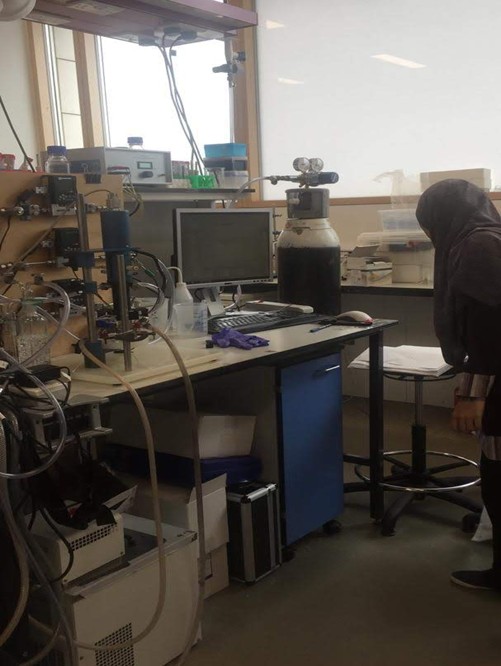
This image was taken during my PhD years, while I was training in the electrochemical cell setup at the Manchester Institute of Biotechnology.
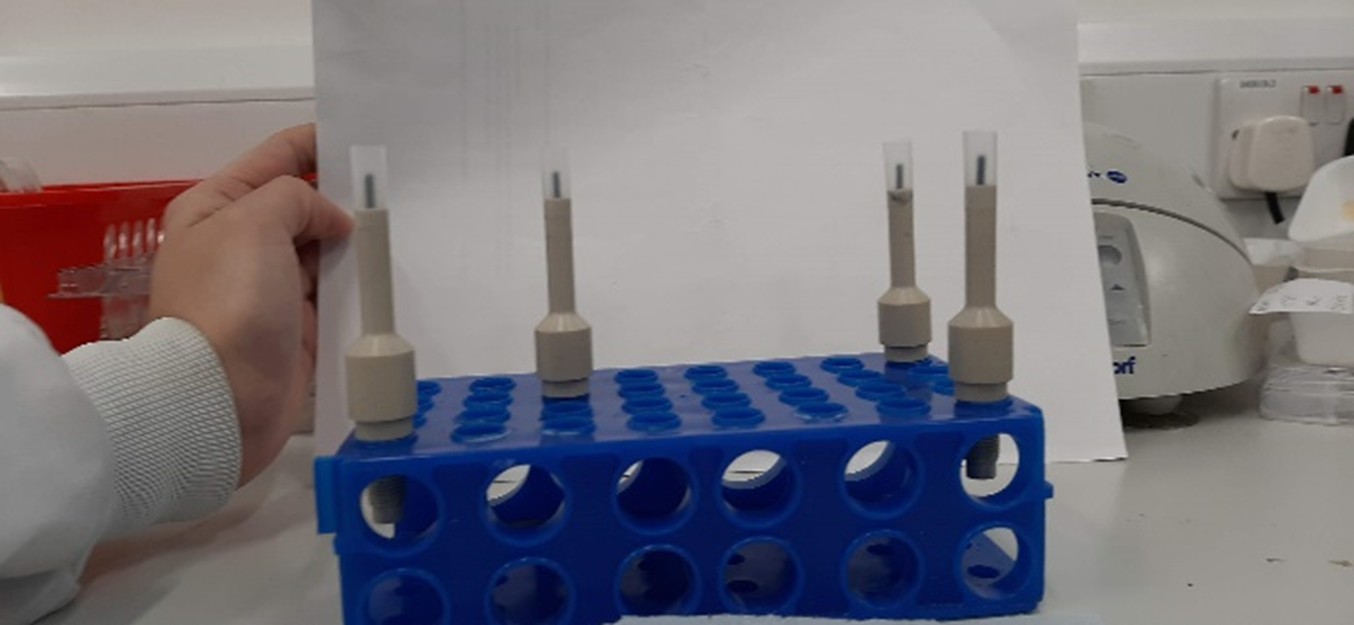
This image shows the process of fabricating my pyrolytic graphite edge electrode through testing and trials.
Being pushed into an unfamiliar field turned out to be my greatest strength. I discovered that a career in science is rarely a straight line.
By stepping outside my comfort zone, I learned to adapt and find joy in the unexpected.
The most rewarding parts of our careers often happen when we dare to embrace the path we never planned to take.
By stepping outside my comfort zone, I discovered more than a new research area. I found a new version of myself as a scientist.
I learned to adapt, to listen, and to find joy in the unexpected.
The biggest takeaway from this whole experience is simply this: the most rewarding parts of our careers often happen when we dare to embrace the path we never planned to take.
Prepared by:
ChM Dr Amirah Farhan binti Kamaruddin
Department of Chemistry,
Faculty of Science,
Universiti Teknologi Malaysia (UTM)
Note: the front page image of this article was generated using ChatGPT.