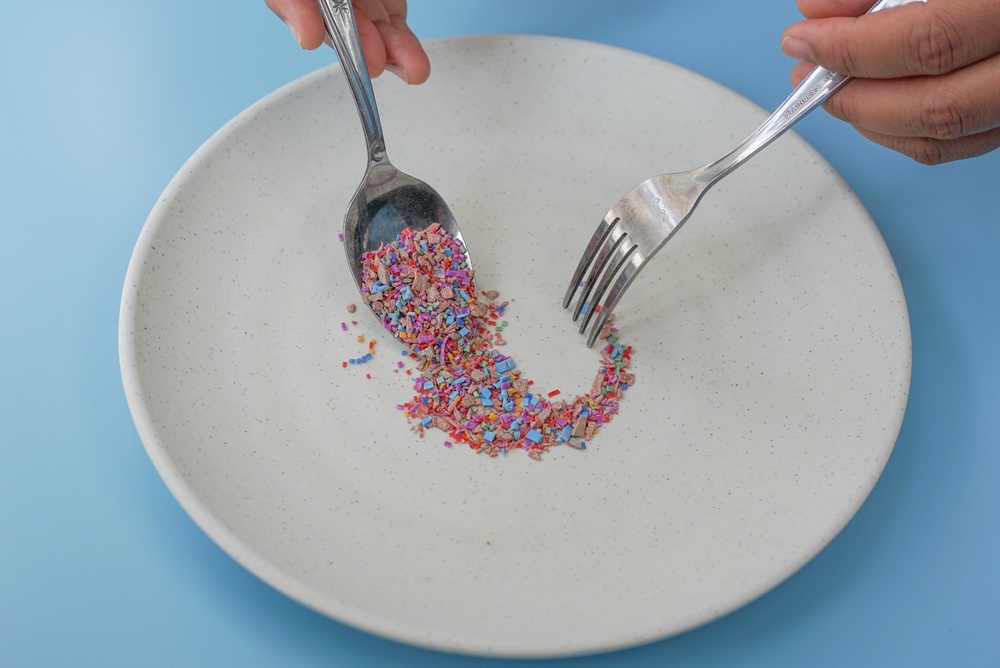
From the water bottles we carry to the grocery bags and cutlery we use daily, plastic is an inescapable part of modern life. However, these familiar objects, including bins, buckets and even the chairs we sit on, do not simply disappear over time. Instead, they gradually break down into millions of microscopic plastic particles known as microplastics.
Often described as the ‘invisible dust’ of the plastic world, these tiny fragments are increasingly accumulating in the environment, often beyond what the naked eye can see.
What are Microplastics?
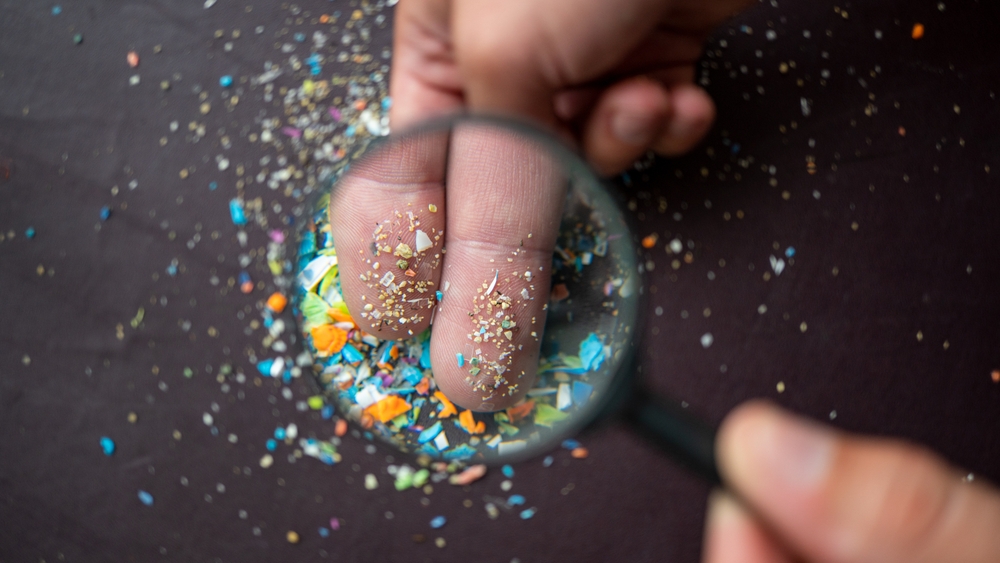
Microplastics are tiny pieces of plastic, defined as less than 5 millimetres in size, about as small as a sesame seed or a pencil eraser. Though often invisible to the naked eye, they are now found everywhere, from the deepest oceans to our food, soil, and even the air we breathe. If one plastic bottle can break down into millions of these tiny particles, imagine how many are accumulating in our environment from the billions discarded each year.
Microplastics come from two main sources:
- Primary microplastics: plastics that are intentionally manufactured in tiny sizes and used in popular cosmetics such as makeup and skincare products. One common example is microbeads used in face wash to help exfoliate the skin.
- Secondary microplastics form when larger plastic items, such as single-use plastic bottles, plastic wraps, shopping bags, take-away containers, polyester clothes, tyres, or paints, slowly disintegrate into smaller fragments over time due to sunlight, heat, and physical wear and tear.
How Do Microplastics Come About?
Plastics do not break down in the way that organic materials decompose. Microplastics don’t disappear; they crumble. Unlike organic materials (like apple cores) that rot and vanish through natural degradation, plastic does not truly disappear. Instead, plastics continue to break down through fragmentation into smaller and smaller pieces over hundreds or thousands of years.
Plastics undergo the following key breakdown mechanisms and eventually become microplastics:
- Photo-degradation: Ultraviolet (UV) radiation from sunlight breaks down plastics, making them brittle.
- Mechanical Degradation: Wave action, wind, and abrasion from sand degrade plastic on beaches and in oceans.
- Biodegradation: Microorganisms like bacteria and fungi can produce enzymes that break down plastic polymers, though this is slow.
- Chemical Degradation: Chemical additives and oxidation processes break down polymers.
These microplastics are likely to degrade further into smaller nanoplastics through chemical weathering, mechanical breakdown, and even the digestive processes of animals. Nanoplastics, or NPs, are a subset of microplastics and are even smaller, with sizes under 1 µm (1 micrometre or 1000 nm).
How Do Microplastics End Up on Our Dinner Plate?
Adapted and edited from a Shutterstock image.
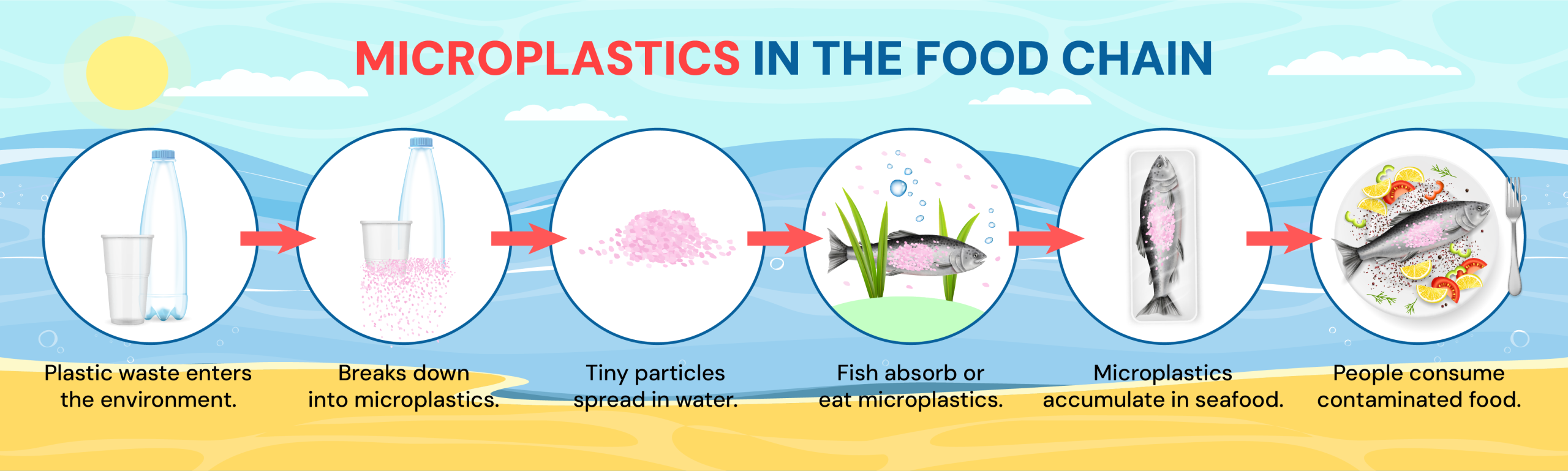
Microplastics travel through waterways and end up in rivers, lakes, and eventually the ocean, where tiny organisms like plankton and small fish can easily mistake these plastic particles for food and eat them. Larger fish then eat these smaller fish, concentrating microplastics in their bodies. When humans catch and eat larger fish and other seafood, microplastics can end up in our bodies.
What Will Microplastics Do to Our Bodies?
Despite their minute size, these particles may pose potential risks to human health. Research in this area is still ongoing, but growing evidence suggests they may affect human health in several ways. Because of their extremely tiny size, microplastics can easily enter the human body through the food we eat, the water we drink, and even the air we breathe. They can potentially pose serious health hazards.
- Lung health: Inhaling microplastics can cause respiratory irritation and remain in lung tissue, causing chronic inflammation.
- Gut health: Larger microplastics can physically scrape or irritate the digestive tract lining, affecting nutrient absorption.
- Manufacturing additives: Microplastics usually carry chemicals like bisphenol A (BPA) and phthalates, which can leak out when microplastics enter the body.
- Environmental toxins: In the ocean or soil, microplastics act like tiny magnets, attracting and soaking up harmful pollutants like pesticides and heavy metals (such as mercury or lead) from the surrounding environment.
- Hormonal disruption: Microplastics can contain or carry chemicals such as bisphenol A (BPA), phthalates, and certain alkylphenols. These chemicals can trick the body into thinking they are natural hormones (like estrogen), which can interfere with metabolism, reproductive health, and even growth and development in children.
- Blood circulation: Studies have recently detected microplastics in human blood, indicating that they can be transported throughout the entire body.
- Organ accumulation: Evidence suggests these particles can settle in the liver, kidneys, and even the placenta.
- Microbiome: Microplastics may alter the balance of the “good bacteria” in our gut, potentially leading to digestive issues or weakened immune responses.
Take-Home Messages
Plastics will stay on this earth forever. While these particles may be ‘invisible’ to our eyes, their impact on our oceans, our food chain, and our own bodies is a growing reality that we can no longer ignore. However, the future is not yet set in stone.
We should do our part and start making conscious choices today by reducing our use of plastic items, avoiding plastic-packaged foods, and supporting plastic-free initiatives.
Prepared by:
Institute of Research, Development, and Innovation (IRDI)