The thinly sliced, crispy potato chips stacked in a canister are everyone’s favourite. It is hard to find someone who does not like this salty and crunchy snack.
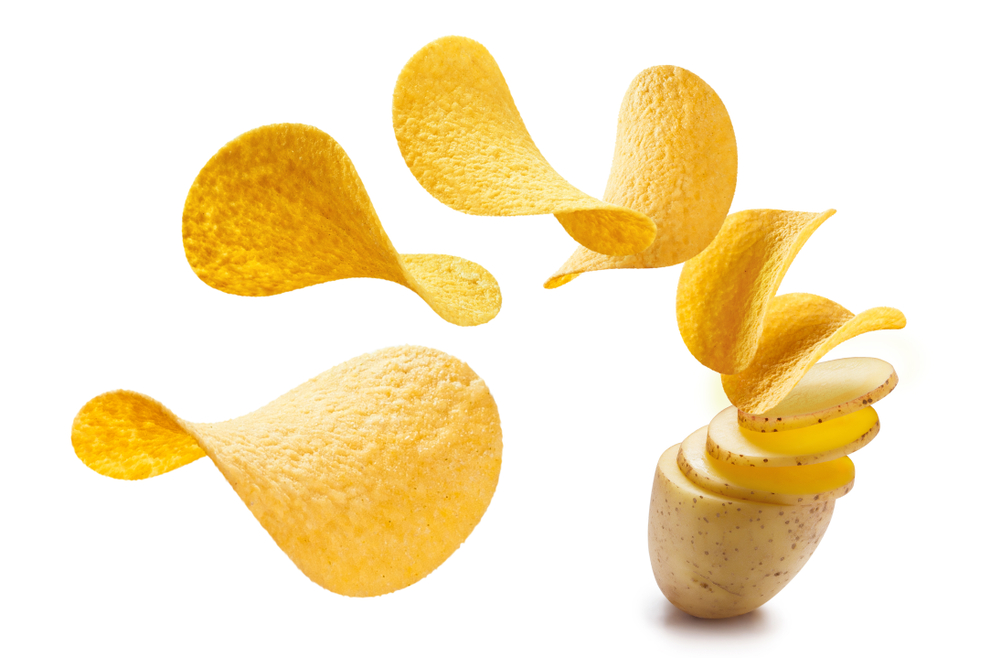
What comes to your mind when you eat potato chips? Just its taste? Have you ever wondered why potato chips have a curved saddle shape?
Did you know the shape was designed using supercomputers in the 1950s? It was designed by scientist Frederic Baur in 1956 for Pringles, and it involved very high-level maths and physics.
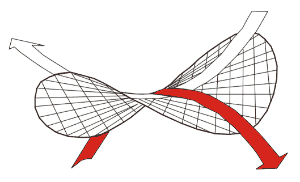
If you take a close look at the chip, it is not curved just in one direction. It is doubly curved. The shape is called hyperbolic paraboloids.
The truncated hyperbolic paraboloid, meaning that the lines on its surface are parallel to a common plane, but not to each other (remember geometry?).
Why does a simple and cheap snack require all this innovation?
Well, there were many complaints about broken chips from consumers, as the chips at the bottom of the can crack easily due to the pressure from all the chips on top.
The hyperbolic paraboloid shape, which has double curvature, provides extra strength to these thin chips. This makes them able to withstand a load.
Did you know that the chip can withstand a 150g weight? This reduced breakage so much. The saddle shape allows the chips to be stacked neatly on top of each other.
Pringles chips are also not 100% potato. They are made from rice, wheat, corn, and potato flakes, all rolled into a dough.
This dough is pressed and cut into ultra-thin chips. When the fried chips move on a conveyor belt, they tend to fly away due to their light weight.
The saddle shape prevented this. So, the chips were easily packed.
There is another reason for this shape. You might have noticed that saddle-shaped potato chips do not break off symmetrically.
They crack in all directions, producing flakes of various shapes. This is also because of the hyperbolic paraboloid shape.
This gives extra crunchiness that adds to the taste. Notice how the chips break the next time you indulge in this snack.
The hyperbolic paraboloid is also widely used in architecture and engineering, especially for constructing roofs.
The London Velodrome, Scotiabank Saddledome in Canada, and the Scandinavium in Sweden are some examples.
Many students have these questions in mind, “Why am I studying algebra, calculus and geometry? Will I ever use them in my life? I have never seen my parents using this knowledge.”
Did the story of potato chip change your mind? Remember that all maths and science concepts and theories are applied somewhere and you will be surprised to see many in our daily lives.
They are all around us. It just requires some inquisitive mind to find out.
Back to the scientist who created the Pringles potato chip shape, Frederic Baur was also asked to design a vessel to pack the chips.
Baur designed the Pringles canister and he loved it so much that when he died in 2008, some of ashes were buried in a Pringles can, at his request.
Source: ZME Science