Did you know 14 March (3/14) is celebrated as Pi Day? This date was chosen because π (pi) can be rounded to 3.14. Recognising this mathematics element, the 40th UNESCO General Conference declared March 14th International Mathematics Day in November 2019.
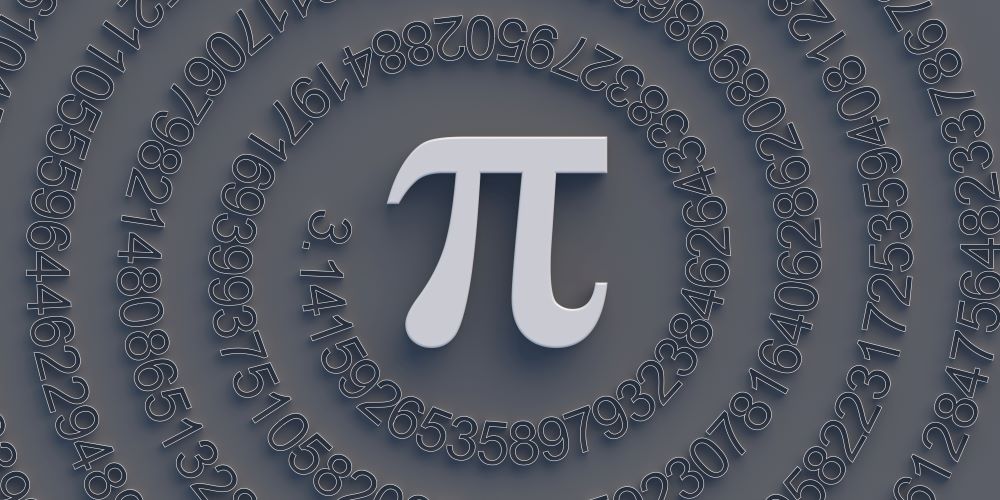
The pi symbol. Shutterstock
This year’s theme is “Playing with Math.” The theme is perfect because many students find mathematics intimidating.
Students can engage more enjoyably with math by incorporating play into learning inside and outside the classroom.
This approach is emphasised in many educational documents, including the Malaysian curriculum.
Playing with Math is an activity that involves exploring, experimenting, and interacting with mathematical concepts creatively.
This usually consists of practical activities such as problem-solving, puzzles, games, or even informal research into mathematical ideas.
Unlike lectures or workbooks, this approach promotes active engagement and understanding of mathematical concepts by helping individuals become more familiar with them.
“Playing with Math” stimulates curiosity, critical thinking, and a positive attitude towards math, making it more accessible and enjoyable.
“Playing with Math” is a learning process, not focusing on the product. Students are not penalised by making mistakes but they improve with the information learnt.
They play with mathematics, thus dispelling the idea that it’s a difficult subject.
Discovering the value of Pi can also be a playful adventure through game-based learning.
Teachers and students can use manipulatives, applications, and software to explore Pi. With manipulatives, students can collaborate by cutting cards, measuring with rulers, and communicating.
They can also use software like GeoGebra to values to witness the magic of Pi first-hand.
Traditional Malaysian games, for example, also involve mathematics.
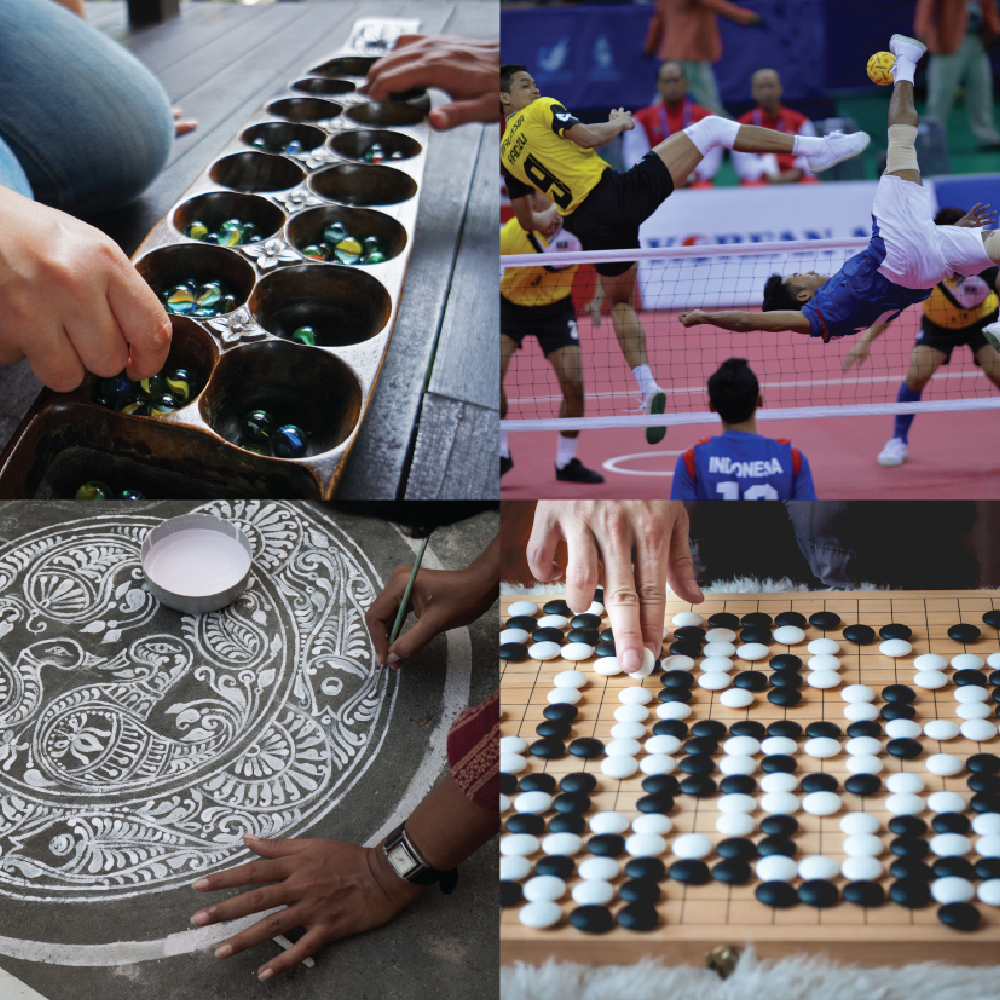
Among them, “Congkak” is the most famous. “Congkak” is a traditional game played with a wooden board and rubber tree seeds.
As players count the number of seeds in each hole, they learn strategic thinking, calculation and basic arithmetics.
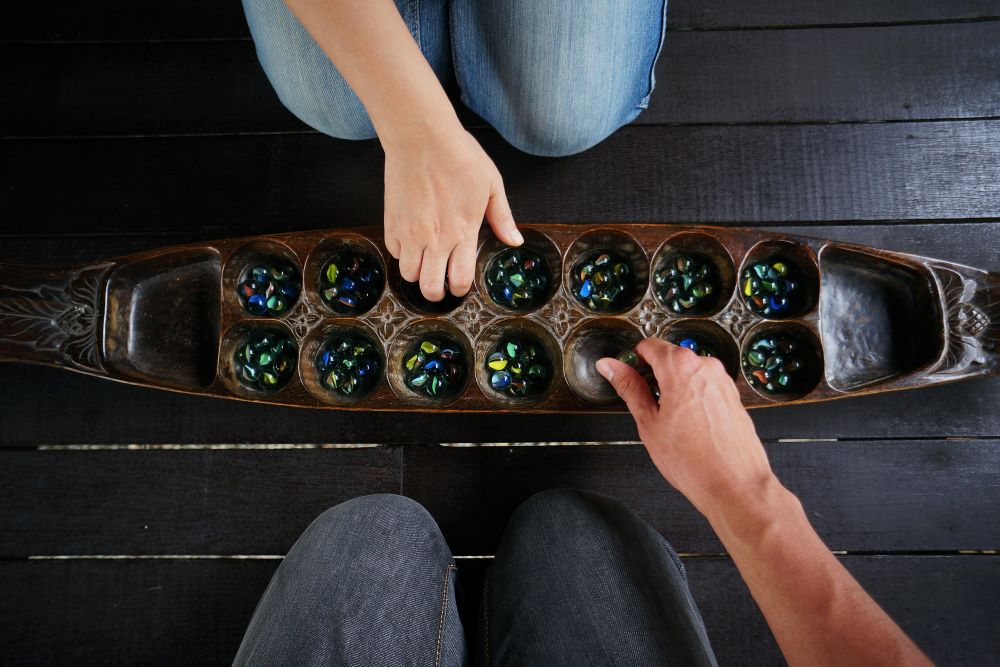
A game of congkak requires strategic thinking, calculation and basic arithmetics. (Shutterstock)
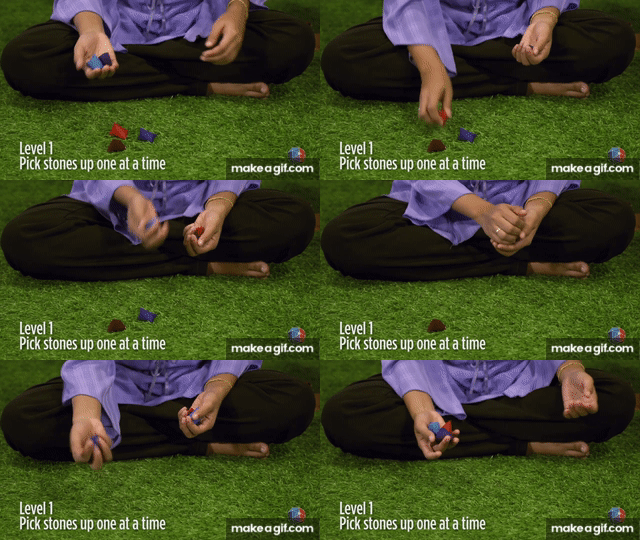
“Batu Seremban” is a game in which small objects like rubber tree seeds, are thrown and caught at different stages.
The game involves addition, subtraction and sometimes multiplication as players calculate their scores by assigning values to their performing sequences.
“Gasing” is a traditional game in which players compete to see who can spin a top the longest.
Physical principles (like momentum and balance) are at the heart of this game.

Physical principles (like momentum and balance, which can be understood by mathematics) are at the heart of playing gasing. Shutterstock
“Sepak takraw” is a popular sport in Southeast Asia. In “sepak takraw”, players kick a rattan ball over the net using various acrobatic movements.
This game involves calculating angles, forces and precise trajectory.
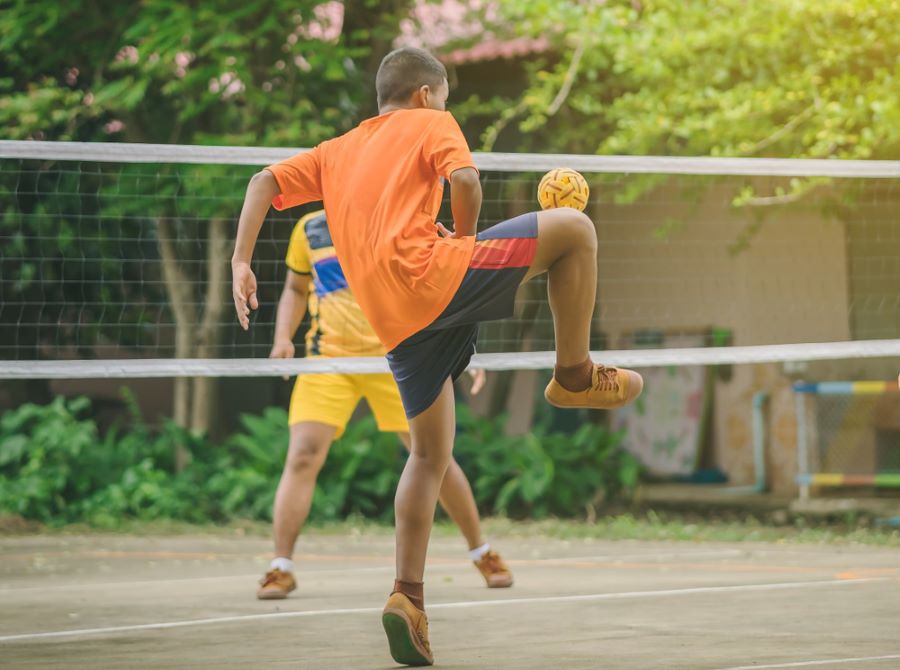
Sepak takraw involves calculating angles, forces and precise trajectory. Shutterstock
The Kolam tradition, popular among Indian communities in Malaysia, introduces the concept of ethnomathematics in Malaysia’s diverse cultural landscape.
These intricate designs blend artistic expression with mathematical principles. The Kolam design showcases elaborate patterns, symmetrical features, and elements of number theory.
This highlights the deep connection between cultural tradition and mathematical concepts.
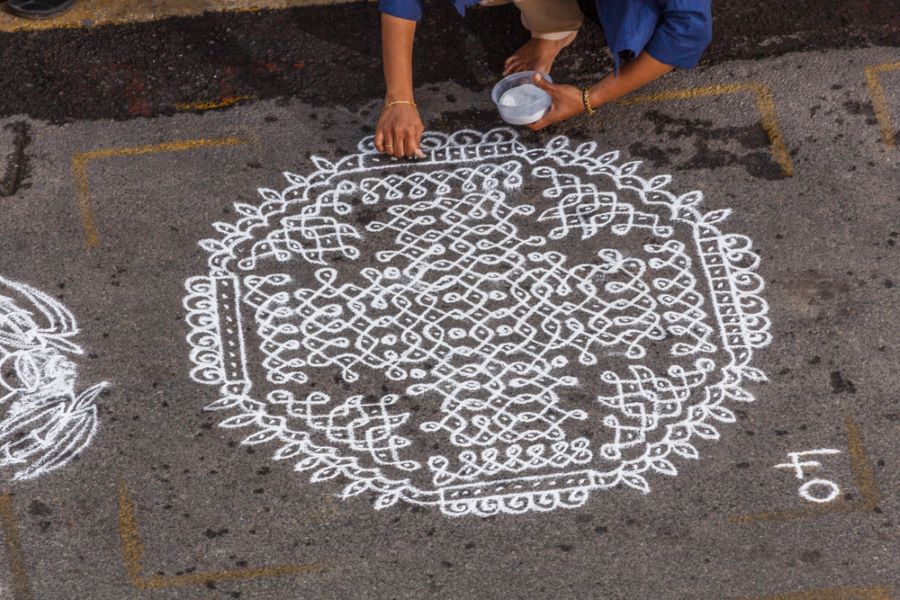
Kolam highlights the deep connection between this cultural tradition and mathematical concepts. Shutterstock
In Chinese culture, the game Go is a fun and engaging way to teach mathematics. By exploring Go’s strategies, students grasp the underlying mathematical ideas.
As they play, students experiment and learn from trial and error to improve their skills and achieve higher scores.
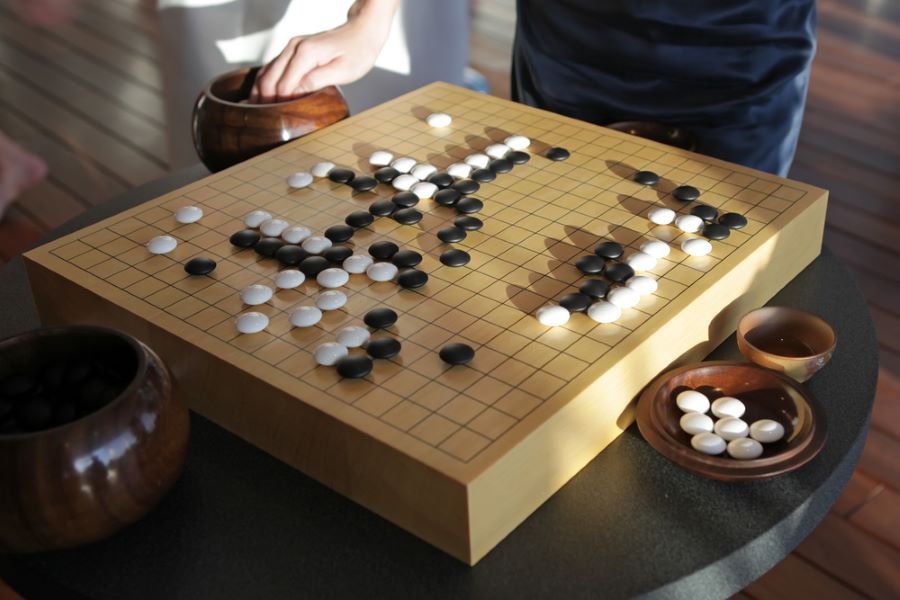
Playing go allows students to uncover mathematical treasures, experiment and learn from trial and error to improve their skills and achieve higher scores. Shutterstock
In mathematics, game-based learning is supported by various theories.
According to Piaget’s theory of cognitive development, children acquire knowledge through social interaction with the environment. This knowledge is gained through activities that explore the physical world.
Piaget stressed the importance of play for children’s cognitive and social development because it involves active participation and continuous interaction with the environment.
The sociocultural theory of Vygotsky describes how children develop their knowledge through social interaction, such as playing games with friends, with support from adults.
In addition to acquiring knowledge, children can develop communication skills, personality, and core values.
The game plays a fundamental role in developing strategies and responsibility for all actions in the players.
Game-based learning in mathematics is grounded inHoward Gardner’s theory of multiple intelligences.
Learning experiences are more inclusive, interactive, and easier to understand when students’ different strengths are considered in the classroom.
These intelligences include linguistic, logical-mathematical, spatial, bodily-kinesthetic, musical, interpersonal, intrapersonal, and naturalistic.
Lastly, the International Day of Mathematics aims to demonstrate that mathematics plays a key role in achieving the UN’s Sustainable Development Goals (SDGs), such as quality education and reducing inequalities.
“Learning with Math” improves individual cognitive skills and develops psychomotor and emotional abilities. In education, engaging with mathematics aligns with the Falsafah Pendidikan Kebangsaan (FPK), which aims to produce physically, emotionally, spiritually, intellectually, and characteristically holistic individuals.
So, let’s celebrate Pi Day by playing with math and making learning an exciting experience!
Prepared by:
Associate Professor Dr Abdul Halim Abdullah
School of Education
Universiti Teknologi Malaysia (UTM)