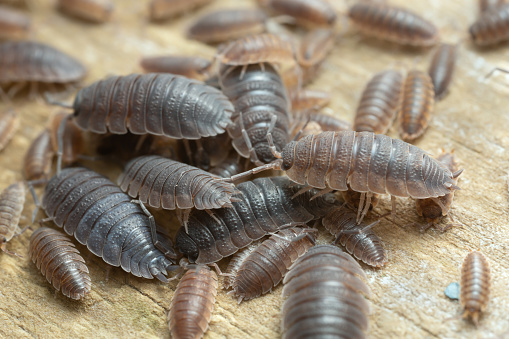
If you have ever walked through the woodlands or a coastal harbour, you may have likely encountered the isopod, an animal resembling a cockroach or a beetle. In another situation, if you have bought some fish, you may have seen an eerie and nasty creature living in their mouths!
If you are an avid gamer of Nintendo Switch, you would have seen a bug-like species called “Ligia exotica” that appeared in a fun and exciting video game named “Animal Crossing”. Without venturing too far, you can even find them lurking around your garden, especially in flower pots or terrariums.
So, what are these so-called bugs that look like cockroaches or lice but aren’t bugs at all?
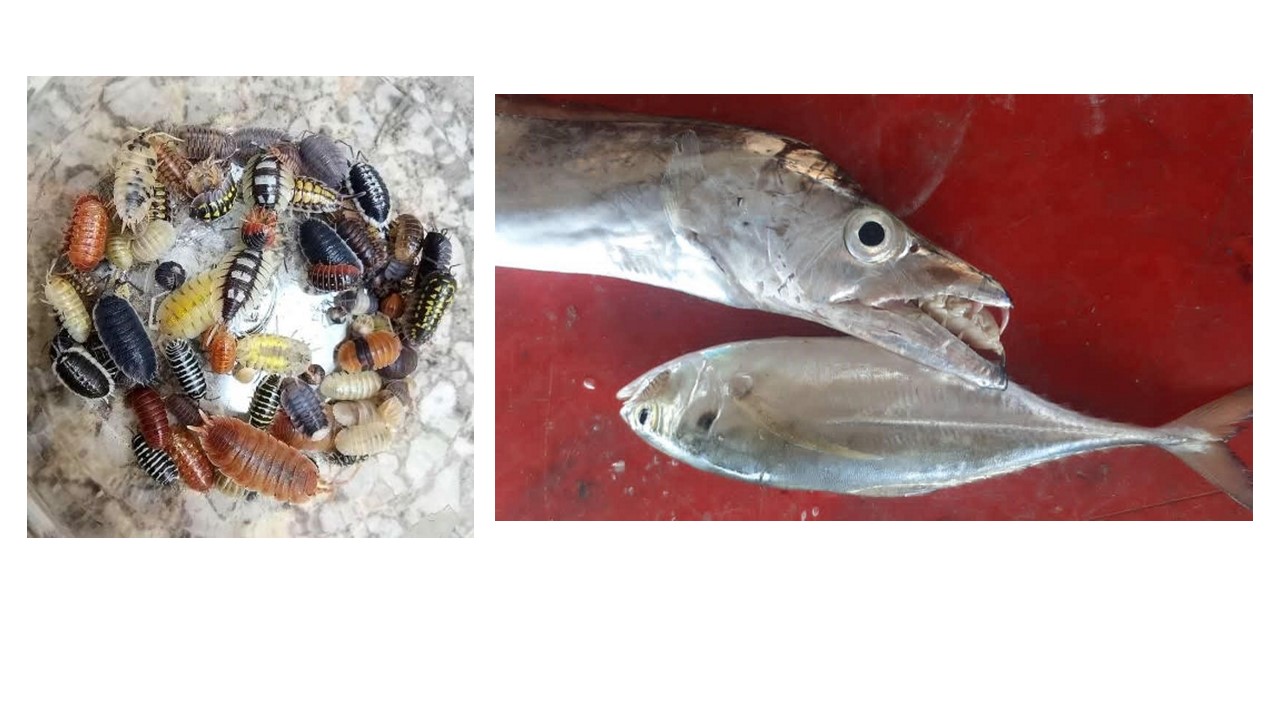
Terrestrial isopod (left) and parasite isopod (right)
These creatures, known as isopods, are named after “iso“, meaning “equal”, and “pod“, meaning “foot”. Common names for the isopods are pill bug, woodlice, roly-poly, sea wharf, sea roach, or sea slater. Isopods are a diverse crustacean group similar to shrimps, crabs, prawns, and barnacles. The order Isopoda has a worldwide distribution of 10,000 known species, of which 5,000 occur on land, 4,500 in marine environments (mostly on the seabed), and 500 in freshwater ecosystems.
Due to the high diversity of isopod species, they can inhabit terrestrial habitats, deep-sea sediments, rocky and sandy beaches, and even hosts such as fish and crabs (as parasites).
Isopods have a variety of morphological features that are functional for their adaptation. As a result, they can come in various colours, shapes, and sizes. Terrestrial isopods have colourful pigmentations and patterns on their bodies, making them attractive pets for care and breeding. Their colours give them common names such as zebra line, rubber ducky, blonde ducky, and the dark knight.
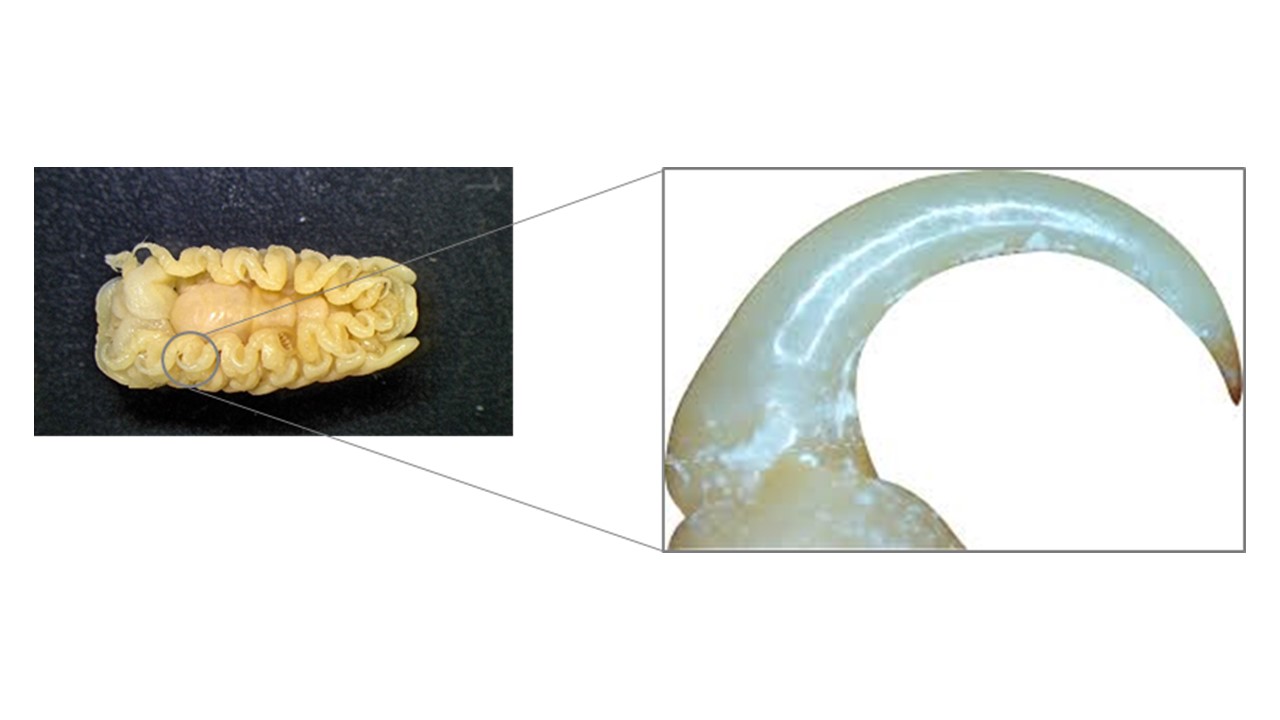
Parasitic isopods possess dactyli, appendages that look like hooks.
Isopods display a variety of feeding modes. They can be scavengers, detritus feeders, predators, parasites, and filter feeders. For example, isopod parasites from the Family Cymothoidae use their dactyli to hook onto their host’s flesh.
Cymothoid isopods are striking ectoparasites on fish, including the famous “tongue biters”. Cymothoids have four feeding attachment modes: mouth-attaching, gill-attaching, skin-attaching, and flesh-burrowing species. Sometimes, a single cymothoid species can parasitise multiple host species.
Here’s a fun fact: this unique isopod can be eaten! Certain families within the isopod group can be eaten like other crustaceans. Although Malaysians have not yet explored this delicacy, Japan and Vietnam have incorporated giant isopods into their favourite dishes. They have acknowledged that it tastes just like chicken!
According to The Japan Times, they also make food products, such as crackers made from giant isopods! If you want to see a giant isopod in Malaysia, you can visit Aquaria KLCC to observe how big it is!
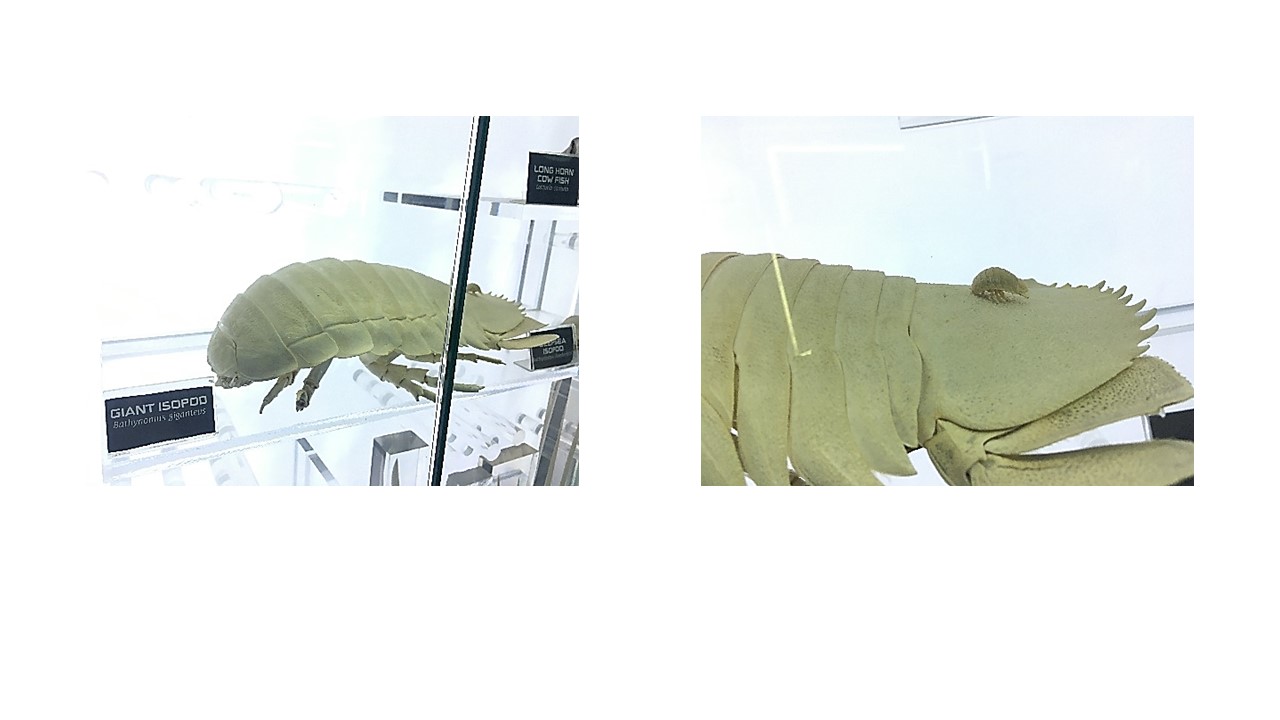
A giant isopod and its baby (close-up) on the hindmost division of its body.
Isopods play an important role in ecology and economy. For instance, a research study used a combination of an ointment and the extraction of an isopod parasite from the species Ceratothoa oestroide to heal diabetic foot ulcers.
In traditional Chinese medicine, another semi-terrestrial isopod species, Ligia exotica, is used to treat muscle injury, swelling, and pain, or to address malnutrition in children.
In ecology, terrestrial isopods are used as indicators to monitor soil toxicity, as they are decomposers and grazers in nutrient-rich, organic soils.
In another report, a species from the Family Cirolanidae is used to clean the skeletons of marine organisms, such as marine mammals, for museum collections. Next time, you can go to the mark, nd check the fish’s tongue or gills and look for the isopod!