Development in science and technology indicates the prosperity of human civilisation. Thanks to scientists, engineers, and perhaps some anonymous heroes who act as pathbreakers, we can live a more convenient life now than our ancestors did. If the knowledge in science and the convenience brought by technology were armour, we, the 21st-century generation, are armed to the teeth! Let’s turn our focus to the term ‘tropics’. The tropics are the regions of Earth surrounding the Equator. As an analogy, Malaysia is one of the countries in the tropics.
Moreover, the tropics are known for their wide range of biodiversity and well-balanced ecosystems. Since we mentioned ‘science and technology and ‘tropics’ earlier in this essay, there must be a subtle relationship between them. How can science and technology contribute to the development of the tropics?
First, we can use science and technology to develop the tropics by building solar power plants. Solar technologies turn light energy into electrical energy. This process can be done through photovoltaic (PV) panels or a concentrating solar-thermal power (CSP) system that uses mirrors to reflect sunlight onto receivers, producing heat that is converted into electrical energy. This statement can be proven according to the principle of conservation of energy. We all know that solar energy is a renewable, environmentally friendly energy source.
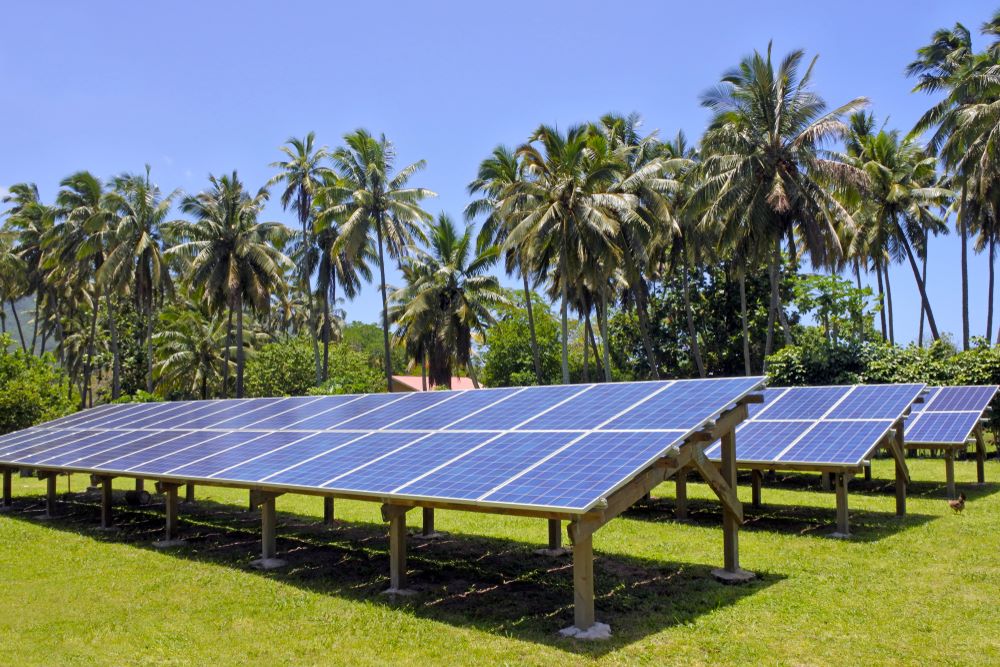
Solar panels are used in the Cook Islands, which have a tropical climate.
Because the tropics receive much more intense sunlight than other regions, solar panels can be used to generate electricity. However, the development in science and technology nowadays is far from fully utilising the light emitted by the sun. We believe that scientists are still working on how to minimise the energy loss to the surroundings during energy conservation. Although the ultimate efficiency of a solar panel in converting light energy into electrical energy is only around 20%, the power output is adequate for domestic use.
Therefore, solar power plants can replace conventional plants that consume fossil fuels to generate electricity. The carbon footprint, also known as the total greenhouse gas emissions from power plants generating electricity, expressed in carbon dioxide equivalents, can be significantly reduced. Alternatively, solar power plants can be combined with wind or hydroelectric power plants to increase electricity efficiency.
Besides that, we can apply science and technology in developing the tropics by establishing ex-situ and in-situ conservation centres. These conservation centres are meant to save threatened or endangered wildlife from illegal hunting, poaching, and deforestation and prevent biodiversity loss. Biodiversity refers to the variety of flora and fauna within a specific habitat. For instance, habitats like tropical rainforests, highlands and even morasses are suitable for certain species of animals and plants to survive. On top of that, the combination of these biotic and abiotic elements, which are animals, plants and habitat, forms an organised ecosystem.
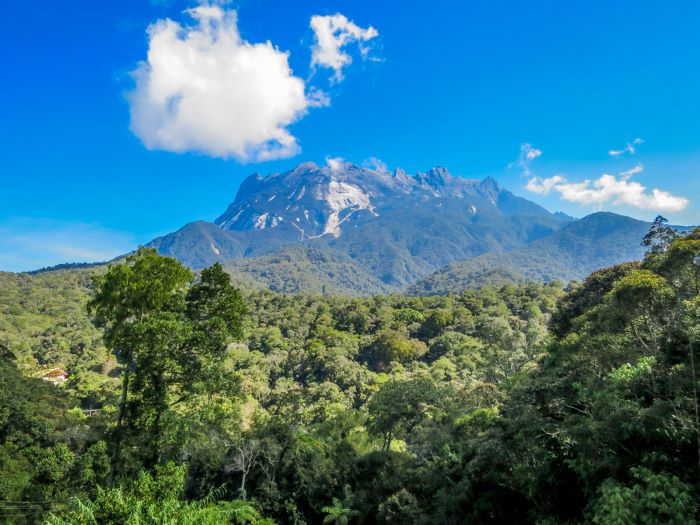
In-situ conservation provides a natural habitat for wildlife, while ex-situ conservation provides an artificial habitat for wildlife. These conservation strategies can create a protected and ideal home for wildlife. Let’s take an example. In SSabah,Malaysia, the Sepilok Orang-utan Rehabilitation Centre in Sandakan is an exex situf ex-situ conservation. At the same time, Kinabalu National Park is an example of in-situ conservation. To ease managers’ work, they can use drones, animal-like robots, and closed-circuit television (CCTV) surveillance to monitor and ensure that wildlife lives in optimal conditions.
Also, we can apply science and technology to the development of the tropics through genetic engineering. If we travel around the world and ask people about what is so special about the tropics, they might tell us about their passions and love for tropical fruits. How can we talk about the tropics without including exotic tropical fruits? Well, the unique climates in the tropics are the key. More specifically, there are three basic types of tropical climates: tropical rainforest, tropical monsoon, and tropical wet or dry.
The tropical climate is always summer-like, with relatively high air humidity compared to other regions of the world; this makes it a paradise for tropical fruits. As the saying goes, kill two birds with one stone, tropical fruits like durians, mangosteens, bananas, pineapples, jackfruits and rambutans are usually cheap and taste good! How can we increase the productivity of these tropical fruits? You guessed it, genetic modification. Genetically modified fruits are produced through recombinant DNA technology. They are more robust and resistant to herbicides, disease and pests than their genetically unmodified cousins. This technology has overcome food shortages, reduced the cost of fruit production, and even increased the nutritional value of fruits.
Many people say the emergence of genetic modification technology has broken the laws of nature. Nevertheless, there are still disadvantages and controversies about the application of this technology. The original species of tropical fruits would be an egg at the tip of a horn. Regarding human biology, transgenic fruits may cause some adverse effects on human health. That’s why some people prefer to take 100% organic fruits for their health.
All in all, science and technology genuinely accelerate development in the tropics. We shall appreciate every drop of sweat and every tear shed by the pioneers on the odyssey of discovery in the field of science. Governments shall invest more resources to facilitate the development of the tropics while cooperating with neighbouring countries. Last but not least, we hope that the tropics will be developed in an eco-friendly way to mitigate global warming and preserve the beauty of nature for our descendants.

This essay was written by Joel Chew Sheng Che, ng who is currently a student at SMJK Chung Hwa Tenom. His essay was selected as the 2nd-place winner in the English category of the 2022 Science for Youth Global Essay Competition, held by the Mahathir Science Award Foundation. In this competition, participants were asked, “How can science and technology remedy the issues faced by tropical regions?”