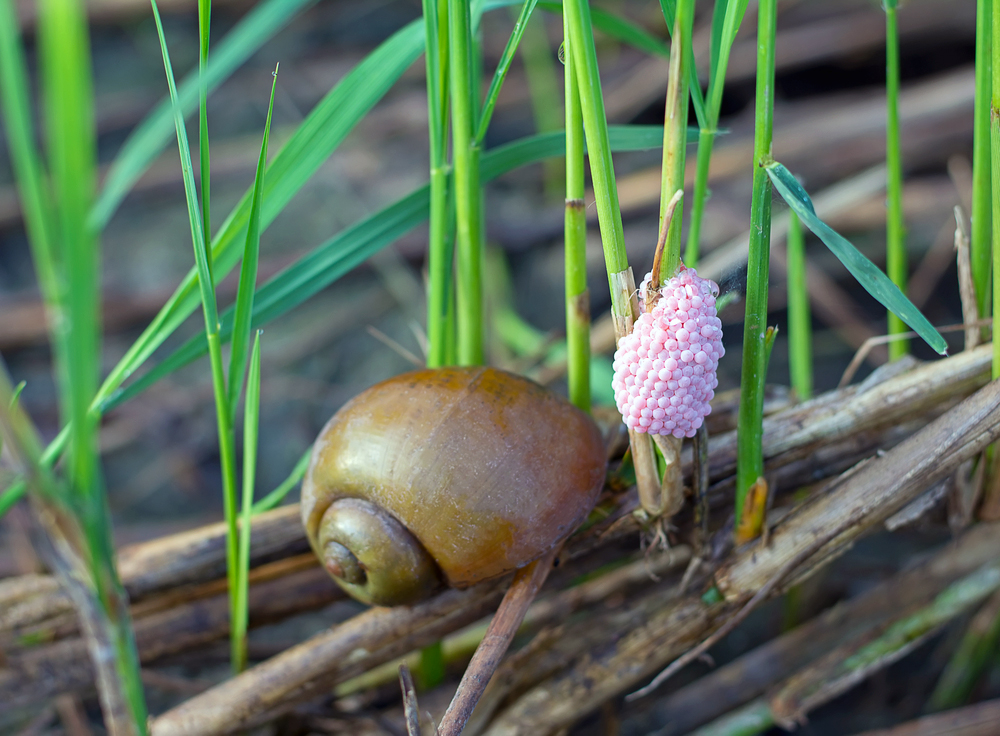
If you have ever walked by a Malaysian paddy field after the rain, you probably would have seen that shiny, spiralled shell creature glinting in the mud, often tinged with shades of gold or brown. Meet the golden apple snail (Pomacea canaliculata), also known as “siput gondang emas” in Malay.
The golden apple snail is a creature as fascinating as it is controversial. Originally from South America, the golden apple snail was introduced to many Asian countries in the 1980s, including Malaysia, as a potential high-protein food source and as an ornamental pet for aquariums.
Unfortunately, this “golden” newcomer did not stay where it was supposed to! It escaped into the wild and found paradise in our watery fields, ponds and waterways.
Within just a few years, numerous scientific reports found that these snails turned from a promising protein import into one of Southeast Asia’s most notorious agricultural pests.
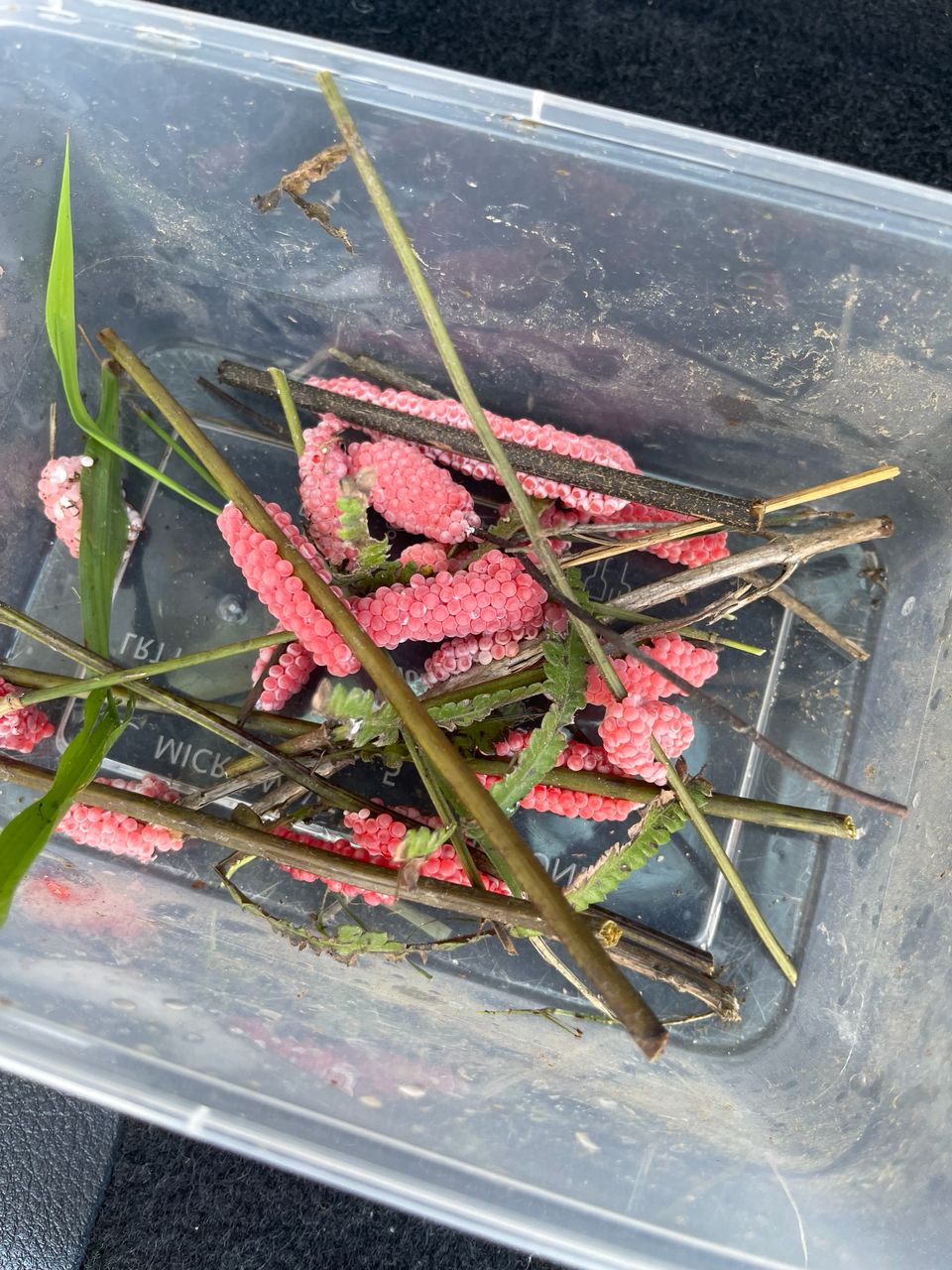
Clusters of golden apple snail eggs on plant stems.
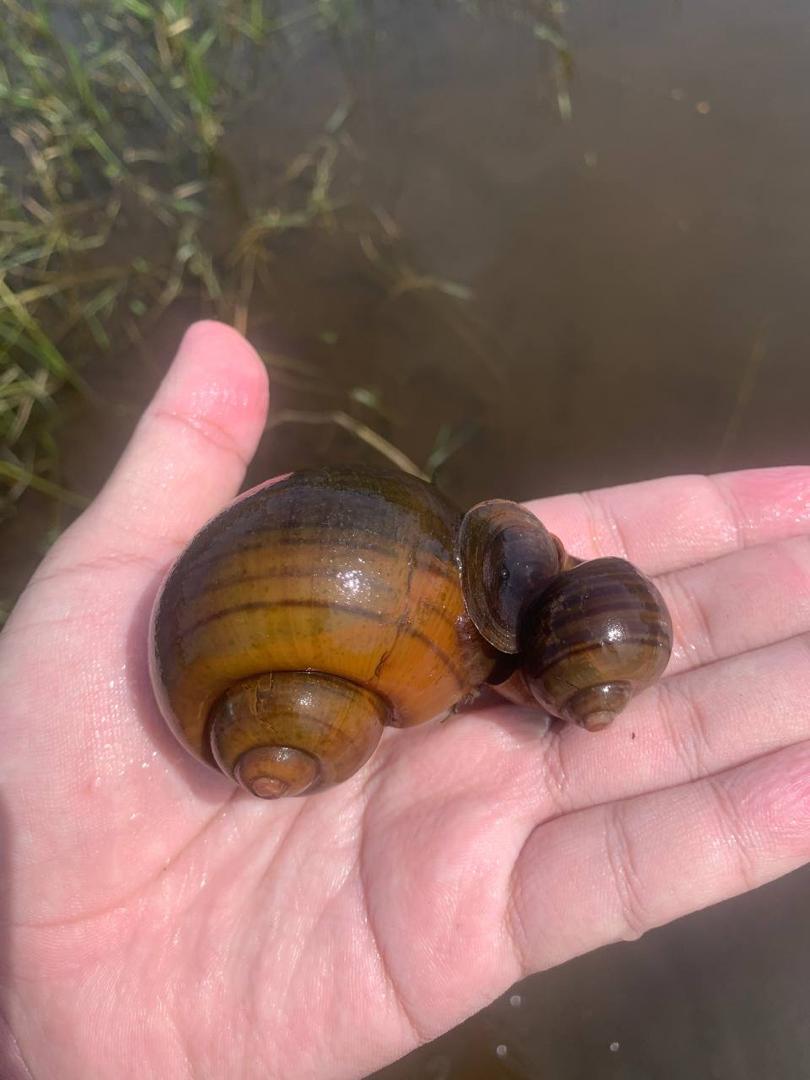
A pair of mating golden apple snails, female (right) and male (left). (Image is the author’s own)
Absolutely not picky eaters, these snails enjoy eating almost any green plant in the environment.
In paddy fields, young rice seedlings are their favourite meal. A single snail can eat several seedlings a day, and with thousands of them working together, they can wipe out entire plots overnight.
As horrible as it sounds, this causes huge economic losses and a constant battle for farmers to protect their crops.
What makes the golden apple snail so successful?
It reproduces rapidly! A female can lay hundreds of bright pink eggs above the waterline each week.
These eggs are hard-to-miss clusters that look like bubblegum stuck to grass stems or rocks.
Researchers found that the neurotoxin perivitelline-2 (PV2), present in eggs, acts as a natural defence against predators and causes skin irritation in humans.
In just a few weeks, baby snails hatch and slip into the water to start their destructive life cycle.
Clusters of golden apple snail eggs on plant stems.
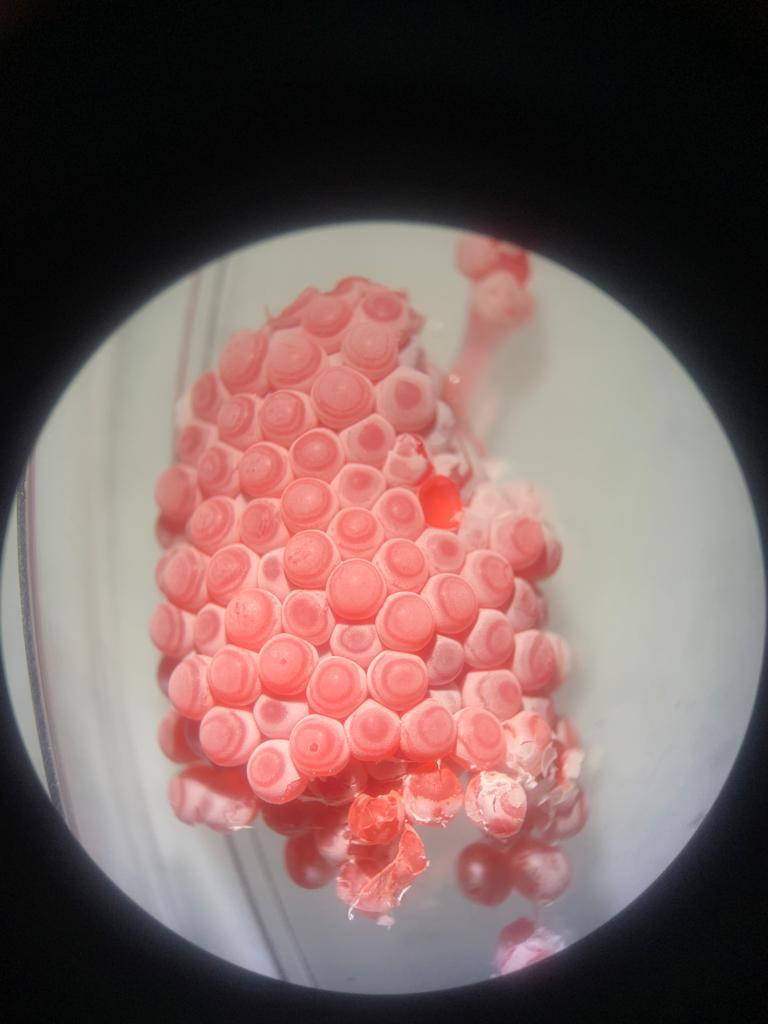
A closer view of a cluster of golden apple snail eggs.
Interestingly, not everything about the golden apple snail is bad. In some rural areas of Thailand, communities have learned to harvest and eat these snails. When properly cooked, golden apple snails become an affordable source of protein.
Thailand researchers reported on how to use the shell of golden apple snails to make calcium supplements, fertilisers, and even animal feed. So, while the snail wreaks havoc in the fields, it may also hold economic and environmental potential when managed wisely.
In natural wetlands, the snail plays another surprising role, helping to recycle nutrients by feeding on decaying plant matter while keeping ecosystems balanced.
The challenge is to keep these snails in check, especially in agricultural areas where their appetite can be destructive.

“Siput gondang emas masak cili padi” ( (Image was generated with AI)
Farmers and scientists have tried many ways to control golden apple snails. Chemical pesticides can kill them, but they often harm fish, frogs and even humans.
A sustainable approach is to use biological control agents (e.g., ducks or fish) to eat snails and their eggs.
Korean researchers reported that manual collection of these snails is one of the most effective methods. Researchers even designed clever traps using bamboo and banana stems to lure and capture the snails.
Japanese researchers are exploring eco-friendly innovations such as snail egg traps coated with natural attractants or biodegradable barriers to protect seedlings.
These techniques are showing promise, especially in integrated pest management systems that balance productivity and sustainability.
In a nutshell, the story of the golden apple snail is a reminder of how human actions can reshape ecosystems.
What began as a hopeful idea to provide food and income has turned into an ecological problem that continues to challenge farmers across Asia. Yet, it also offers valuable lessons.
With careful research, community cooperation and sustainable practices, even invasive species can be managed.
So, the next time you see those pink egg clusters by the water, take a closer look. Behind that bright colour lies a tale of survival and adaptation.
The golden apple snail may be small, but its impact is a powerful example of how nature responds when boundaries are crossed!
Prepared by:
Associate Professor Ts Dr Thilahgavani Nagappan
Associate Professor Dr Wahizatul Afzan Azmi
Faculty of Marine and Environmental Sciences
Universiti Malaysia Terengganu (UMT)