Oil sands, a naturally occurring mixture of sand, water, clay, and bitumen (a heavy, viscous form of crude oil), are a major energy source in Canada and among the world’s largest oil deposits.
The oil sands industry plays a crucial role in meeting global energy demands but also comes with significant environmental challenges.
Image was generated using AI.
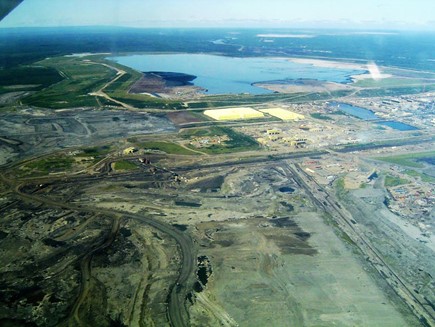
An aerial image of oil sands tailings mine and tailings ponds in Northern Alberta, Canada. Wikipedia
Extracting bitumen from oil sands produces a large volume of waste called oil sand tailings (OST), which is stored in huge ponds, as shown above.
Can you imagine an area equal to 500 football fields combined? Imagine this area is filled with water, fine solids, and leftover chemicals from bitumen extraction!
They are large and deep (containing over one trillion litres of OST combined!).
Some materials in the tailings can take decades, sometimes centuries, to naturally settle and become stable.
Because of this, the tailings ponds will continue to grow in size! These tailings ponds are huge and challenging to manage due to their complex physicochemical nature.
The water in these ponds is murky, containing high levels of clay, leftover bitumen, and various chemicals from the extraction process.
These ponds are highly toxic due to harmful substances such as naphthenic acids, polycyclic aromatic hydrocarbons (PAHs) and elevated concentrations of heavy metals.
These harmful substances were released from the oil sands during bitumen extraction and upgrading and were discharged into the tailings ponds at the end of the process.
Conditions inside these ponds are deadly to most living organisms because they are often anoxic (low or no oxygen) and have highly alkaline or acidic zones, depending on the chemical makeup of the residuals.
Hence, tailings ponds were initially thought to be sterile due to their extreme conditions.
However, methane gas bubbles were observed in the first tailings ponds after a decade of bitumen extraction operation! Methanogenesis is brewing in the tailings, indicating some lifeforms are thriving in the deathly tailings!
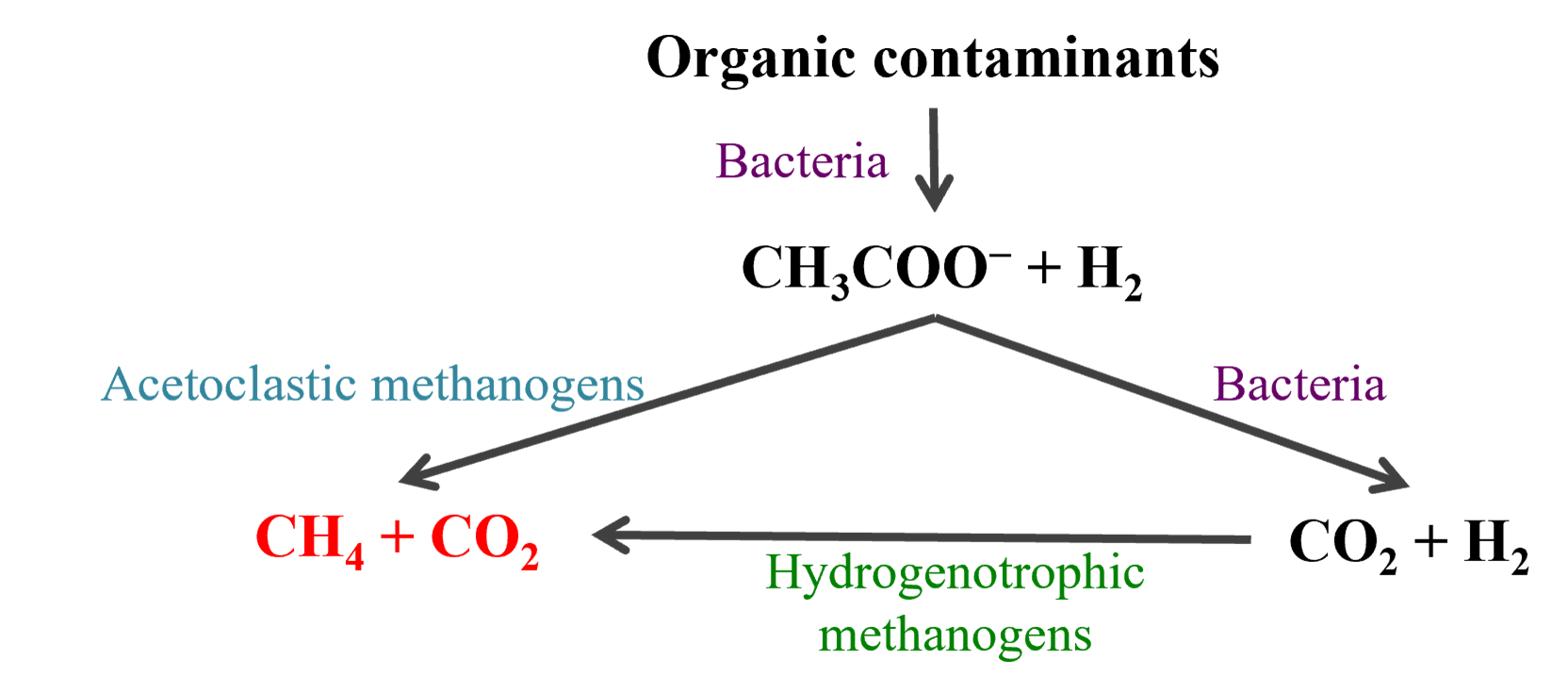
A diagram shows how bacteria and archaea work together to break down organic waste without oxygen (anaerobic).
Methanogenesis is an anaerobic respiration process that breaks down organic compounds into methane.
A consortium of anaerobic microbes drives this process. These microbes are OST’s hidden, unsung heroes, breaking down organic pollutants that aerobic microbes can’t handle.
As shown above, anaerobic biodegradation transforms toxic organic compounds into less harmful substances, like methane and carbon dioxide.
The microbes involved in the methanogenesis process were indigenous to the oil sands.
They survived the harsh bitumen extraction and upgrading processes, but it took them several years to adapt to their new environment in the tailings ponds before they resumed methanogenesis.
One key microbial species is Methanosaeta, an archaeon known for producing methane by digesting complex organic matter.
Others, like Desulfovibrio, can reduce sulfates into hydrogen sulfide, a critical step in breaking down sulfur-rich compounds.
These microbial species are usually in syntrophic relationships, in which the different microbes rely on one another to perform metabolic functions that none could perform alone.
Although the natural degradation process is slow, anaerobic microbes accelerate it, helping to reduce the long-term environmental impact of tailings ponds.
However, the methane released at the end of the process is a potent greenhouse gas.
This creates a tricky situation in which microbes help clean up pollution but can also contribute to climate change if we are not careful.
The microbial life within these tailings ponds isn’t just an environmental necessity—they represent untapped resources for biotechnological applications, including:
- Bioremediation: Using microbes to break down hazardous compounds in polluted environments, not limited to OST but also other contaminants-impacted environments. Specific microbes can target contaminants, converting them into harmless or less harmful substances.
- Energy Production: Certain anaerobic microbes can produce methane, which can be captured and used as a bioenergy source. This would convert organic waste into something valuable.
- Metal Recovery: Microbes can also extract valuable metals, such as nickel and copper, from tailings, a process called bioleaching.
Through careful monitoring and control, the activities of these microorganisms can be harnessed to provide both environmental solutions and economic benefits.
Oil sands tailings ponds are among the largest artificial bodies of toxic waste, but within them lies a hidden world of microbes working to restore balance.
By understanding and harnessing the power of these microbes, we can turn an environmental nightmare into an opportunity for innovation and sustainability.
Though the journey ahead is complex, the potential for these “fantastic microbes” to become a key part of the solution is undeniable!
Prepared by:
Dr Mohd Faidz Mohamad Shahimin
Note: The cover image of this article was generated using Artificial Intelligence (AI).