To simplify science for the public, researchers must translate complex discoveries into language people can understand.
Do you know that edible bird’s nest (EBN) has the potential to control your blood pressure?
Now, would you prefer to hear it explained that way, or like this: “Glyco-conjugated sialylated glycoprotein from Aerodramus fuciphagus has inhibitory effects on angiotensin-converting enzyme, contributing to antihypertensive properties”?
After more than a decade researching functional foods and ingredients, I have realised that great science means little if it cannot be understood.
Know Your Audience
Communication begins with understanding who you’re talking to. At scientific conferences, I can use technical language freely.
But with industry partners, I highlight business value, such as turning overripe fruit into vinegar and creating wealth from waste.
With the public, people care about practical questions: “How long should I double-boil edible bird’s nest?” or “How much should I eat per serving?”
They’re less curious about epidermal growth factor (a small protein produced by cells to stimulate cell growth and proliferation) and about cell proliferation. Different contexts demand different tones.
Making it Complicated for Myself to Make it Simple for Others
Einstein once said, “If you can’t explain it simply, you don’t understand it well enough.” To truly simplify science, I first make it complex for myself.
In the lab, I spend countless hours working with enzymes and implementing scientific techniques such as ultrafiltration, chromatography, and the delicate extraction of sialic acid from edible bird’s nest.
I focus heavily on sialic acid because research shows it is abundant in edible bird’s nest and plays a vital role in cognitive development and immunity.
These processes are technical, repetitive, and sometimes exhausting, but they deepen my understanding of how things really work.
Only then can I translate that complexity into something meaningful for others, whether those in the field or the general public.
Instead of detailing how enzymatic hydrolysis breaks down complex glycoproteins (proteins with carbohydrates attached) into smaller molecules, I focus on the final benefits.
I tell parents and friends, “This process releases nutrients that might help your child think more clearly and fall sick less often.”
That transformation from complex data to relatable meaning is the essence of science communication.
I do the heavy lifting in the lab, so others do not have to, ensuring science remains accessible without losing its substance.
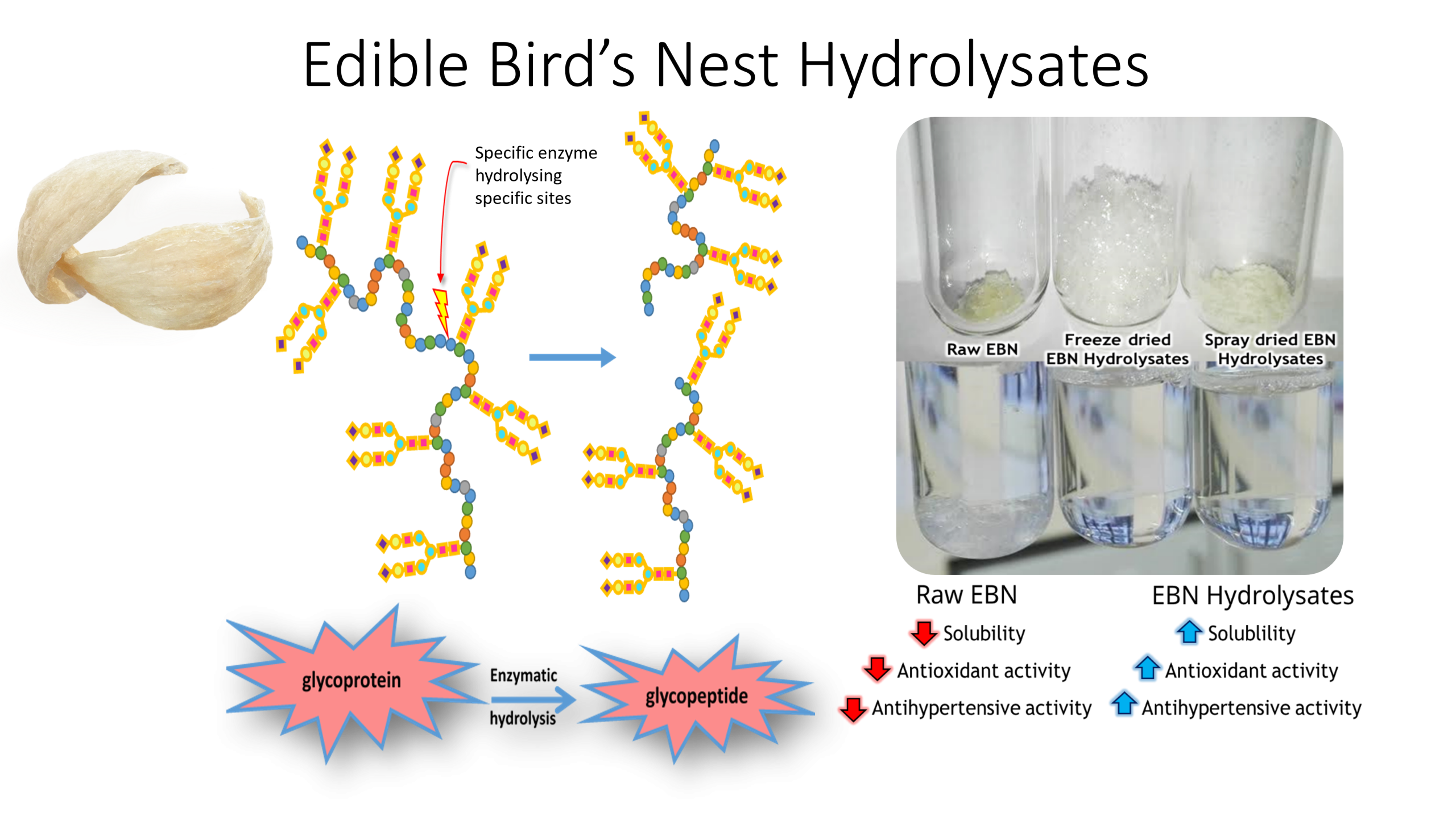
As shown above, edible bird’s nest (EBN) contains a glycoprotein, which, in my research, I extract using scientific methods and convert into small glycopeptides using enzymes.
This process yields EBN hydrolysates (small glycopeptides) with enhanced properties, including high water solubility, strong antioxidant activity, and potent antihypertensive activity.
Ultimately, this means these beneficial compounds are much easier for the human body to absorb and utilise to control blood pressure and maintain overall health.
Go Beyond Science
Science does not exist in isolation. It must connect with economics, society, and culture. My work on seaweed goes beyond studying its chemical properties and functional ingredients.
To make research meaningful, I also need to understand its economic and social impacts.
For example, Malaysia is the 7th largest seaweed producer, just below Japan, yet the Japanese seaweed industry is worth 46 times more! That is not a scientific gap, but it is a value gap.
So, when I pitch projects, I do not just talk about polysaccharides (complex carbohydrates with functional properties) and antioxidants (compounds that protect cells from oxidative damage); I show how science, economics, and culture together can close that gap and give research real-world impact.
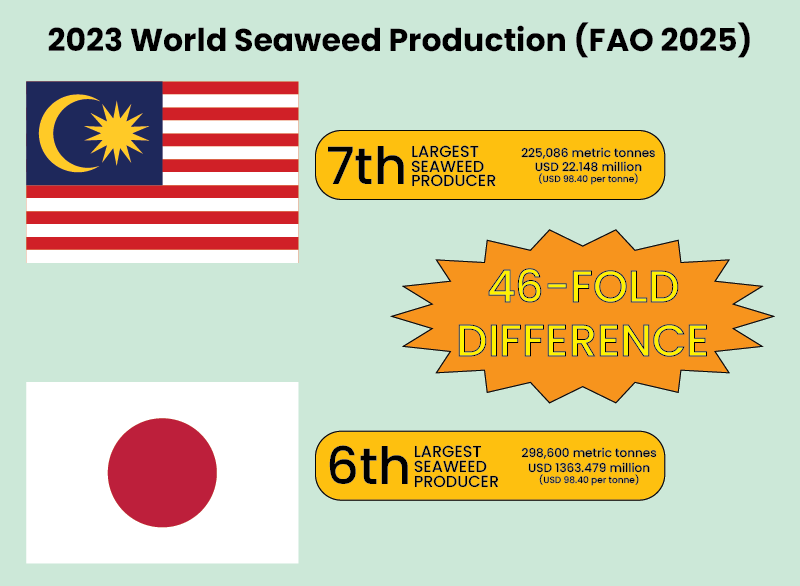
World seaweed production in 2023, based on the Food and Agriculture Organization of the United Nations (FAO 2025)
Create Your Own Jargon
Sometimes, rather than translating jargon, we invent better words. For example, the term “food pilot plant” is not immediately clear to everyone.
A simpler term is “mini demo factory”, or in other terms, small, demonstrative, and industrial enough for anyone to understand.
Similarly, instead of “extracted seaweed polysaccharide beverage,” we say “seaweed tea.”
And when explaining fermentation to children, I don’t talk about lactic acid bacteria. I say, “We feed good bacteria sugar, and it vomits sour juice.”
It may sound crude, but kids laugh, adults remember, and science feels human again.
Make It Relatable
Science is a language, and like all languages, it only works if it connects.
Technical terms like “spectrophotometric analysis” or “bioactivity of sialylated glycopeptides” work in journals, but not in conversations with parents, schoolkids, or policymakers.
By the way, spectrophotometric analysis is just using light to measure the amount of a specific substance in a sample, and the bioactivity of sialylated glycopeptides refers to how well these extracted sialic acid-rich bird’s nest proteins function in the human body.
Instead, I say, “We are turning seaweed into health ingredients and biodegradable plastics, and edible bird’s nest waste into brain-boosting supplements”.
Relatability turns hard-to-understand concepts into tangible ideas.
For example, deodorising seaweed is technically about adsorption kinetics and volatile compounds.
But when I told an entrepreneur, “Imagine seaweed that does not smell so that it can be used in snacks, cosmetics, even bags,” you could almost see the lightbulb switch on.
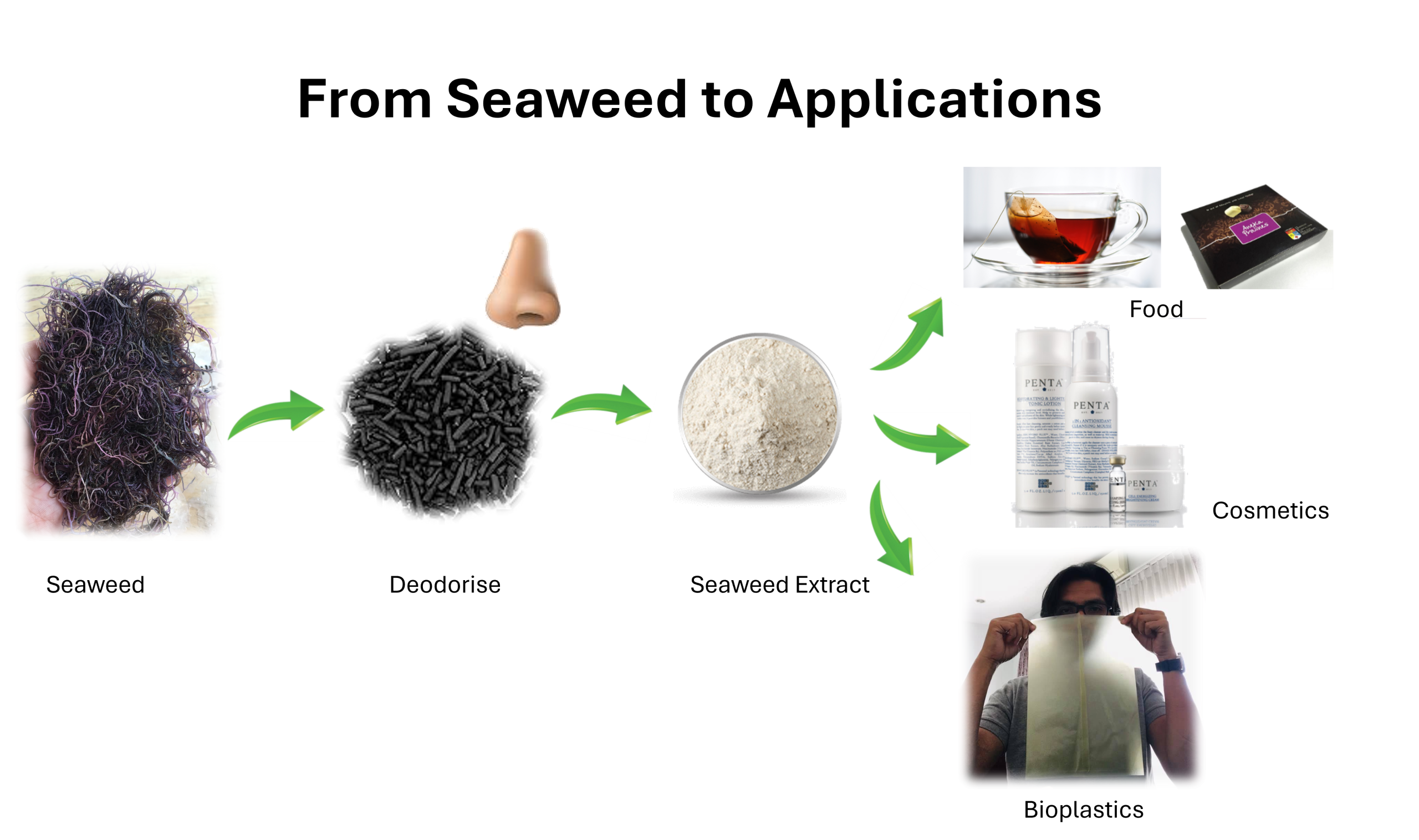
Converting seaweeds (Gracilaria sp.) into food, cosmetics and bioplastics.
Conclusion
Science should not remain locked in labs or buried in journals. It must be felt, understood, and used by everyone, from students to industry, from policymakers to communities.
Simplifying science does not mean dumbing it down. It means elevating it so more people can reach it, connect with it, and be empowered by it.
When people understand science, they trust it.
When they trust it, they use it to make better choices for their health, their businesses, and their societies.
The work is hard, and we scientists often keep things complicated for ourselves. Still, the reward is meaningful impact, science that is not only known, but lived.
Note: This article is based on excerpts from the TEDxUKM talk delivered by the author.
Prepared by:
Associate Profesor Ts Dr LIM Seng Joe