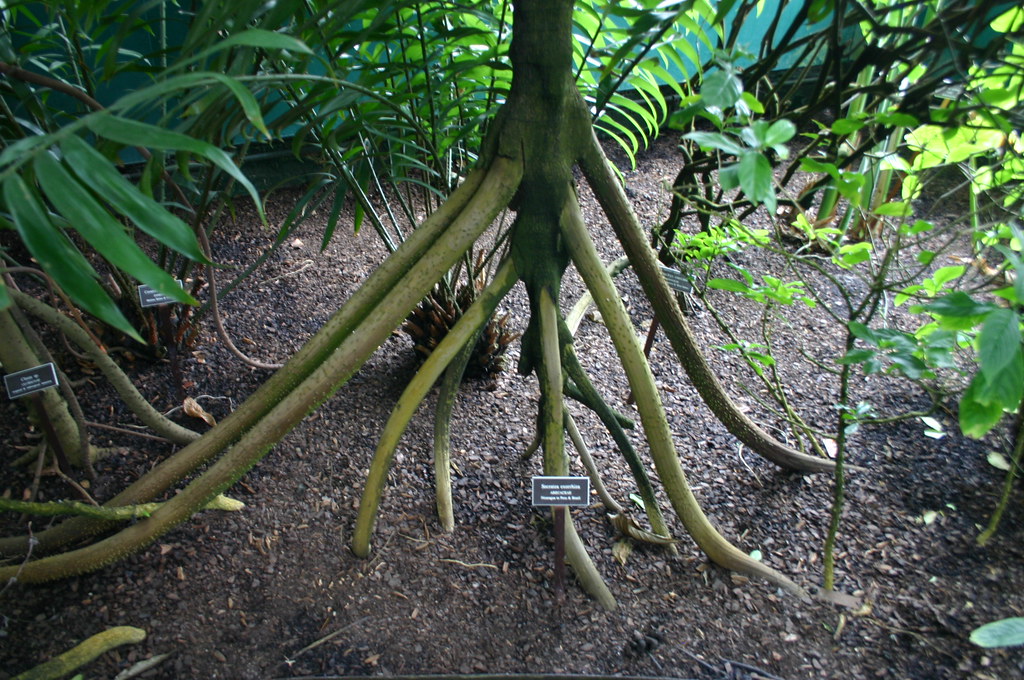
Since childhood, we have been taught that plants are stationary living organisms. However, nature surprises again with an extraordinary plant that can walk. The plant is Socratea exorrhiza, also known as the walking palm.
It is said that the tree moves around 20 metres every year. Socratea is a genus of five species of palms found in tropical Central America and South America.
This tree can be found in Nicaragua, Costa Rica and Panama. How exactly does this tree walk?
This tree walks because of its unique root system, which consists of stilt roots similar to those of a mangrove.
Unlike other plants, it develops a set of aerial roots and lacks a complete underground root system.
The roots of this tree grow outward from the trunk, and as the soil erodes, some of the roots die off.
The new roots will grow on one side and shed their roots on the opposite side.
That is how the tree is displaced from its old position to a new one since it follows the direction of new roots.
Various theories have been proposed on the function of the stilt root.
Stilt root serves various functions, including rapid vertical growth and enhanced mechanical stability.
It can reach up to 25 metres in height and 16 cm in stem diameter.
You might be curious why this plant needs to walk around the forest to meet the Sun.
Yes, light is a limiting factor in a tropical forest, and this plant must move to reach a sunny area to survive.
Palm trees are abundant in rainforests and are iconic tropical forest plants. Competition for sunlight among plants in tropical rainforests is intense.
Tropical rainforests have dense vegetation that forms three different layers: the canopy, the understory, and the ground layer.
Although tropical forests receive 12 hours of sunlight daily, less than 2% of sunlight reaches the ground.
The soil is always shaded because tall trees create the canopy, and the understory layer prevents sunlight from reaching the ground.
Plant survival in a tropical rainforest depends on its ability to tolerate constant shade or adapt its strategy to reach sunlight. Thus, Socratea’s strategy to attain sunlight is to walk around the forest.
Since the plant has to be competitive enough to capture sunlight, the root system allows the tree to grow taller and longer rather than develop thick trunks to attain canopy growth.
Thus, unlike other plants, the tree spends less energy developing its trunk and underground root system.
Although Socratea does not have an underground root system, it gets good mechanical stability from its aerial-like root.
Aerial roots are above the ground and provide greater support and stability for the stem.
Aerial roots can perform multiple functions, such as gas exchange, propagation, stability, and nourishment.
Some believe that stilt roots make the tree more stable in swampy areas.
However, scientists continue to study and debate the behaviour of this walking plant, but none of the theories has been confirmed, and it remains a strange miracle from nature.