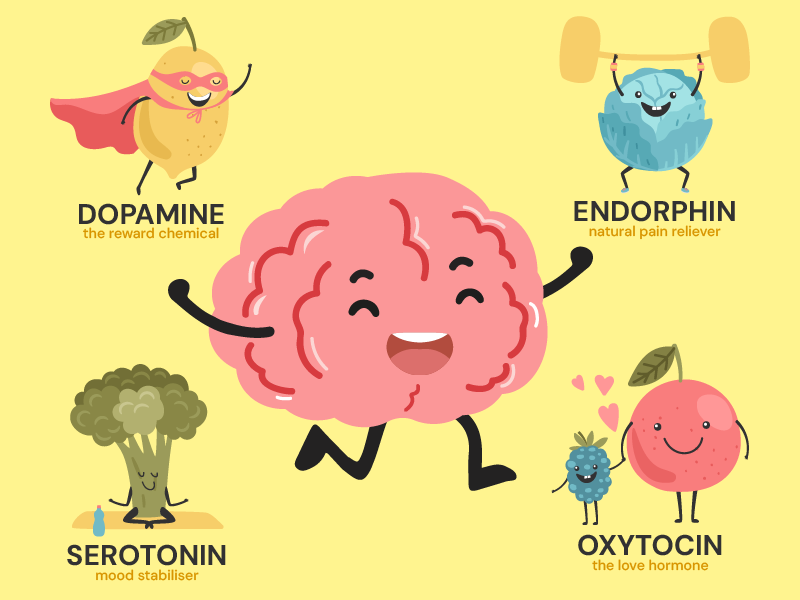
Serotonin: The Mood Stabiliser
Serotonin is the chemical that keeps us steady. It regulates mood, sleep, appetite, and even digestion. When serotonin levels are balanced, people feel calm and emotionally stable. For a long time, scientists thought low serotonin was the cause of depression. Newer research says the story is messier than that, and the honest answer is that nobody has worked it out yet. Serotonin matters. It just isn’t the whole answer.
The good news is that serotonin can be boosted naturally. Sunlight, exercise and decent sleep all help. What about food? Your body does build serotonin from tryptophan, which you get from eggs, nuts and cheese. But eating more of it barely changes what reaches your brain, because other nutrients from the same meal are queuing at the same door. Sorry, cheese lovers. Go for the walk instead.

Dopamine: The Motivation Molecule
If serotonin is about balance, dopamine is about drive. Dopamine fuels motivation, reward and the urge to chase after something. Here is the surprise. Dopamine is less about enjoying a reward and more about wanting it. It surges hardest in the moments just before you get the thing, not after. That itch you feel when you are one goal from winning, or one episode from the end? That is dopamine at work.
Dopamine also helps us learn by reinforcing behaviours that bring rewards. Too little dopamine can lead to a lack of motivation and is linked to conditions such as Parkinson’s disease. To keep dopamine flowing, set small goals, celebrate achievements, listen to music, and practise gratitude.

Endorphins: The Natural Painkillers
Endorphins are the body’s built-in defence against pain and stress. They act like natural painkillers, reducing discomfort and creating feelings of euphoria. For instance, think about the burst of laughter during a funny movie or the joy of singing along to your favourite song. That warm, uplifting sensation comes from your brain releasing its own opioids, the same family of molecules that strong painkillers copy.
Endorphins also help with relaxation and stress relief. Activities like laughing with friends, dancing, or a hard game of futsal can trigger their release. In everyday life, endorphins remind us that joy can be found in simple pleasures.

Oxytocin: The Bonding Hormone
Oxytocin is sometimes called the “love hormone” because it strengthens social connections. It is released during hugging, childbirth, breastfeeding, and moments of trust or affection. Oxytocin helps build empathy, closeness, and trust between people. There is a twist, though. Oxytocin pulls us closer to our own group, and studies suggest it can make us more suspicious of people outside it. So “love hormone” is only half the story.
Simple acts of kindness, spending time with loved ones, or even petting animals can increase oxytocin levels. This makes oxytocin essential not only for family bonds but also for friendships and community ties.

The Brain’s Fantastic Four: How Happy Chemicals Work as a Team
While each neurotransmitter has its own role, they work best together. Serotonin keeps us calm, dopamine keeps us motivated, endorphins help us cope with stress, and oxytocin strengthens our relationships. Together, they form the foundation of emotional well-being.
A healthy lifestyle supports this teamwork. Regular exercise, balanced nutrition, enough sleep, and positive social interactions all help maintain these chemicals. In other words, happiness isn’t just about luck; it is something we can nurture through daily habits.
One thing matters more than all of this, though. If sadness or worry sticks around for weeks and stops you from doing things you used to enjoy, that is not a habit problem, and it is not your fault. Tell a parent, a teacher, or a doctor. Some things need more than sunshine and a good playlist.
Conclusion
Serotonin, dopamine, endorphins, and oxytocin are the invisible forces shaping how we feel, act, and connect with others. By understanding them, we learn that well-being is not a mystery but a balance of chemistry and lifestyle.
Whether it’s enjoying sunlight, celebrating achievements, laughing with friends, or sharing a hug, these “happy chemicals” remind us that happiness is built from small, everyday choices.
So try one thing this week. Twenty minutes outside. One small goal finished. One message to a friend you keep meaning to text. Then notice what shifts. Your brain chemistry is not something that happens to you. You get a say in it.
Prepared by:
Ahmad Saifuddin Mohamad Arshad
and