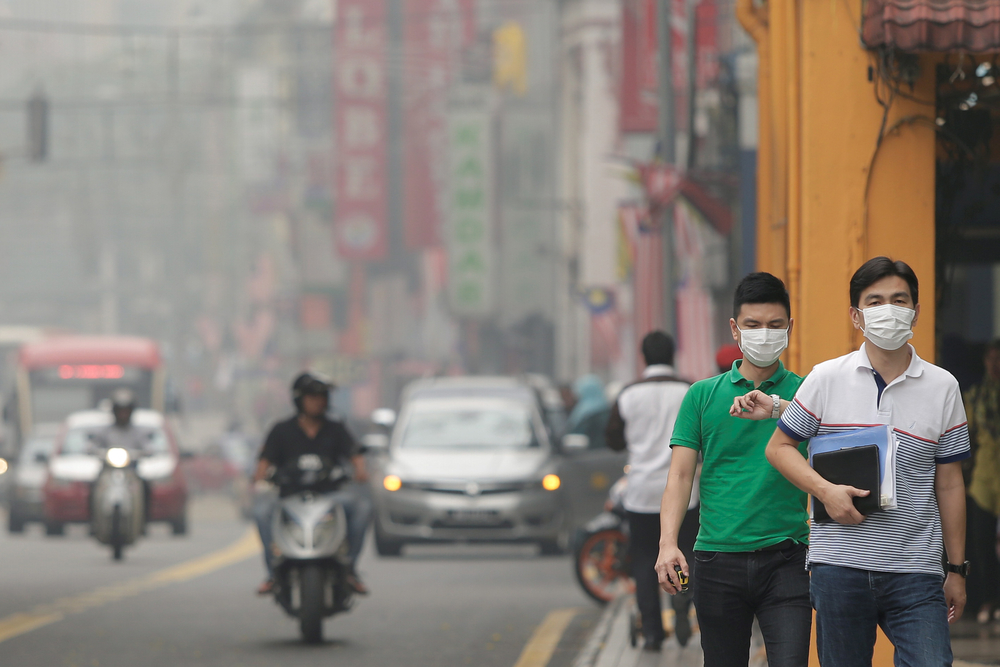
It’s about that time of the year, and Malaysians know the routine. Look outside the window, notice the reduced visibility and check the Air Pollutant Index (API). Haze is one of the most visible forms of air pollution. At the same time, volcanic eruptions in our region can send ash high into the atmosphere. Both may make the sky look hazy, but they are very different phenomena.
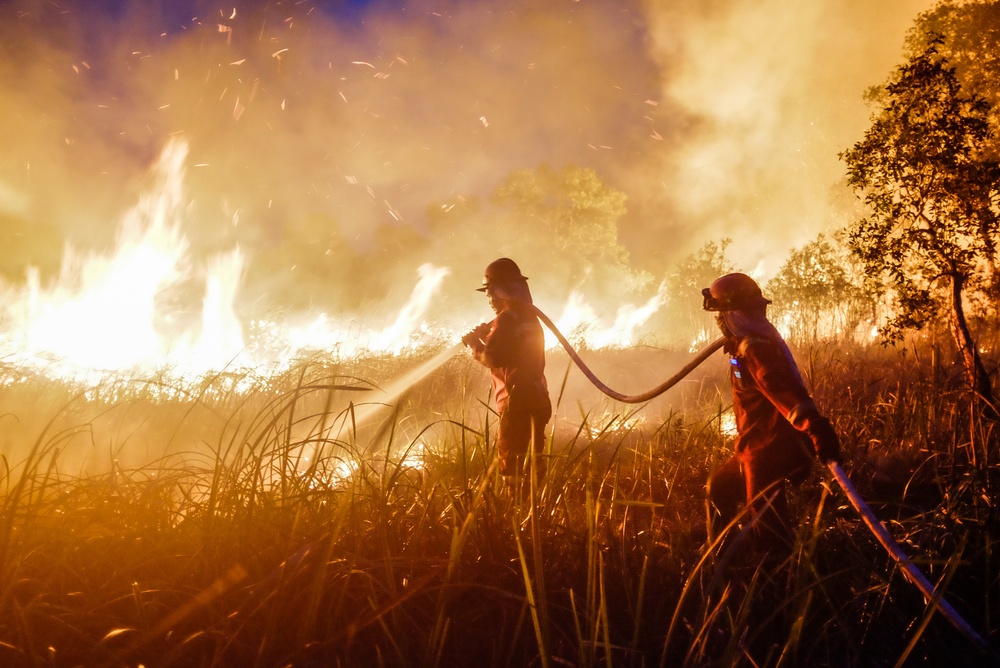
A Manggala Agni firefighter works to extinguish a land fire in Ogan Ilir Regency, South Sumatra, Indonesia on 15 August 2026. Shutterstock
When forests, vegetation or peatlands burn, combustion releases gases, soot and fine particles. Of particular concern is fine particulate matter, known as PM2.5, which consists of airborne particles measuring 2.5 micrometres or less in diameter. Because they are extremely small, they can penetrate deep into the respiratory system. Peat fires can be especially persistent because they may smoulder below the surface for long periods, continuously releasing smoke.
How can smoke from one place affect communities hundreds of kilometres away? The answer lies in the atmosphere.
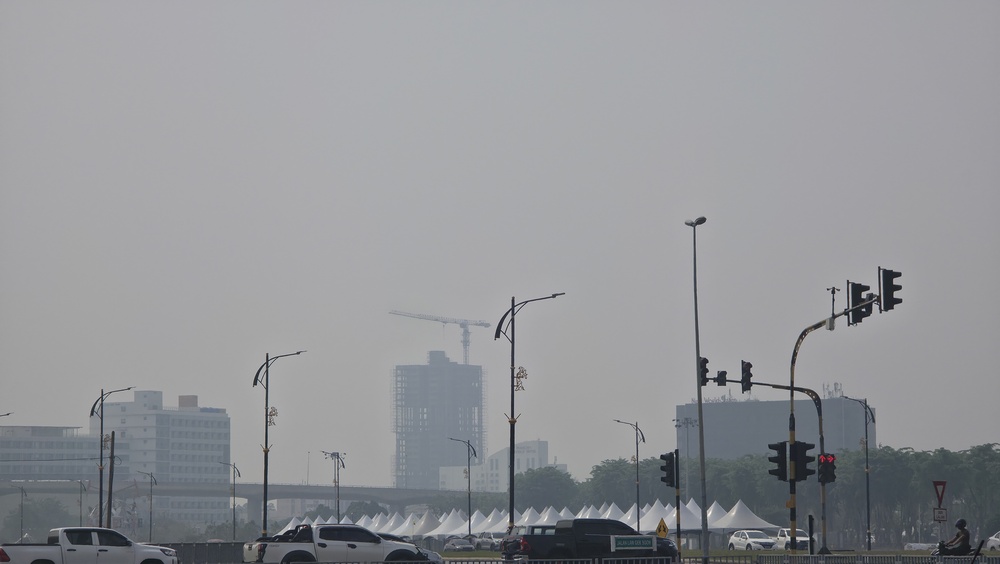
A view of the haze situation in Bintulu, Sarawak, taken on 4 September 2026. Shutterstock
Under certain weather and monsoon conditions, winds can transport smoke across seas and national boundaries. This is known as transboundary haze. The atmosphere does not recognise political borders. Scientifically, what matters is where pollutants are released, how high they rise, which way the wind moves, and how rainfall and other weather conditions affect their journey.
Dry conditions can amplify the problem. When rainfall decreases, vegetation dries out, and peatlands lose moisture. Dry material burns more easily, fires may persist longer, and suppression becomes more difficult. Winds can then carry smoke over considerable distances.
A severe haze episode is therefore rarely the result of a single factor. It usually involves an interaction between fire, fuel, land conditions, weather and atmospheric circulation.
Volcanic ash is something different.
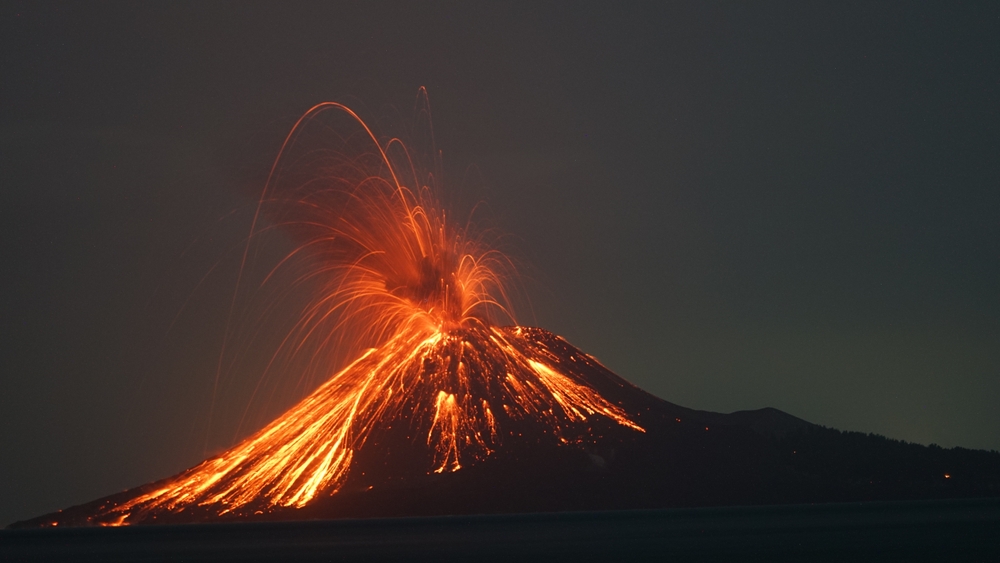
Anak Krakatau Volcano in 2023. Shutterstock
Unlike smoke produced by combustion, volcanic ash consists of tiny fragments of rock, minerals and volcanic glass released during an eruption. Ash can rise high into the atmosphere, reduce visibility, affect respiratory health and pose serious risks to aircraft.
Although haze and volcanic ash may both make the atmosphere appear dirty, they have different sources, properties and impacts. A volcanic eruption occurring at the same time as a haze episode does not mean that the volcano caused the haze.
How do scientists tell what is actually in the air?
Think of it as atmospheric detective work. Ground-based monitoring stations tell us how pollutant concentrations change where people live. API readings translate these measurements into a form the public can understand. Satellites can detect fire hotspots and observe smoke plumes. Meteorological observations tell us about wind, rainfall and atmospheric conditions. At the same time, computer models can help trace where polluted air may have travelled.
Yet haze also reveals a bigger issue.
Air pollution does not disappear when the haze disappears.
Haze represents an acute pollution episode where pollutant concentrations may rise substantially over a relatively short period, attracting public attention because we can see and sometimes smell the change in our environment.
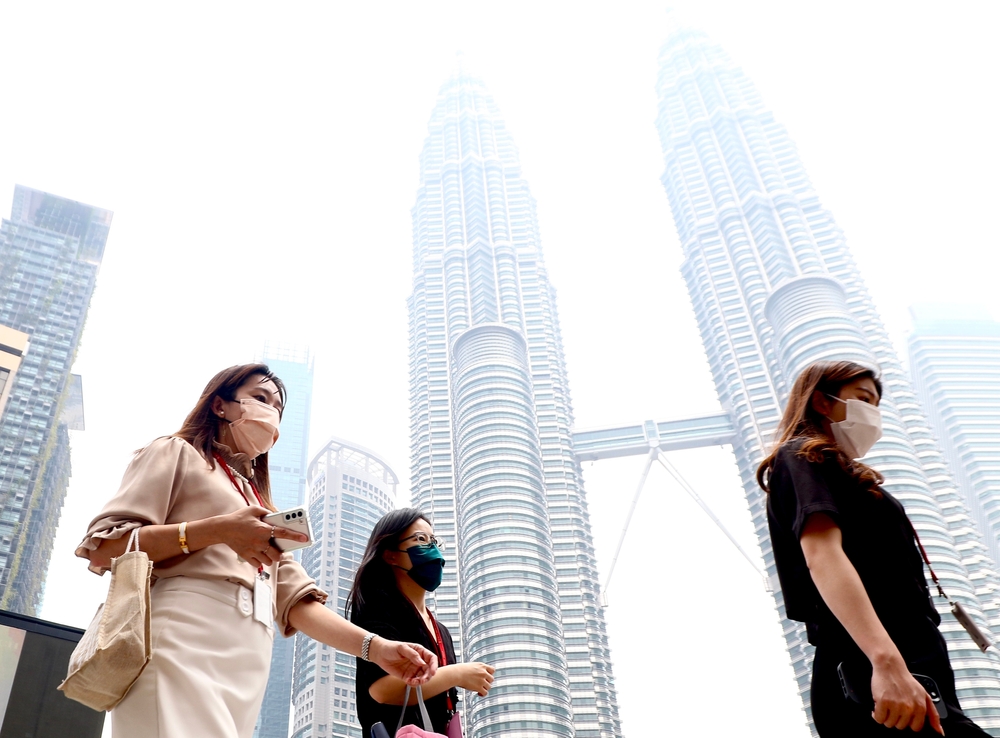
But on ordinary blue-sky days, we still experience exposure to ambient air pollution from sources such as road traffic, industry, construction, open burning, and pollutants formed through chemical reactions in the atmosphere.
The concentrations may be lower than during a major haze episode. Still, exposure occurs repeatedly – day after day, month after month.
This distinction matters. Haze attracts attention because we can see it, while chronic air pollution deserves attention precisely because we often cannot.
Air-quality management should therefore extend beyond responding to emergencies. We need sustained monitoring, cleaner transport and industry, better urban planning, effective emission controls and greater public understanding of the air we breathe every day.
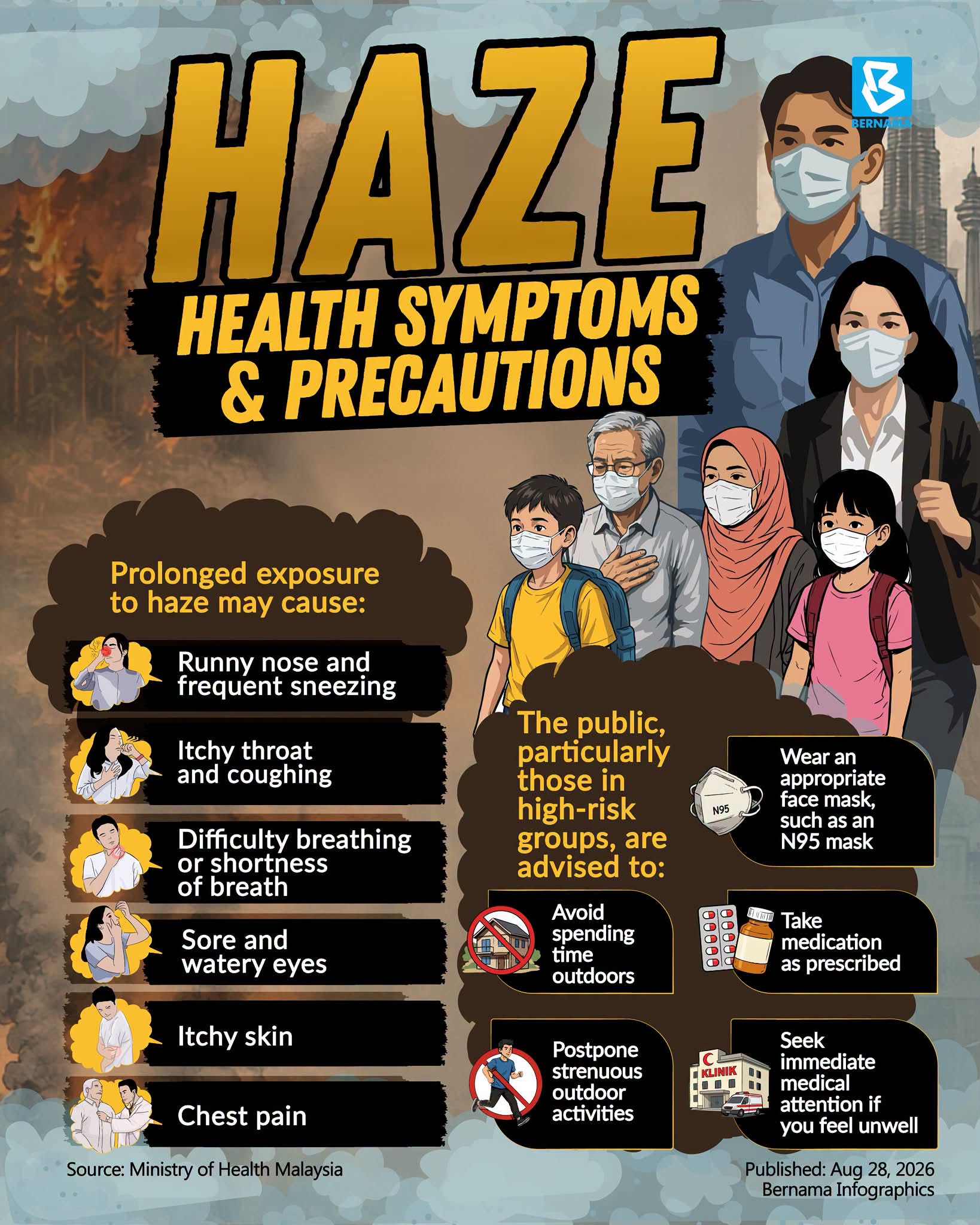
During haze episodes, people should monitor official air-quality information, reduce prolonged outdoor activities when pollution levels deteriorate and follow health advice, particularly for children, older adults and those with respiratory or cardiovascular conditions.
Ultimately, haze, fires and volcanoes remind us of one simple fact: we share an atmosphere.
Understanding our air should not begin only when the skyline disappears – and it should not end when the blue sky returns.
Prepared by: