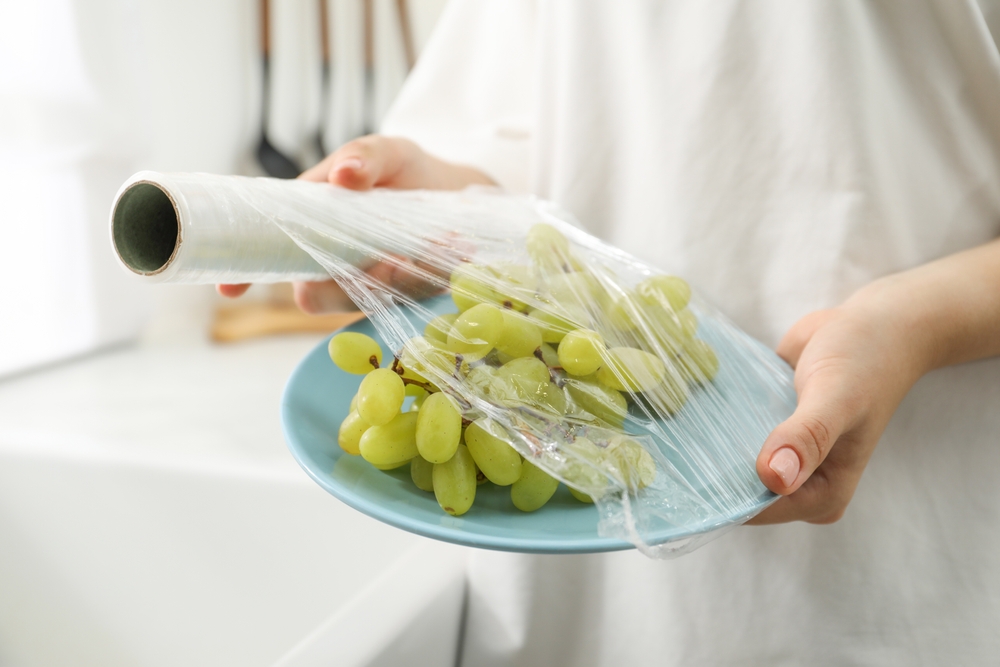
We love how it seals our bowls, but could your cling wrap be clinging to your health, too?
Storing leftovers is a daily practice in many busy households. We demand easy-to-use features and time-saving solutions. The go-to choice: stretchy, sticky plastic, known as cling wrap. It is incredibly convenient, sealing bowls with a simple press to reduce moisture loss and exposure to external contaminants.
Once sealed, tuck these meals into the fridge, ready to reheat the next day (and of course, remove the cling film before heating!). It seems like a handy kitchen necessity, but are you using it safely and correctly?
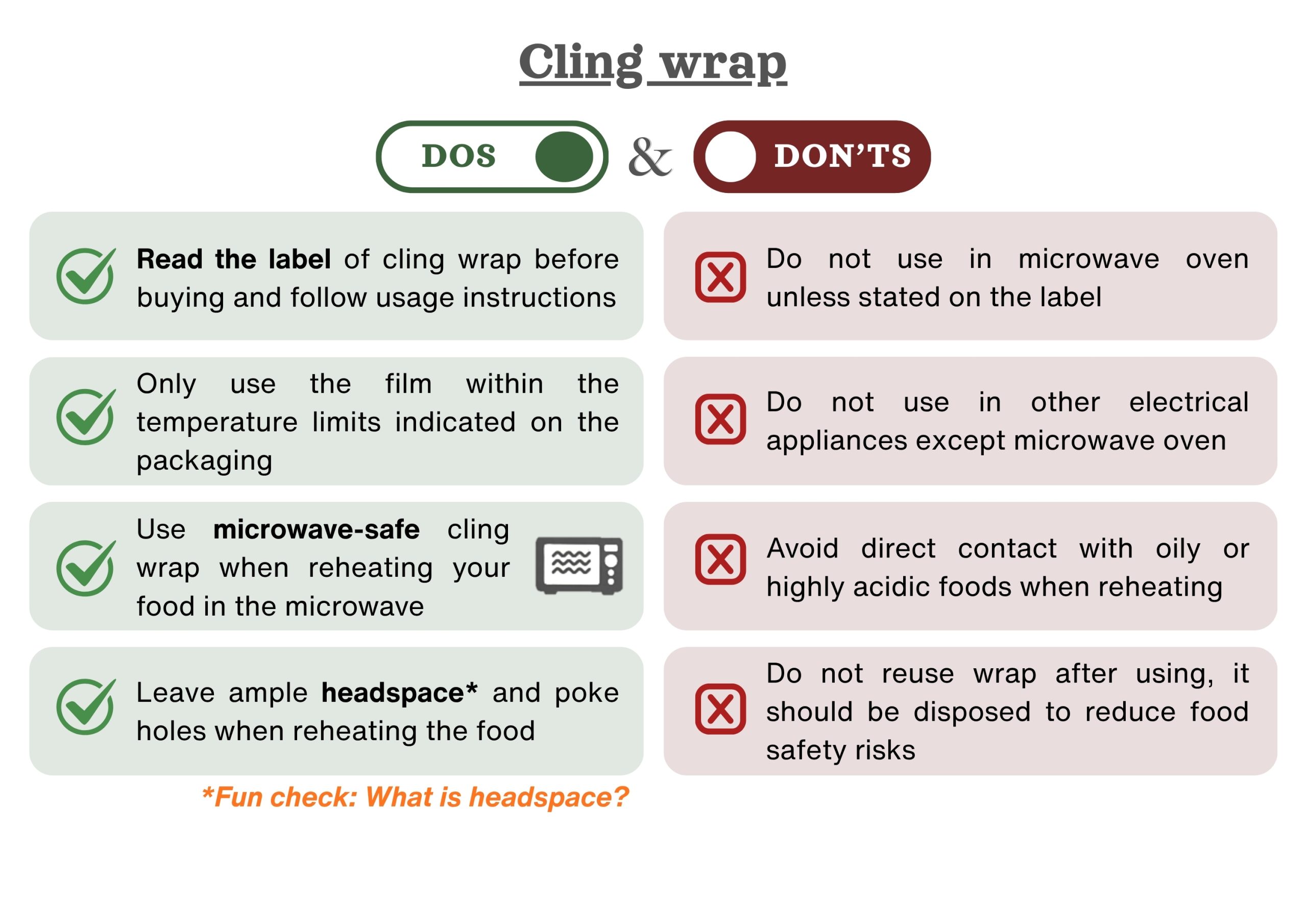
The do’s and don’ts of cling wrap.
*The answer is at the end of this article!
Understand Your Cling Wrap
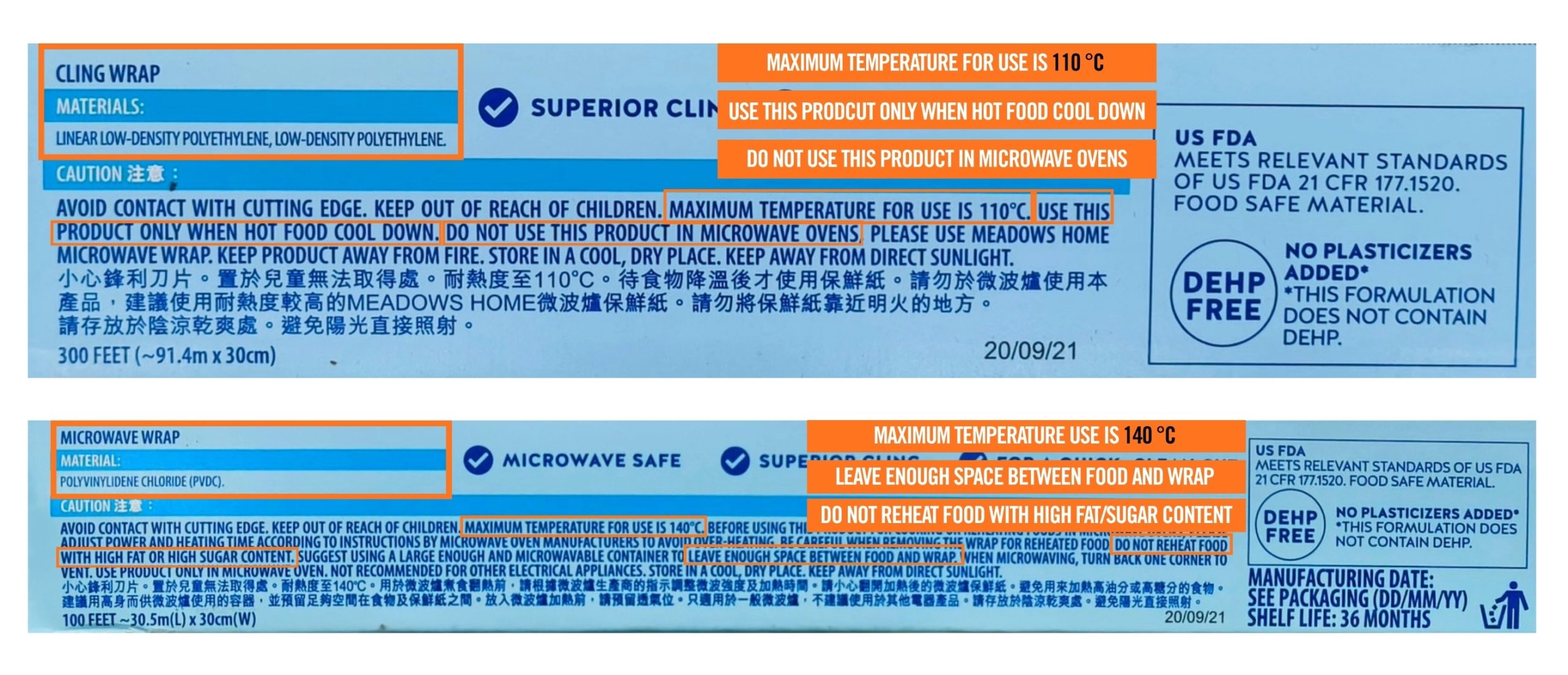
The side panels of locally sourced cling wrap.
Traditionally, polyvinyl chloride (PVC) is widely used as cling wrap because its clinging effect makes it effective for sealing food and maintaining freshness.
About 20% to 35% softening chemicals, called plasticisers, are added to rigid films to make them flexible, stretchy, and clingy. These characteristics come from a variety of plasticiser types, including phthalates like di(2-ethylhexyl) phthalate (DEHP), non-phthalate alternatives like adipates such as di(2-ethylhexyl) adipate (DEHA), terephthalates like di(2-ethylhexyl) terephthalate (DEHT), and citrates like acetyl tributyl citrate (ATBC).
These plasticisers are not chemically locked in the PVC; hence, they can easily leach or “migrate” from the cling wrap and directly into your food under two conditions:
- When the food is hot (like wrapping hot leftovers)
- When the food is oily, fatty or acidic (like salmon, cheese, or fresh-cut lemon)
As a result, governments strictly regulate plasticiser use in PVC, including the Malaysia Food Regulations 1985 and the U.S. Food and Drug Administration (FDA). Commission Regulation (EU) No 10/2011 also tightly controls four commonly used phthalate plasticisers. They may interfere with hormones and reproductive health.
To minimise exposure, choose the right materials (i.e., phthalate-free cling wraps) for the intended use and follow labelled instructions.
A Safer Way to Wrap
The industry is actively shifting toward polyethene (PE)- based cling wraps (i.e., low-density PE and linear low-density PE). Since these PE do not require plasticisers, they are generally considered safer than PVC cling films regarding plasticiser migration.
Furthermore, to address environmental waste, manufacturers are increasingly developing eco-friendly alternatives. For instance, chemical company BASF and packaging manufacturer Fabbri Group jointly developed a compostable cling film called Nature Fresh®, made of a blend of Ecovio® and Ecoflex® (i.e., PBAT > 95% and PLA < 5%). The product is designed to provide optimal breathability to extend food shelf life while strictly complying with the U.S. and European food contact safety standards.
With the growing variety of safer and sustainable options on the market, you can safeguard your health by reading the label and choosing the right wrap for the job. Remember: Wrap it tight, mind the height, and most importantly, use it right!
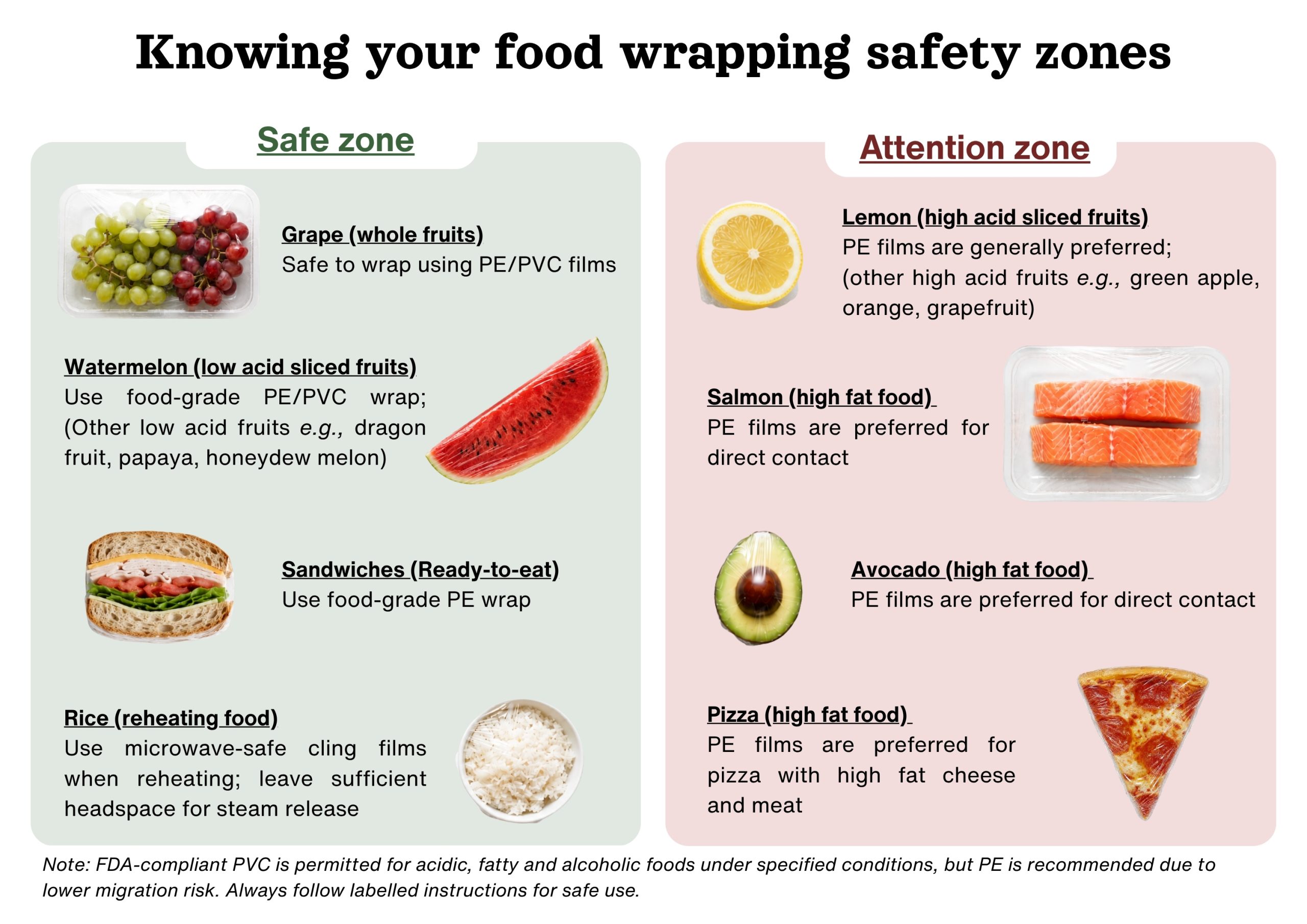
Safe use of cling wrap, at a glance.
*Answer: Headspace is the air/gas-filled volume within the height between the food surface and the inner film.
Prepared by:
Ms Lau Weng Nyan and Dr Hayati binti Samsudin
Food Technology Division
School of Industrial Technology
Acknowledgement
The author (Ms Lau Weng Nyan) expresses sincere gratitude to the Kuok Foundation Berhad for the MSM postgraduate scholarship awarded during her studies.