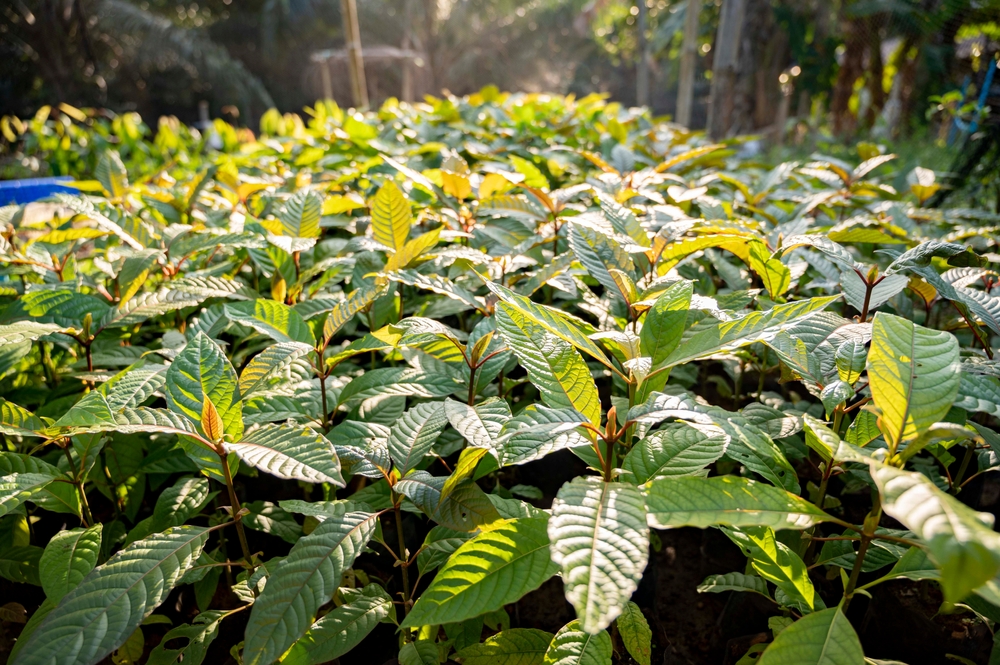
Kratom (Mitragyna speciosa Korth.) is a tropical evergreen tree belonging to the Rubiaceae family, indigenous to Southeast Asia, particularly Thailand, Malaysia, Indonesia, and Papua New Guinea. In Malaysia, Kratom is locally called ‘ketum’.
Kratom became widely discussed in the early 2000s due to concerns about addiction and misuse. The plant contains mitragynine, a psychoactive compound listed under the Poisons (Psychotropic Substances) Regulations 1989.
Under the Poisons Act 1952, the use and possession of Kratom are regulated and restricted in Malaysia, with legal penalties for misuse.
Different countries also regulate Kratom differently. Thailand once banned Kratom cultivation and use, but has recently reviewed its laws due to its long history in traditional medicine. Meanwhile, the United States FDA have also imposed regulations and some restrictions on Kratom.
Traditionally, people have used fresh or dried Kratom leaves by chewing them, brewing them as tea, or preparing them as powders and extracts to boost alertness and energy (stimulant) and to relieve pain (analgesic).
This article highlights both the potential benefits and possible risks of Kratom, giving readers a balanced overview of what it contains, how it works and its health effects.
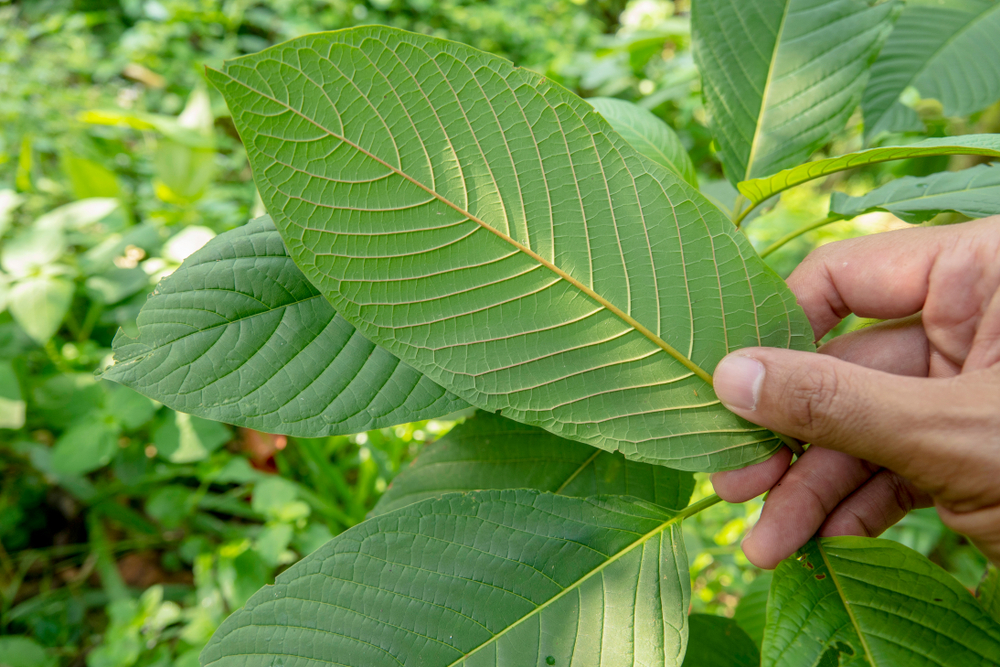
Fresh Kratom leaves. (Shutterstock)
Kratom leaves contain more than 40 identified alkaloids, with mitragynine (C23H30N2O4) as the predominant constituent, typically accounting for up to 60% of total alkaloid content.
A second key alkaloid, 7-hydroxymitragynine (C23H30N2O5) (Figure 3), occurs at lower concentrations. Other minor alkaloids include speciogynine, paynantheine, and speciociliatine. They may contribute synergistically to Kratom’s overall effects.
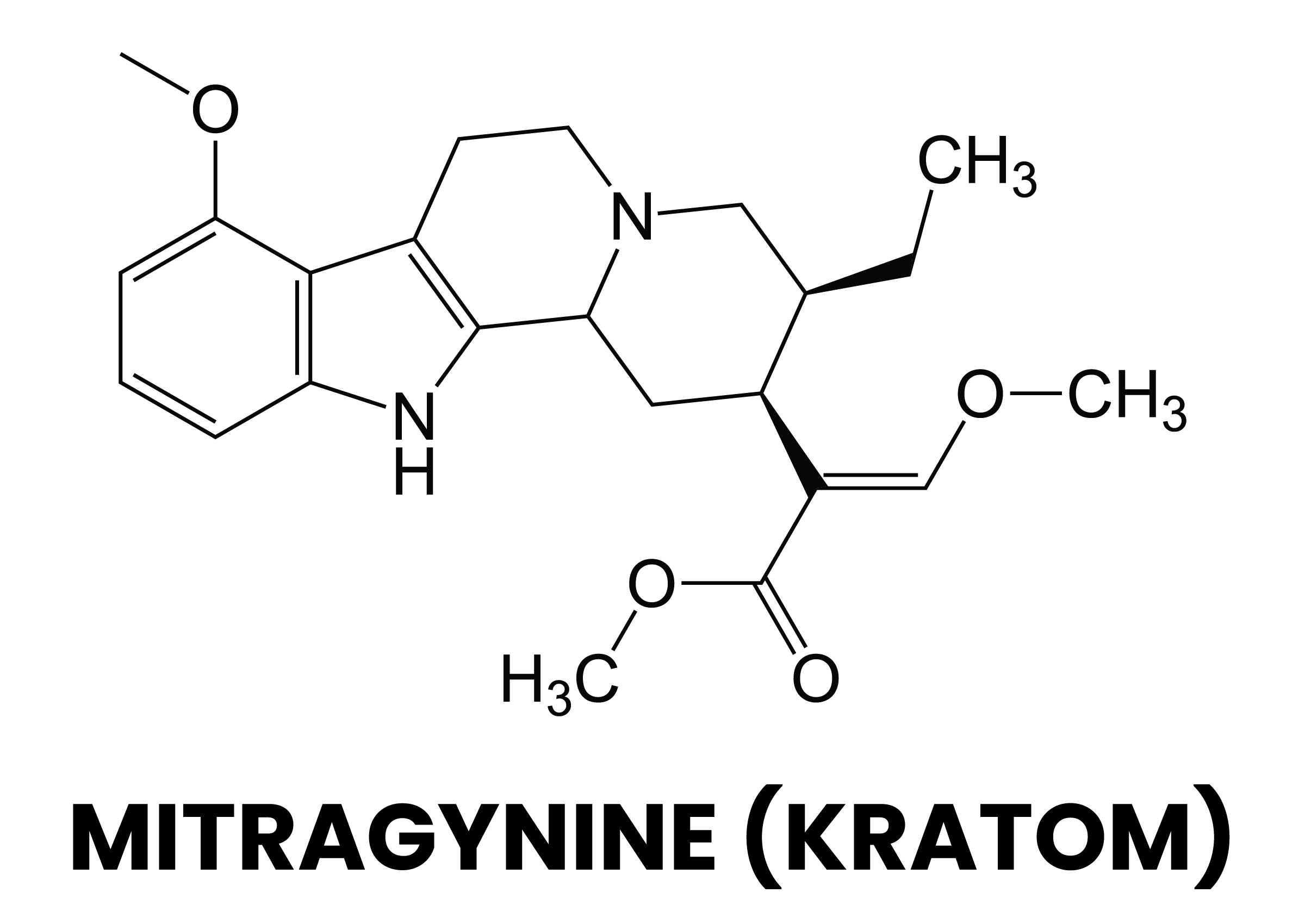
The chemical structure of mitragynine. (Shutterstock)
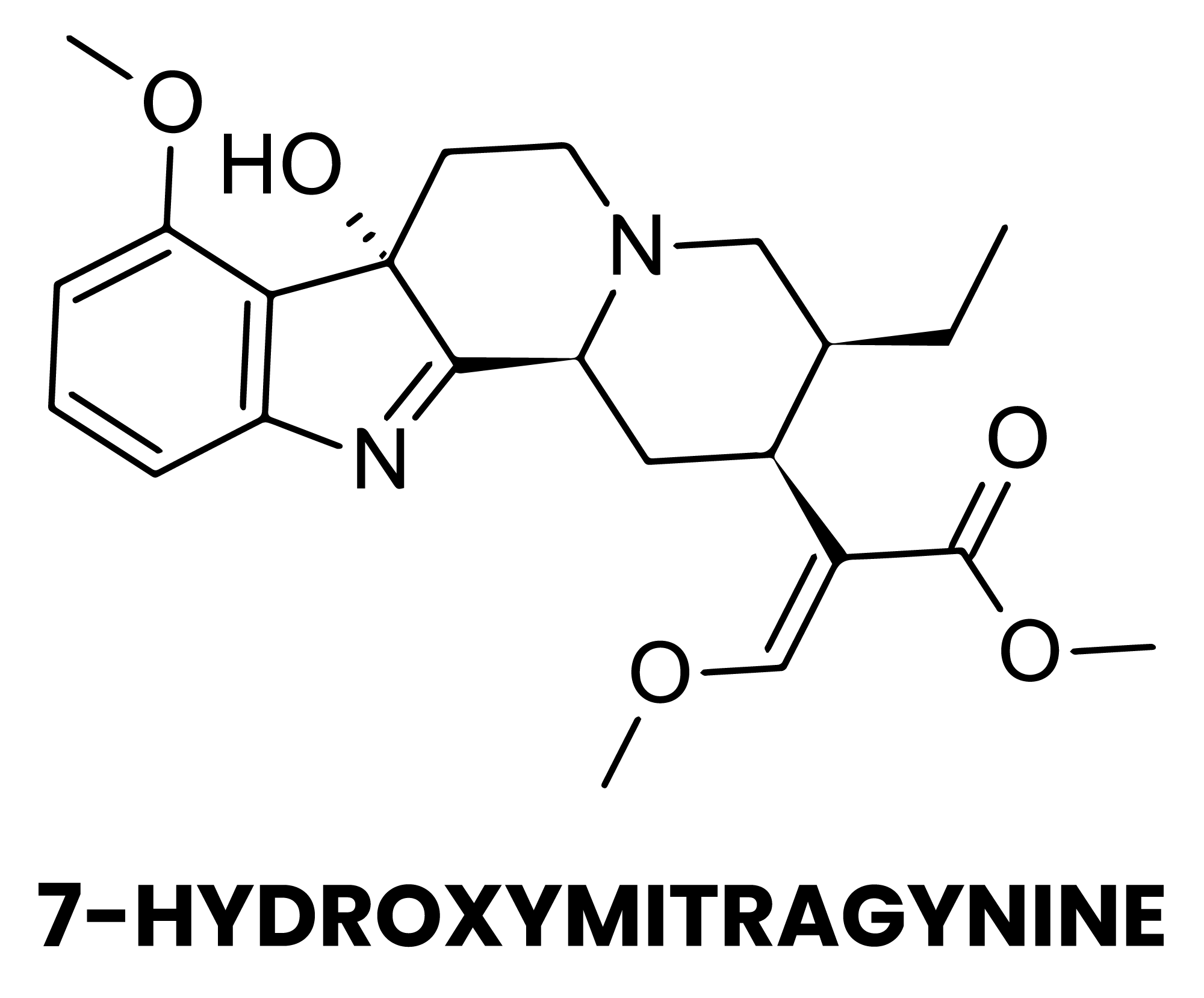
The chemical structure of 7-hydroxymitragynine. (Shutterstock)
In ethnomedical contexts, Kratom has been used to reduce fatigue among manual labourers, alleviate pain, treat gastrointestinal disorders, and help reduce dependence-related symptoms from opioid drugs such as morphine or heroin. These effects are believed to be attributed to the mitragynine and 7-hydroxymitragynine contained in Kratom.
Mitragynine and 7-hydroxymitragynine affect the body in complex ways. Both compounds act partly like opioid drugs by interacting with opioid receptors (sensors), especially in the brain, which may explain their pain-relieving effects.
However, unlike classical opioids such as morphine, kratom compounds appear to affect these receptors differently and may cause less severe breathing suppression.
Nevertheless, this does not mean Kratom is completely safe. Besides opioid receptors, kratom compounds may also affect other systems in the body, including those related to alertness, mood, and energy. This may explain why some users report feeling more energetic, focused, calm, or emotionally uplifted after consuming Kratom.
Kratom’s effects are dose-dependent. Low doses of 1–5 g of dried leaves may produce stimulant-like effects, including increased alertness, focus, sociability, and endurance. Meanwhile, moderate to high doses (5–15 g) may produce analgesic, sedative, and euphoric effects.
In addition, some studies and surveys suggest that individuals with opioid dependence have used Kratom as a harm-reduction strategy, reporting reduced opioid cravings and milder withdrawal symptoms.
However, strong scientific evidence from large clinical trials is still limited, and more research is needed before Kratom can be recommended for this medicinal use.
In short, Kratom is a biologically active plant that contains naturally occurring alkaloids. Due to its opioid-like effects, it may offer benefits such as pain relief, mood enhancement, and possible harm-reduction effects.
However, it also carries potential risks, especially dependence, misuse, and adverse health effects when consumed excessively or without proper control.
Therefore, continued research and careful scientific evaluation of Kratom remain important and should be carried out within appropriate government regulations.
Prepared by:
Muhammad Ammar Nukman bin Adnan, Muhammad Amirul Firdaus bin Mohd Shahrul Faizal, Ahmad Amirul Aiman bin Ahmad Jafri, Ahmad Qushairi bin Azhar, Salmiah Jamal binti Mat Rosid, Nurul Najidah binti Mohamed
This article is provided for educational purposes only and should not be used as a substitute for professional medical advice, diagnosis or treatment. Always consult a qualified healthcare professional regarding any health concerns.