Environmental health is an aspect of human health determined by physical, chemical, biological, social and psychological environmental factors. A healthy environment leads to healthy people.
One should be careful about recycling and disposing of materials. We rely on our earth to supply clean water, breathable air, and healthy food, all of which can be put in danger by the sloppy throwing away of rubbish.
Therefore, green practices aim to raise society’s awareness of the consequences of continuing as we are.
One of these is environmental diseases- respiratory problems from pollution and infectious diseases from global warming; as such, 5R is introduced to society.
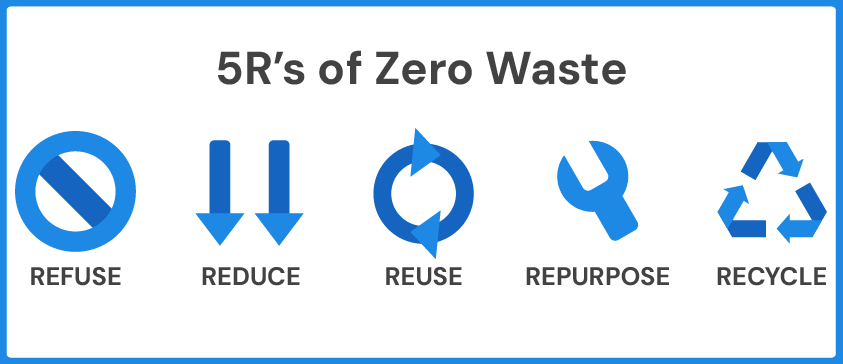
According to the 5Rs, four actions should be taken before recycling: refuse, reduce, reuse and repurpose.
The United Nations (UN) defines sustainable development as development that meets the needs of the present without compromising the ability of future generations to meet their own needs.
The UN identifies fighting poverty, hunger, and lack of access to water and food as essential sustainable development goals.
Fossil fuels harm the environment, while green strategies using renewable energy and materials remain the best and most reliable approach to combat environmental issues.
Anyhow, it is imperative to plan for the future, a crucial aspect of environmental consciousness.
Human activities have driven global warming and climate change since the pre-industrial period.
Our environment is under stress due to factors such as rising temperatures, water scarcity, more frequent heat waves, drought, weed and insect invasions, severe storm damage, and salt intrusion, among others.
Recently, flooding, heat waves, droughts, rising sea levels, and erratic rainfall have been observed in the United States, Asia, and Europe and are linked to climate change.
According to the World Health Organisation (WHO), climate change is responsible for at least 150,000 deaths annually, a figure expected to double by 2030.
Unfortunately, the poorest and most vulnerable countries and those who have contributed the least to the problem will be amongst the hardest hit by global warming, just like the devastating floods in Pakistan.
This is worrisome and the most pressing threat to our planet. Therefore, there is a need to instil care and chart (3C) the trend of environmental pollution and its effects on human health by reducing the carbon footprint in our daily lives.
While we understand the efforts of the United Nations and other notable organisations worldwide, we want to seize this golden opportunity to make a passionate call to all countries, particularly the Malaysian government, to take action with immediate clarity to save our beautiful planet.
An instance of such actions is funding more research activities, particularly in environmental management, such as CO2 transformation into value-added products and collaborating with businesses to cut carbon emissions.
It is also necessary to promote policies that encourage clean, renewable energy and to enforce them accordingly.
More awareness and campaigns on the use of synthetic plastic in mass media, to the extent of sensitising ignorant citizens on the negative impact of environmental pollution and global warming.
All these efforts will help citizens and nature adapt to climate change.
By implementing a small change in our daily habits, like saying no to single-use plastics, smaller carbon footprints, and transforming concentrated atmospheric CO2 into hydrocarbon fuels, the number of toxins released into the atmosphere will be reduced drastically.
This effort aligns with United Nations Target 12.5 to ensure sustainable consumption of natural resources by reducing waste generation, particularly from single-use packaging in daily life, by 2030.
Future generations will benefit from improved air, fewer landfills, and more renewable energy sources.
Professor Dr Hazleen Anuar is from the Department of Manufacturing and Materials Engineering at the International Islamic University Malaysia. She can be contacted via email. Dr Yakubu Adekunle Alli is a postdoctoral research fellow and climate change advocate from LCC-CNRS, Université de Toulouse. He can be contacted via email.