
The lyric “What doesn’t kill you makes you stronger” reflects a well-established brain mechanism called neuroplasticity, the brain’s ability to reorganise, adapt, and grow in response to experience, especially in the face of adversity.
Just as muscles repair and grow stronger after injury, neural circuits strengthen when challenged.
This adaptive capacity underlies resilience, and one brain region plays a central role in this process: the prefrontal cortex (PFC).
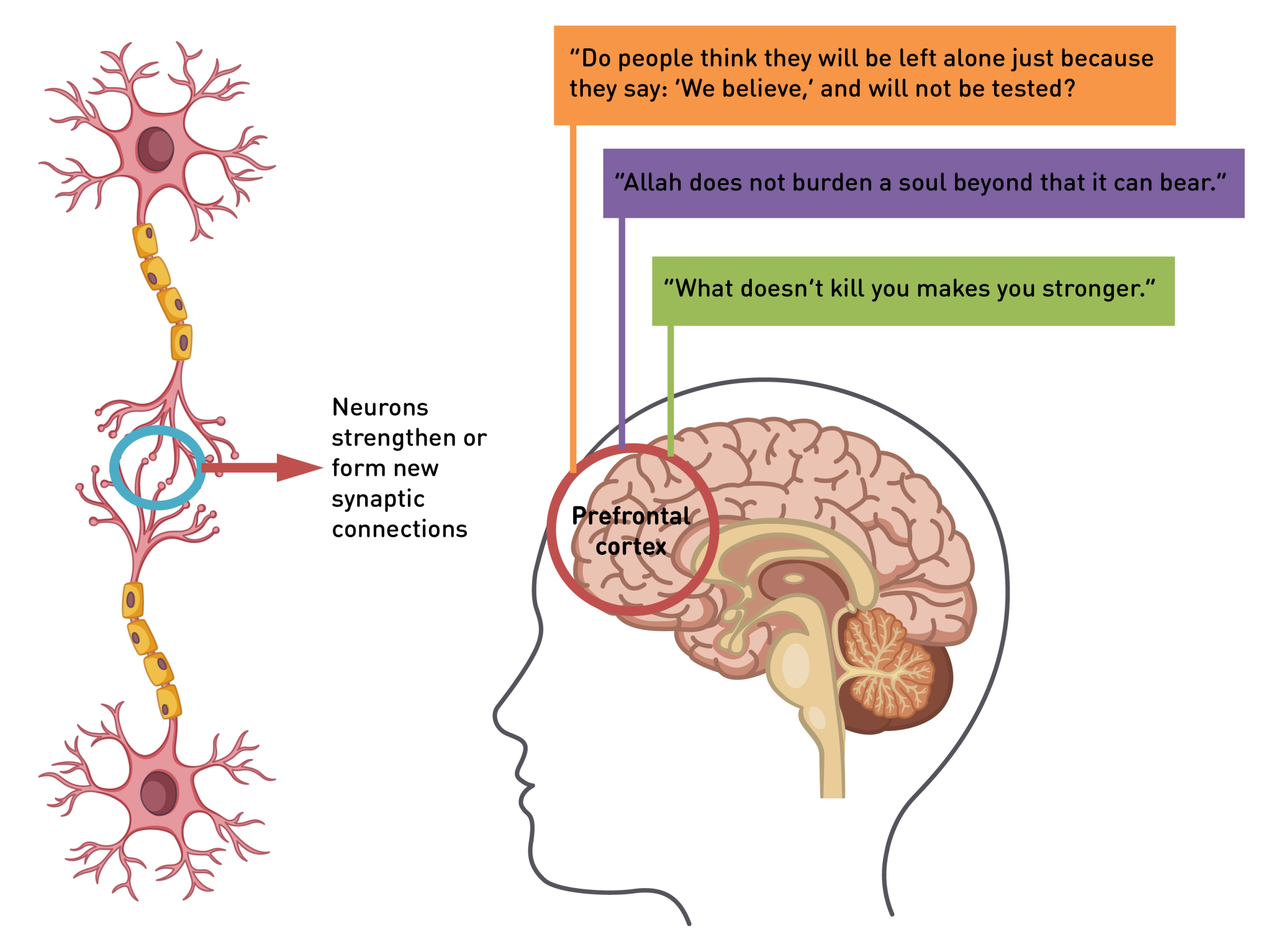
The PFC is responsible for executive functions such as decision-making, planning, critical thinking, and evaluating outcomes.
During hardship, this area becomes especially active, helping us to interpret experiences, reflect, and assign meaning.
One of its key functions is generating predictive reward value, which enables the assessment of whether enduring current pain may lead to future growth or benefit.
This predictive mechanism explains why positive inputs like motivational quotes or spiritual reflections can be so powerful.
For Muslims, engaging in tadabbur (deep reflection) on verses like
“Allah does not burden a soul beyond what it can bear.”
(Surah Al-Baqarah 2:286)
serves not only as spiritual comfort, but also as a neurological signal that reframes difficulty as an opportunity for growth, activating the PFC to support adaptation and resilience.
From a clinical perspective, this has implications for treatment-resistant depression (TRD). In TRD, standard therapies often fail, leaving patients stuck in persistent distress.
Yet, neuroscience suggests that the brain is not fixed. With neuroplastic support, including spiritual frameworks, cognitive therapy, and community, recovery remains possible.
Furthermore, the Quran reminds us that trials are inevitable:
“Do people think they will be left alone just because they say: ‘We believe,’ and will not be tested?”
(Surah Al-Ankabut 29:2)
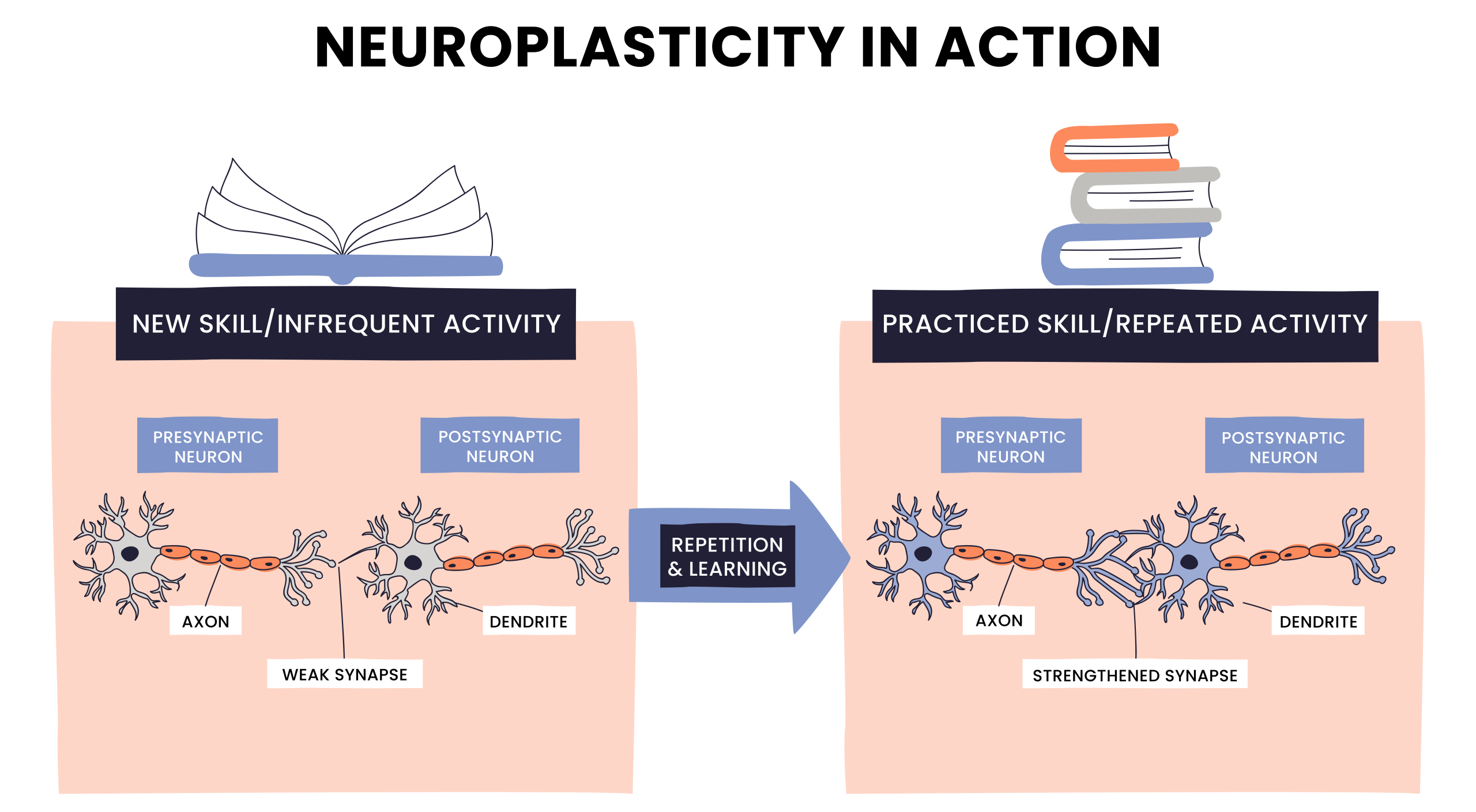
Here, adversity is framed not as punishment, but as a test of growth. This aligns with what neuroscience shows: repetition of purposeful thoughts and actions, especially when grounded in meaning, strengthens neural pathways and builds resilience.
In the brain, the PFC interacts with the VTA-mesolimbic pathway, which governs motivation and reward. When infused with knowledge, faith, and positive environments, this circuit reinforces adaptive behaviour.
Without these inputs, however, individuals are vulnerable to emotional dysregulation, seen today in the rise of mental health challenges linked to screen addiction, fear of missing out (FOMO), poor dietary habits, and disconnection from nature and reflection.
To build a resilient brain, we must be intentional. It’s not just about avoiding hardship, but about training our minds, through faith, learning, and healthy practices, to interpret adversity as a catalyst for transformation.
Neuroplasticity doesn’t happen overnight; it requires repetition, reflection, and support.
In sum, resilience is not just surviving; it’s growing stronger through struggle, and the PFC is our brain’s compass in that journey. With faith as a guide and neuroscience as a map, we are empowered to reframe pain into purpose and reshape our futures.
Prepared by:
Dr Fatin Haniza Zakaria
Dr Fatin recently completed her PhD in Neurosciences (Department of Neurosciences, Universiti Sains Malaysia), focusing on alternative antidepressant interventions using preclinical models of depression. She is passionate about bridging science, spirituality, and human experience to promote mental wellness.